






 Portuguese
  Spanish
 3 min of reading
  1 comment


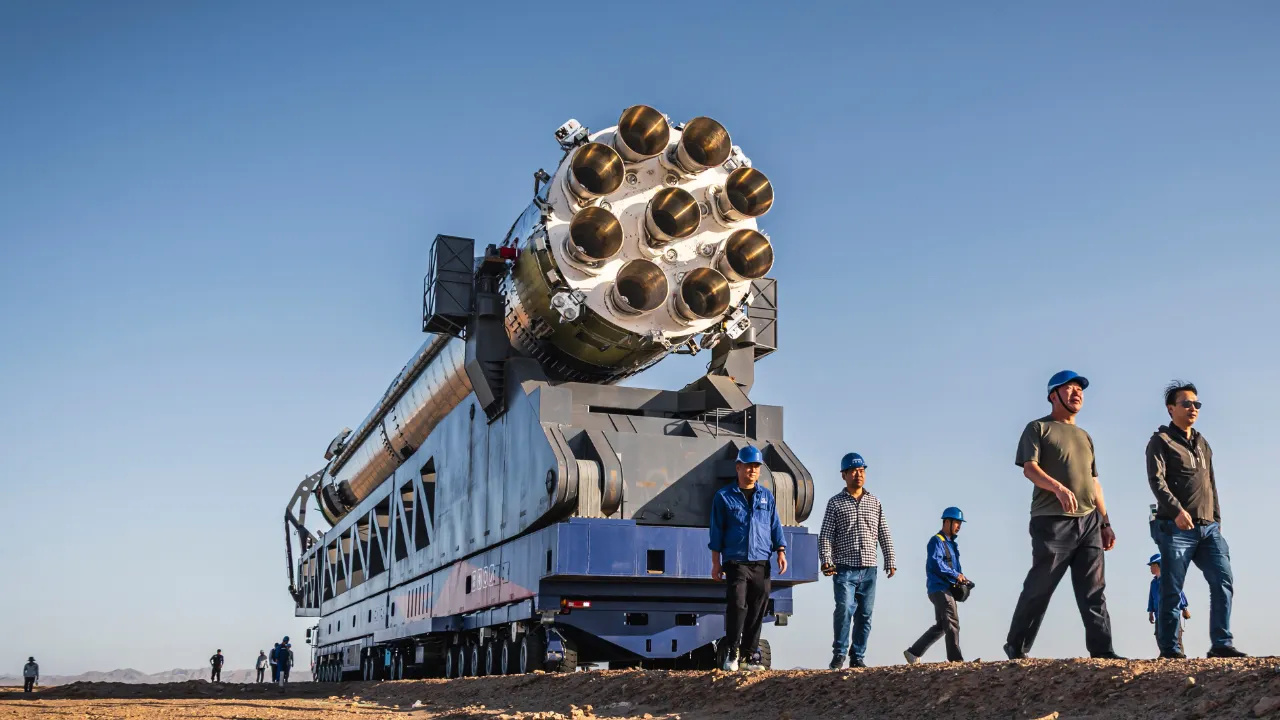


The Chinese space giant is making significant strides in the reusable launch segment — a domain so far mainly associated with SpaceX. The private Chinese company LandSpace recently completed a critical ground test with its reusable rocket ZhuQue-3 (ZQ-3), marking a new chapter in the international competition for space dominance. This is the technical, strategic, and market landscape you need to understand — and why it matters.
What We Know So Far
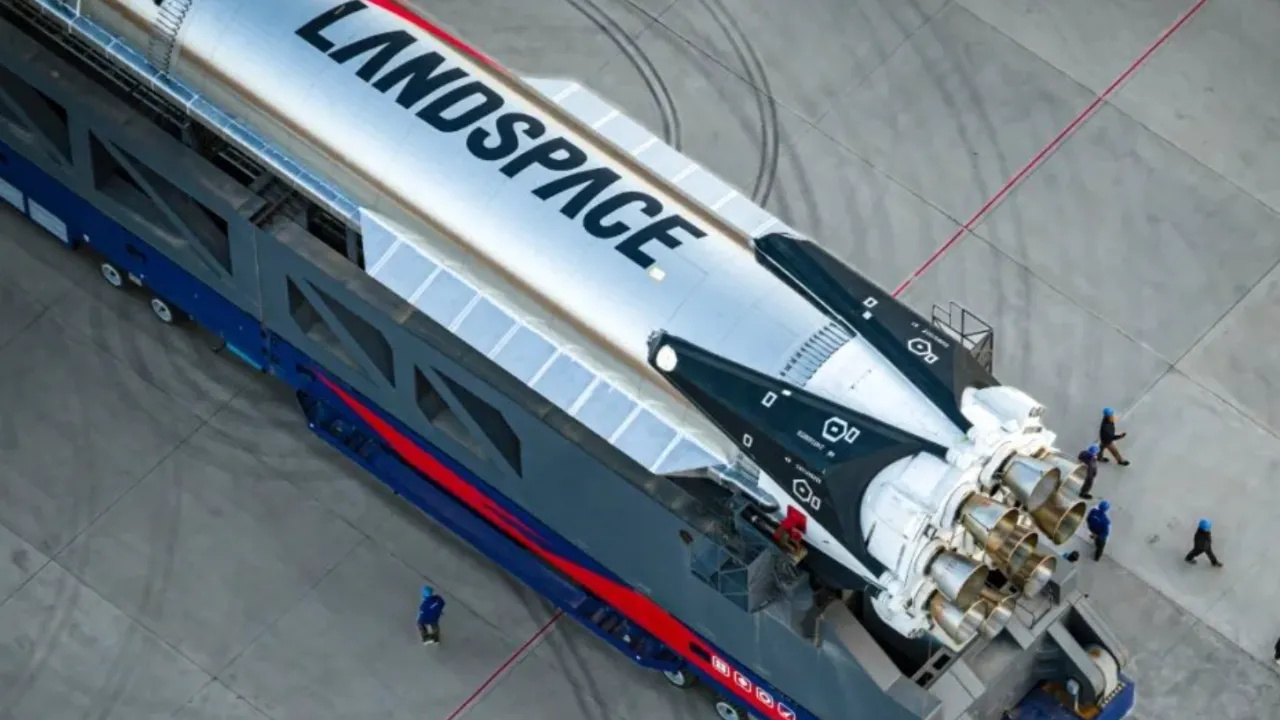
The ZhuQue-3 (ZQ-3) is LandSpace’s new heavy reusable rocket and features a series of innovations that place China close to Western space powers. At about 66 meters tall and with a body diameter of 4.5 meters, it impresses with its scale and choice of materials. The structure is made of stainless steel, similar to that used in projects like SpaceX’s Starship, ensuring strength and thermal tolerance during reentry. The rocket uses a combination of liquid methane and liquid oxygen as propellants — a cleaner and more efficient solution than traditional kerosene. This choice facilitates reuse and reduces the environmental impact of missions. The payload capacity is also noteworthy: up to 18 tons for low orbit when the stage is recovered, potentially reaching 21 tons on non-reusable launches.
LandSpace’s most recent milestone was the ground test conducted on October 20, 2025, when the ZhuQue-3 (ZQ-3) successfully underwent a static ignition at the Dongfeng Space Center in China. This procedure is crucial to validate engine performance and structural integrity before orbital flights. During the test, engineers observed stability in the propulsion and control systems, reinforcing the project’s feasibility. The expectation is that the first orbital flight will take place in the fourth quarter of 2025, possibly with a controlled landing attempt of the first stage. If confirmed, LandSpace could become one of the few companies in the world capable of launching and recovering a heavy reusable rocket.
-
Helicopter Drops 180 Tons of Sand and Gravel on Swedish River to Revive Ecosystem Damaged by Decades of Exploitation

-
Brazilian Company Launches Retro Smartphone with 48 MP Camera, T9 Keyboard, and Privacy Features for Social Media-Free Use

-
Self-Taught Chinese Farmer Builds 5-Ton Submarine from Scrap, Launches It in Anhui River
-
Invisible Induction Technology Enables Wireless Power for Blenders, Coffee Makers, and Air Fryers, Reducing Countertop Cables





Within the Chinese space strategy, the ZhuQue-3 (ZQ-3) represents a significant paradigm shift. Until recently, China was primarily known for the disposable rockets of the Long March family, which dominate its official and commercial missions. With the advancement of LandSpace and other startups in the sector, the country is moving towards more modern and competitive launch systems. Reuse reduces costs, increases flight frequency, and improves the economic sustainability of the space program. Furthermore, it strengthens China’s geopolitical position in a scenario where dominance in space technology is also a form of strategic power. The firm entry of private Chinese companies into this race shows that Beijing is willing to compete directly with names like SpaceX and Blue Origin.
Why This Moment Is Relevant (and Urgent)
The economies of scale provided by reusable rockets can completely transform the space industry. The ability to launch satellites and missions at much lower costs increases global demand for orbital transportation and enables new business models. With China entering this market, Western companies and governments will face greater competitive pressure, which could lead to price reductions and accelerated innovations. The use of methane and stainless steel also marks a new generation of cleaner, more durable, and easier-to-maintain rockets. Additionally, mastery of this technology gives China a strategic edge in areas such as communications, defense, and scientific exploration.
The Risks and Unknowns That Still Remain
Despite the advancements, the ZhuQue-3 (ZQ-3) has not yet completed an orbital flight nor demonstrated actual landing and reuse capabilities. The ground test was successful, but it represents only the first step of a long technological journey. The challenge now is to ensure that the first stage can return to Earth in a controlled and safe manner without compromising the vehicle’s performance. It also remains to be seen whether the project can meet the multi-reuse targets, something that demands a complex infrastructure for landing, recovery, and refueling. Even with a design similar to that of the Falcon 9, LandSpace still needs to prove it can achieve the same level of reliability and efficiency.





Practical advice that’s easy to implement. Much appreciated.