Portuguese
  Spanish


New coating creates a water-repellent barrier, hinders ice accumulation, and can reduce failures in electrical networks exposed to extreme cold
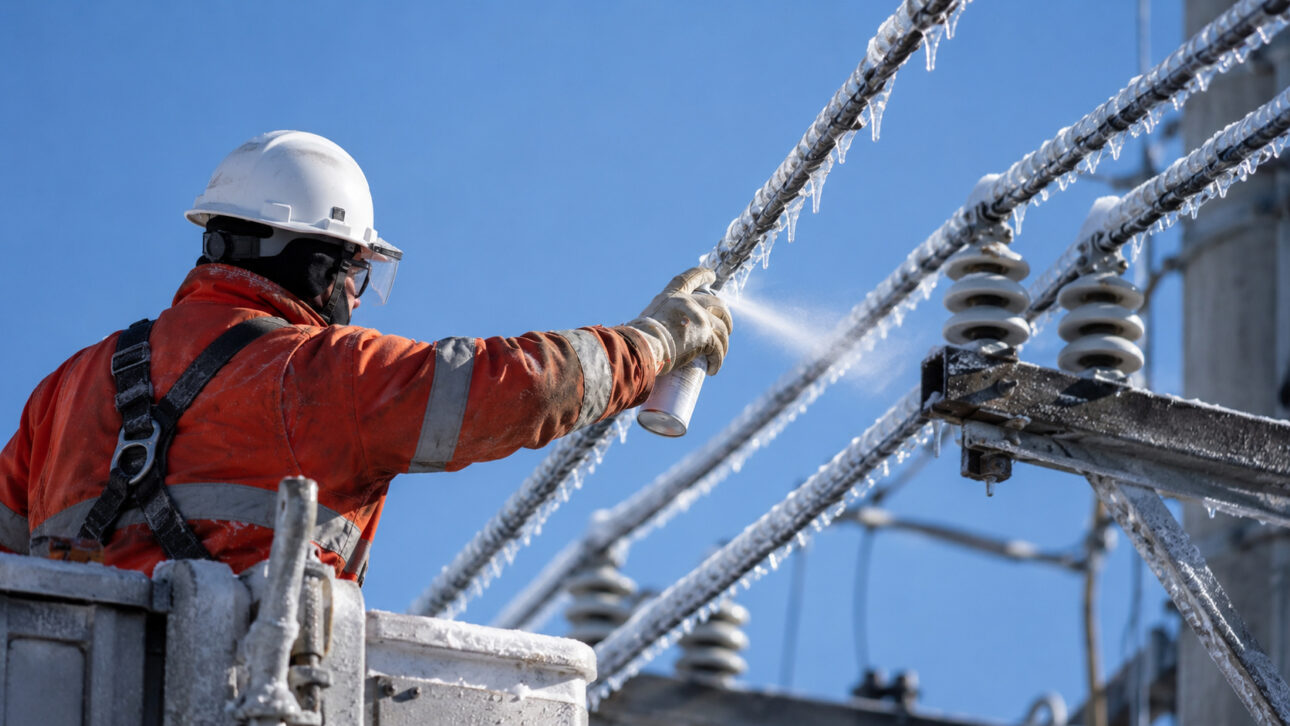
An innovation aimed at protecting power transmission networks is gaining attention in the infrastructure sector. The anti-ice spray for electrical cables uses a superhydrophobic coating capable of reducing water contact with metal and hindering the formation of frozen layers on wires. The technology seeks to reduce operational risks, avoid mechanical overload on towers, and enhance the reliability of energy supply in regions with harsh winters. This advancement is gaining relevance because excessive ice accumulation can break high-voltage conductors and cause blackouts in entire cities.
Special coating creates a barrier against ice accumulation
The technology works through a physical and chemical film applied directly to aluminum or copper cables. According to studies published by MDPI on anti-ice coatings in overhead transmission lines, superhydrophobic surfaces reduce the adhesion of frozen water, delay ice formation, and decrease operational risks in electrical networks. In practice, the material prevents cold droplets from easily remaining on the conductive surface. When ice forms, its adherence to the cable is reduced, and the accumulation can be dislodged by wind or natural vibration of the network.
Operational benefits can reduce failures and maintenance costs
The application of the spray can reduce the additional mechanical weight supported by the support towers. Cables covered by frozen crusts become heavier and, consequently, increase material fatigue and the risk of breakage. The ice-resistant coating on cables can also reduce emergency maintenance costs, as it preserves wires exposed to repeated freezing cycles. The protective film also shows resistance to ultraviolet radiation, which helps maintain its chemical functionality for prolonged periods under sun, wind, snow, and freezing rain.
-
Brazilian Entrepreneur Turns Passion for Amazonian Cocoa into a Million-Real Chocolate Business After Studying in France

-
Structural Report Reveals Serious Issues at Historic Corinthians Stadium, Engineer Recommends Partial Demolition

-
For a Decade, a Young Sudanese Innovator Builds Robots from Electronic Scrap in a Makeshift Lab in Omdurman

-
Woman with no tech background uses AI to develop app, reaches 50,000 users and goes viral with 2 million views by turning conversations into an emotional support tool.



Extreme weather increases the need for network protection
Extreme climate variations alter the frequency and intensity of winter storms in high-altitude areas. The mountainous terrain accelerates freezing winds and favors the deposition of supercooled liquid water on suspended metal wiring. Therefore, understanding factors such as soil moisture, regional physical geography, and atmospheric dynamics helps identify the most vulnerable sections of the network. This relationship between climate, terrain, and infrastructure underscores the importance of protective chemical barriers for distribution systems exposed to intense cold.
Laboratory tests confirm the product’s efficiency
Researchers used thermal simulation chambers to reproduce severe ice storm conditions. Digital sensors monitored coated cables and common wires without chemical protection, placed side by side during the tests. The results indicated that the product prevented the accumulation of frozen mass even under extreme humidity and temperatures well below zero. This laboratory validation allowed the project to advance to practical stages, focusing on field tests and potential industrial application in the electrical sector.
Next steps involve tests on real electrical networks
The group responsible for the technology seeks partnerships with energy distribution companies to test the spray on real transmission lines. Improving the viscosity should facilitate large-scale application by maintenance teams, unmanned aircraft, or industrial drones. The formula is also undergoing adjustments to reduce the ecological impact of the solvents used in the protective mixture. Investing in this type of preventive protection can represent a way to reduce blackouts and increase efficiency in the use of energy resources.

Technology may open a new path for energy security
The advancement of superhydrophobic coatings shows how materials science can help preserve electrical networks in regions subject to extreme winter. The solution still depends on real-scale tests, but laboratory results indicate potential to reduce operational failures, protect metal cables, and increase supply reliability. Ice prevention becomes part of a broader energy security strategy, especially in places where severe storms pressure infrastructure.