Portuguese
  Spanish


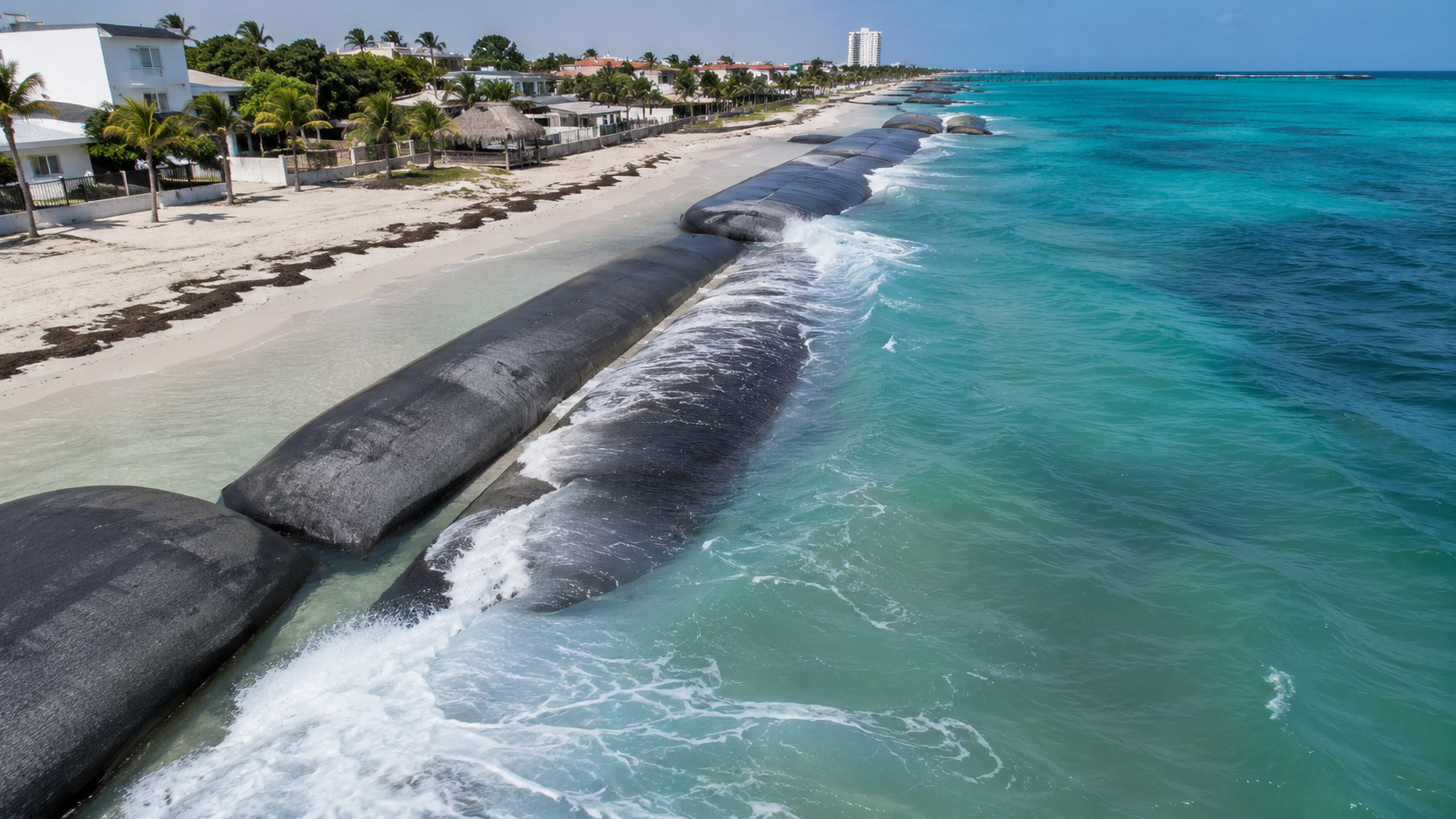

Yucatán used submerged geotubes with sand to reduce coastal erosion, restore beaches, and dissipate the force of waves in the sea.
The state of Yucatán, in Mexico, adopted a less visible solution to tackle coastal erosion on the northern coast: geotextile tubes filled with sand installed on the seabed as submerged breakwaters. Instead of erecting rigid concrete or stone structures above the water, the project opted for low-height barriers, almost always submerged, to reduce wave energy before impacting the beach.
The intervention was part of a beach rehabilitation program initiated in 2001 by environmental authorities in Yucatán. According to the study published in Geotextiles and Geomembranes, the geotubes were designed as low-crested submerged structures and, by September 2005, had already been installed along 4 kilometers of coastline.
Coastal erosion in Yucatán had been advancing for years and was pressuring a coastline highly sensitive to waves and hurricanes
The northern coast of Yucatán was described by researchers as a barrier island system highly dependent on the balance between waves, bathymetry, and sediment transport. In this environment, small changes in coastal dynamics can accelerate sand loss and disrupt the coastline.
-
Modern Liquid Porcelain Flooring Offers Seamless, High-Gloss Finish for Home Renovations Without Demolition

-
Brazilian Couple Builds Entire Cabin from Cement and Shade Cloth in Just 7 Days to Escape Renting, Using Affordable Farm Supplies Instead of Steel Mesh

-
Epoxy Paint Revolutionizes Bathroom Makeovers in a Weekend at a Fraction of Renovation Costs
-
Finnish Man Buys Unwanted Island for a Bargain, Builds Home with Seven Trees and €400 Roof, Lives Off-Grid with Family in -35°C



The study states that the permanent erosion of the region’s beaches intensified over about 15 years, mainly due to changes in coastal dynamics caused by human action. In some sections, the coastline regression was estimated at 1 meter per year or more, in an area also exposed to hurricanes crossing the Gulf of Mexico.
Sand-filled geotubes were installed as submerged breakwaters to restore beaches without erecting walls
To address this situation, engineers adopted woven polypropylene geotubes filled with sand. Once installed parallel to the beach, these tubes began to function as low-height submerged breakwaters, almost invisible when the sea is calm.
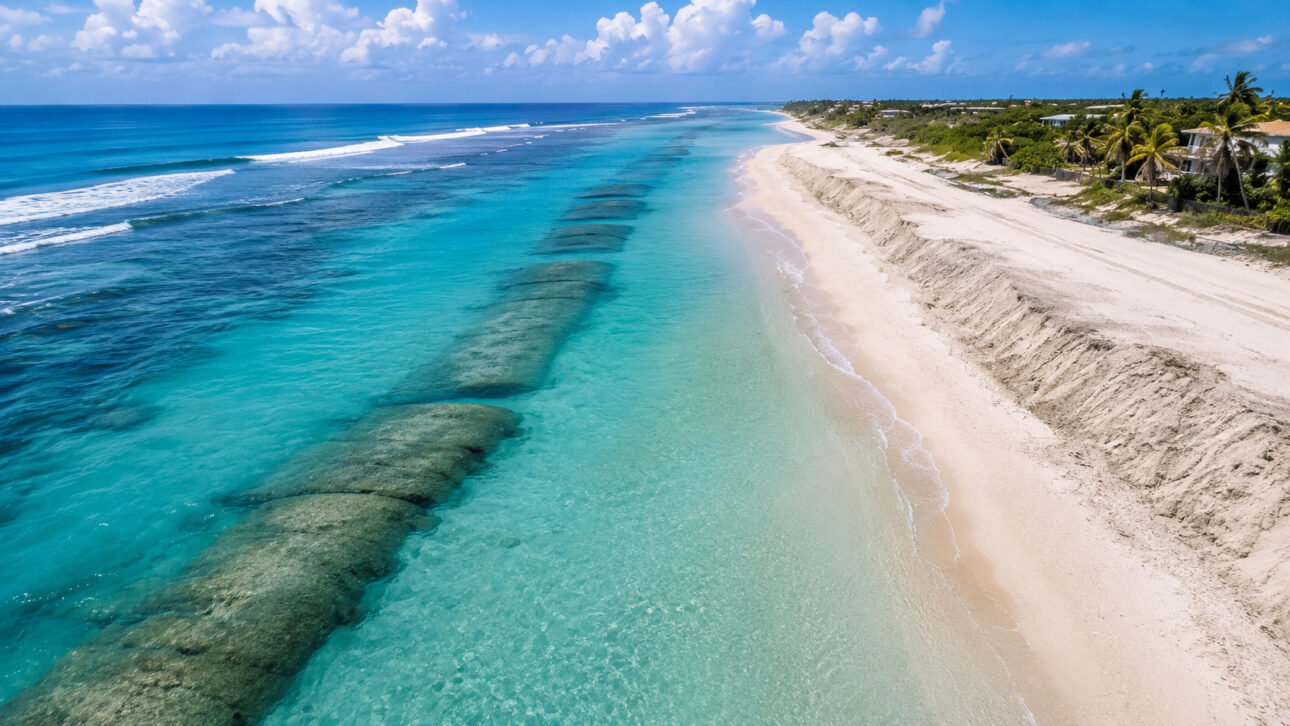
The logic of the project was different from more traditional coastal engineering. Instead of completely blocking the sea with rigid structures, the proposal was to create a flexible barrier, capable of working with the natural dynamics of the coast and minimizing negative interference on neighboring beaches.
The authors of the study highlight that the solution was designed precisely to avoid rigid structures and better absorb the physical changes of the environment. This flexibility was treated as an important advantage for a coastline subject to swells, storms, and constant changes in profile.
Submerged breakwaters reduced wave energy without interrupting the longitudinal transport of sediments
The central function of the geotubes was not to completely block the waves, but to control the breaking process before the energy reached the sand strip with maximum force. According to the science direct article, the goal was to reduce the incident energy to a level capable of maintaining the dynamic balance of the coastline.
At the same time, the project aimed to preserve the longitudinal transport of sediments, considered essential for the stability of the region’s beaches. The goal was to favor sand accumulation and rebuild a more balanced coastal profile, without interrupting the natural circulation that connects neighboring stretches of the coastline.

This strategy transformed the geotubes into a low-crested coastal engineering solution, aimed more at dissipating energy and inducing gradual beach recovery than imposing a rigid barrier against the sea.
Monitoring of beach recovery in Yucatán showed sediment accumulation and stabilization of the coastline
The science direct study reports that the performance of the first geotubes was monitored for at least 18 months after the initial installation. The monitoring evaluated both the response of marine processes and the behavior of geosynthetic materials over time.
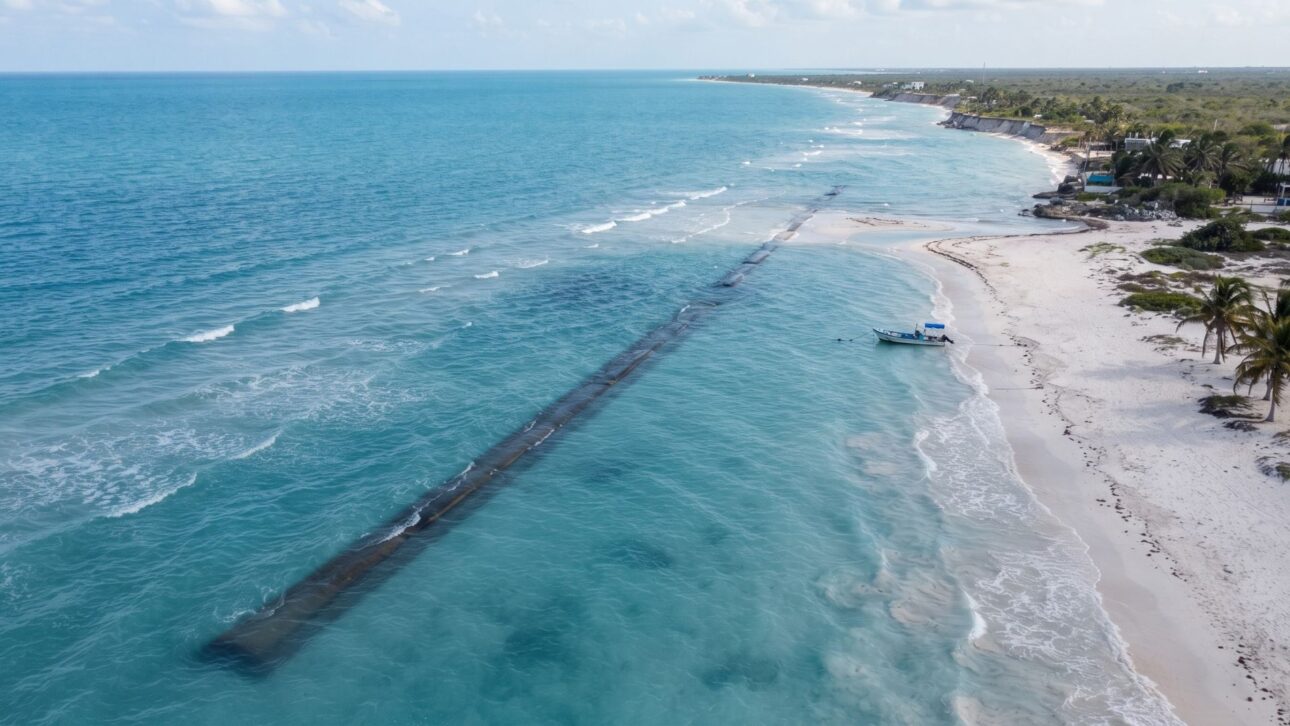
In the results presented by the authors of the study from Science Direct, the geotubes proved to be an effective and environmentally friendly alternative for coastal stabilization, inducing sand accumulation in protected sections and contributing to the gradual recovery of the beach.
The researchers also indicated the need to continue improving design, monitoring, and maintenance criteria. Even so, the case of Yucatán has become one of the technical examples of using geotubes for beach restoration and erosion control.
Use of geotextile tubes gained space in coastal protection and beach recovery projects in other regions
A scientific review published in The Scientific World Journal states that, in recent decades, geotextile tubes have been used in various parts of the world to prevent coastal erosion, stimulate artificial beach nourishment, and even assist in mangrove recovery.

In this context, Yucatán’s experience fits into an engineering line that seeks more flexible, modular, and less visible solutions than conventional walls and ripraps.
The technology does not alone eliminate all coastal erosion problems, but it has shown potential to integrate broader beach recovery strategies.