






 Portuguese
  Spanish


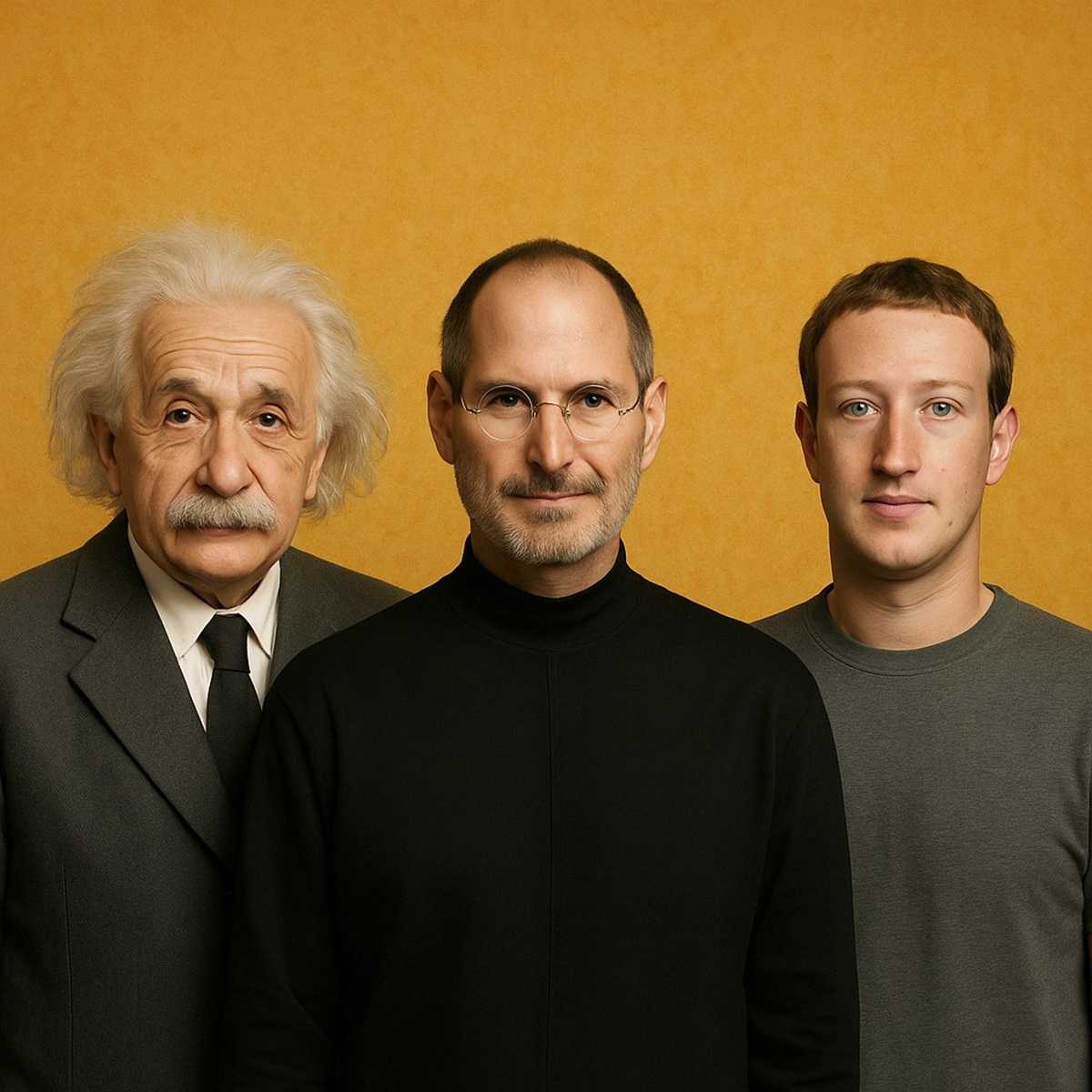
The Way We Dress May Seem Just a Matter of Style, But for Many Famous Names, Like Steve Jobs, Albert Einstein, and Mark Zuckerberg, Repeating Clothes Is More Than Just an Aesthetic Preference. It’s a Strategy to Preserve Mental Energy and Avoid So-Called Decision Fatigue, a Theory That Shows How Excess Choices Can Drain Our Ability to Think Clearly.
Steve Jobs and his famous black turtleneck, Albert Einstein with his gray suit, or Mark Zuckerberg with his hoodie are examples that draw attention.
The most important thing is that these great names seem to have found in repetition a way to alleviate the mind.
The daily choice of clothes, which may seem trivial, is directly linked to managing mental energy.
-
Couple Transforms School Bus into Mobile Home with Full Bathroom Using YouTube Tutorials, Invests $50,000

-
Chester County, USA, Achieves “Functional Zero” in Chronic Homelessness by 2026 with Housing First, Reducing Shelter Use by 52%

-
Brazil Extracts 12 Million Cubic Meters of Sand for Largest Beach Expansion Project, 82% Complete Along 8.8 km Coastline
-
Bosch Unveils Revolutionary 2.3 kg Hub Motor for E-Bikes with 45 Nm Torque and 400 Watts Power, Eliminating Resistance Above 25 km/h in Historic Shift for German Manufacturer



Why The Decision to Dress Tires The Mind
We make between 10,000 and 40,000 decisions a day.
From simple choices, like what to eat, to complex ones, like solving problems at work.
Each decision consumes energy. According to Bob Pozen, a professor at MIT and author of Extreme Productivity, the more energy we spend on unimportant tasks, the less we have left for what really matters.
Therefore, deciding what to wear is one less decision for someone who needs to focus on something bigger.
This logic is behind the concept of “decision fatigue.”
This theory, studied by psychologists, shows how the accumulation of small choices can tire the mind to the point of affecting important decisions.
What Is Decision Fatigue
The theory was developed by social psychologist Roy F. Baumeister. He states that the mind works like a muscle: the more decisions are made, the more tired it becomes.
This directly affects mental clarity and increases the chances of errors. Moreover, research confirms this effect.
A 2016 study published in PNAS observed that, after hours of decision-making, activity in the lateral prefrontal cortex decreases. This is a clear sign of mental fatigue.
The consequence is simple: with less energy, people tend to opt for less rational solutions.
Jobs, Einstein, Obama, and Zuckerberg
Steve Jobs always chose a standard outfit to avoid wasting time and energy on his wardrobe. “I don’t want to worry every day about what to wear, so I wear the same jeans and the same black sweater,” he told Walter Isaacson, the author of his biography.
For Jobs, every extra decision mattered. The simplicity of his clothing was a trick to keep focus on Apple’s innovation.
Einstein also had a similar routine. He often wore the same type of gray suit, white shirt, and slip-on shoes.
Barack Obama revealed something similar: he preferred to alternate only between gray and blue suits, precisely to avoid unnecessary decisions early in the day.
Mark Zuckerberg follows the same reasoning.
The gray hoodie has become his trademark. For him, the essential thing is to focus energy on managing his company.
How to Apply The Theory in Daily Life
Moreover, the theory of decision fatigue shows that simplifying choices can bring more productivity.
Wearing repeated clothes or a fixed pattern is a practical way to save mental energy. This helps to free up space for truly important decisions.
Therefore, the lesson is clear. By reducing the number of daily choices, it is possible to gain more focus, clarity, and energy to face challenges that require maximum attention.
Final Tips for Practical Life
To combat decision fatigue, experts recommend pre-organizing clothes or meals.
These small changes help reserve energy for activities that require creativity and planning. It’s a simple method but with visible results.
It’s not just about fashion. The strategy of Jobs, Einstein, or Zuckerberg is an example of how to reduce distractions to achieve greater goals.
It’s a choice that may seem small, but it makes all the difference in the final result.
Therefore, thinking less about the wardrobe may be the first step to thinking better about life’s big decisions.


Be the first to react!