






 Portuguese
  Spanish


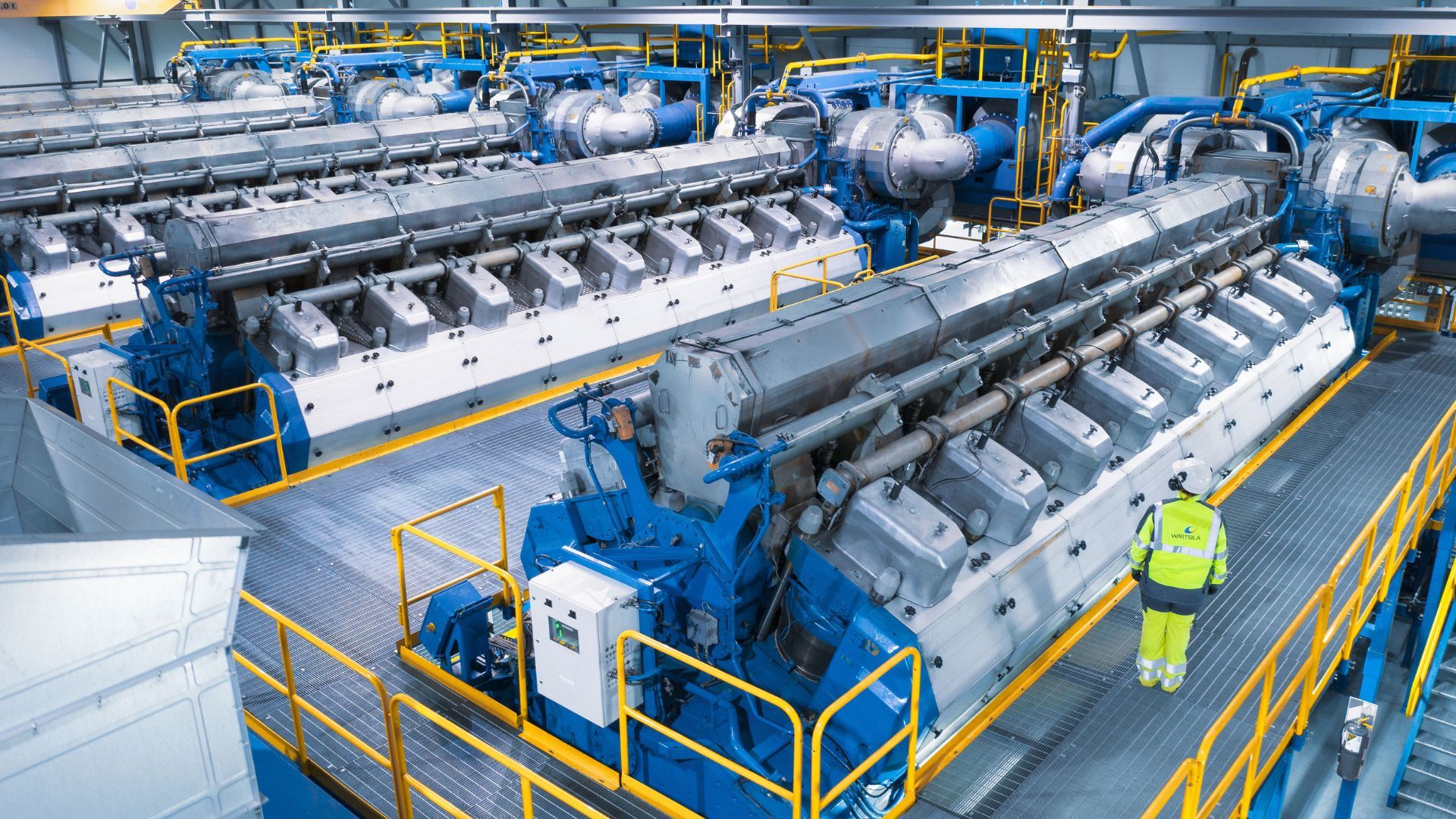

Suape Energia and the Finnish company Wärtsilä have completed, in Pernambuco, the implementation of the world’s first engine aimed at thermoelectric generation powered almost entirely by ethanol. The pilot plant, at the Suape II plant, has about 4 MW and now enters the testing phase in a real environment.
Brazil has just taken an unprecedented step in the use of ethanol beyond automobiles. Suape Energia and the Finnish company Wärtsilä completed, this Thursday (28), at the Suape Industrial Port Complex, in Pernambuco, the implementation of what they describe as the world’s first engine designed to generate electricity on a large scale powered almost exclusively by ethanol.
The project, named Project Ethanol, now moves from the implementation phase to testing in real conditions. The idea is to prove that ethanol, derived mainly from sugarcane, can become a dispatchable energy source, generated on demand, and help balance the power grid at a time when solar and wind are growing but depend on the weather. It is the first time that a thermoelectric plant of this type bets on biofuel.
How the ethanol engine at the Suape II plant works

According to interesting engineering, at the heart of the project is a modified Wärtsilä 32M engine, produced in Finland and adapted to run on Brazilian sugarcane ethanol. The pilot plant has an approximate capacity of 4 megawatts and is expected to consume about six million liters of biofuel over approximately 4,000 hours of testing, generating data on performance, reliability, emissions, and economic viability.
-
Award-Winning Japanese Restaurant Reveals It Has Preserved Part of the Same Frying Oil for 66 Years

-
American Youth Transforms from Severe Obesity to U.S. Air Force Enlistment, Losing 90 Kilograms in Two Years
-
11-Year-Old Entrepreneur Sells 60 Homemade Sweets Daily, Mastering Cost Calculation, Social Media Promotion, and Client Negotiation Since Age 7

-
Peruvian Mountain’s 5,200 Aligned Holes May Unveil Ancient Indigenous Market for Corn and Cotton


The equipment was installed next to the UTE Suape II, the largest fuel oil thermoelectric plant in Brazil, with an installed capacity of 381.2 MW. The initial investment is around R$ 60 million, and the supply of ethanol is already being negotiated in an advanced agreement with Vibra Energia. It is worth remembering that Wärtsilä had already conducted laboratory tests with alternative fuels, but had never put an ethanol-powered plant into real operation.
Why transforming sugarcane into electricity interests Brazil
The country starts from a privileged position. Brazil is the world’s largest producer and consumer of sugarcane ethanol and has invested decades in production, storage, and transportation infrastructure for the fuel. The problem, until now, is that almost all of this was aimed at the transport sector, with little attention to the potential of ethanol in electricity generation.
For Suape Energia’s technical director, José Faustino Cândido, Brazil leads production but has been neglecting the use of ethanol to generate electricity. According to him, the great advantage of biofuel over other energy transition alternatives is precisely that it already has a consolidated production chain, ready logistics, and wide availability. If the technology succeeds, it could open a new market for the sugar-energy sector and strengthen national energy security.
Dispatchable energy: the problem ethanol wants to solve
The great challenge of modern electrical grids is to combine reliability and decarbonization. Solar panels only produce when there is sun, and wind turbines depend on the wind. Batteries help cover some of these gaps, but long-term storage is still expensive in many markets, which opens up space for low-carbon fuels that can be stored and used when demand rises.
This is where ethanol comes in. Wärtsilä argues that biofuels are transportable, storable, and compatible with existing generation engines, which facilitates adoption. According to the International Energy Agency’s net zero emissions scenario, bioenergy should grow significantly by 2030, as countries seek ways to cut emissions without losing grid stability, a role that a flexible thermoelectric plant can fulfill.
What’s at stake and the next steps
The phase that begins now is the most important: proving the technology outside the laboratory. The focus will be to validate the performance of the engine in power generation, demonstrate economic viability, and discover if ethanol can indeed become a practical option for future electrical systems. The project, in Suape, has the potential to expand to up to 600 MW, enough to serve more than 2 million families.
Among those involved, the tone is optimistic. The administrative director and representative of Petrobras, a minority shareholder, Giane Ferreira Moreira, advocates for ethanol generation as clean, stable energy that creates jobs, while the leader of Suape, Armando Monteiro Bisneto, sees Pernambuco as a reference in the sector. Still, caution is warranted: nothing guarantees that ethanol will become a major fuel for electricity generation, and this will only be answered after thousands of hours of testing and proof that the numbers add up economically.
Using sugarcane ethanol not only in cars but to light up millions of homes is the kind of bet that could redefine the Brazilian electricity matrix if it comes to fruition.
Tell us in the comments if you believe that ethanol energy generation will take off or if the future truly lies in solar and wind.


