Portuguese
  Spanish


STF Decides in Theme 1335 That Precatories Must Be Adjusted by IPCA-E During Grace Period, Increasing Amounts Owed to Federal Employees and Creditors.
The Federal Supreme Court (STF) recently ruled on the Theme 1335 of general repercussion, which addresses the method of adjustment of federal precatories during the so-called grace period. This period corresponds to the interval between the registration of the precatory and the start of the deadline for its payment by the Union, States, or Municipalities. The decision is historic: the STF defined that the Selic rate does not apply during this interval. Instead, the adjustment must be made exclusively by the IPCA-E (Broad Special Consumer Price Index), an inflation indicator calculated by the IBGE.
This change may seem technical, but it has a direct impact on the pocketbooks of thousands of creditors and public employees, as it alters the final amount received when the precatory is paid.
Why This Decision Matters
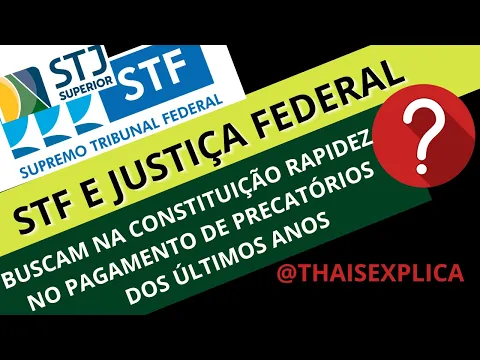

Brazil currently has one of the largest public debts with precatories in history, amounting to hundreds of billions of reais nationwide.
-
Dismissing a retired worker or one eligible for retirement constitutes ageism and creates a duty to compensate: a unanimous decision by the TRT mandates reinstatement to employment, payment of back wages, and upholds compensation of R$ 15,000 for discrimination.

-
Work less and produce more? Nobel Prize in Economics explains why shorter workdays can increase productivity

-
Unions are growing again in Brazil after more than a decade, but they face an urgent challenge to win back digital workers and maintain relevance.
-
From the typewriter to the home office: how work has changed and why new generations think differently



Precatories represent judicial debts that the Union and other public entities are required to pay after final convictions.
Until now, there was disagreement on which index should be applied to adjust these amounts between registration and effective payment. Some advocated for the Selic rate, which combines monetary correction and interest. Others argued that the correct approach would be only correction by inflation, via IPCA-E.
With the ruling of Theme 1335, the STF settled the issue: only the IPCA-E should adjust the precatory during this initial period, without the addition of the Selic.
The Impact for Employees and Creditors
For many creditors, the decision may mean higher amounts at the time of payment, as the IPCA-E guarantees full monetary adjustment for inflation.

Practical Example:
- A public employee entitled to R$ 200 thousand in precatories registered in 2022 may see this amount updated based on the inflation accumulated until the payment begins.
- Depending on the period and the index, the difference can reach thousands of reais more compared to the previous calculation.
Lawyers involved in precatory cases emphasize that the decision provides legal certainty and standardizes the calculation throughout the country, avoiding prolonged disputes in lower courts.
What Is the Grace Period
The “grace period” is the time frame allowed by the Constitution for the public entity to organize itself and include the precatory in the following year’s budget.
- Precatories registered by July 1 of each year must be paid by December 31 of the following year.
- This interval is called the grace period, which can last from 6 to 18 months, depending on the registration date.
During this time, the value of the precatory needs to be adjusted, and the choice of index directly impacts the final amount that the creditor will receive.
The Position of the STF
In the ruling, the STF ministers understood that the application of the Selic rate would be unjustified during this interval since the index already includes default interest, which can only apply from the expiry of the payment deadline.
Thus, the decision established the following thesis:
“In the period between the issuance or registration of the precatory and the end of the constitutional deadline for its payment, the monetary adjustment is exclusively by IPCA-E.”
This understanding applies to all ongoing processes, as Theme 1335 was judged under general repercussion, meaning it applies nationwide.
Reflections on the Economy and Public Accounts
For creditors, the decision is positive as it ensures the preservation of the real value of credit, avoiding inflationary losses.
For the government, on the other hand, the measure may increase the total amount of debt with precatories, further pressuring public accounts.
In 2023, the Union allocated more than R$ 45 billion for the payment of precatories. With the STF’s decision, this figure may increase in the coming years, depending on the accumulated inflation.
What Creditors Should Do
Holders of federal precatories should stay alert:
Verify the calculations: check if the adjustment is being made by IPCA-E, as determined by the STF.
Seek legal guidance: in case of errors, it is possible to contest the presented calculations in court.
Monitor deadlines: remember that the grace period may vary and impact the adjusted value.
Specialized lawyers highlight that in many cases, the calculations made by the Treasury are contestable, and the STF’s decision strengthens the position of creditors in potential challenges.
A Milestone for the Adjustment of Precatories
The ruling of Theme 1335 in the STF represents a milestone for creditors of precatories in Brazil. From now on, there is no doubt: the amount owed will be adjusted exclusively for inflation, via IPCA-E, until the constitutional payment deadline.
This decision reinforces the protection of citizens who have waited years for a judicial decision and ensures that the credit maintained by the government does not lose value against inflation.
For thousands of employees, retirees, pensioners, and companies that are creditors of the Union, this change may mean thousands of reais difference at the time of receiving the precatories.
The message from the Supreme Court is clear: the adjustment must preserve the purchasing power of the creditor, ensuring fairness and balance in one of the largest debts of the Brazilian state.