






 Portuguese
  Spanish


In Thorne, England, the couple Gwyn ap Harri and Kate bought a 1920s abandoned cinema for 90,000 pounds and spent 450,000 to turn the old projection room into a home. The audience area was replaced by a garden, connected to the room by a hydraulic window about 4 meters high.
Few would look at an abandoned cinema and see a home. That’s what an English couple did by purchasing the old cinema in the town of Thorne, in northern England, for 90,000 pounds and transforming it into a modern home for the family. The story became famous on the architecture program Grand Designs and was detailed by the Grand Designs Magazine.
The project was as bold as the starting point. From the original 1920s structure, the couple kept only the facade and rebuilt the entire interior in concrete, in a renovation that cost 450,000 pounds, well above the budget. The result is a house that almost no one imagines exists behind an old cinema marquee.
The two most impressive details summarize the audacity of the work. The audience area where the seats once were became a large garden, and the living room opens to this backyard through a hydraulic window about 4 meters high, which functions like a hangar door. It is an unlikely dwelling born from a building doomed to oblivion.
-
Cost of Installing Electric Fences in 2026: Price Per Meter and Factors Affecting Installation

-
Retired Builder Constructs House Using Over 4,000 Milk Cartons in Brazil, Engineer Estimates Structure Could Last 100 Years

-
Concrete-filled PVC homes could be cheaper than traditional masonry, UPF research finds; with ready modular panels, less waste, and faster construction, the Concrete-PVC system aims to cut costs and transform affordable housing in Brazil.
-
Brazilian House Built with 32.8 Tons of Construction Debris Offers Affordable Housing Solution



How the couple found the abandoned cinema in Thorne
The discovery began at home, in the couple’s hometown. Entrepreneur Gwyn ap Harri and his wife, Kate, were looking for a larger property in Thorne, South Yorkshire, England, and mainly wanted a spacious backyard and an open living space. Instead of a common house, they noticed that the old cinema in the town had enormous potential.
The building carried history and abandonment in equal parts. It was the old Kensington Palace Cinema, which had its heyday in the 1920s and then fell into oblivion, like so many neighborhood theaters across England. Buying it meant, at the same time, saving a local landmark and fulfilling the family’s desire for more space.
The negotiation resulted in a bargain price. According to the Grand Designs Magazine, the couple acquired the cinema for just 90,000 pounds in February 2011. For a property of that size, it was a low price, precisely because the building was degraded and would require a major intervention to become anything habitable.
The motivation went beyond money. According to the newspaper YorkshireLive, the idea of transforming the old cinema into a home also had the appeal of rescuing a piece of the city’s memory and offering the children a large backyard, something hard to find in traditional properties. The risk, however, was proportional to the ambition.
From 1920s Cinema to Modern Home
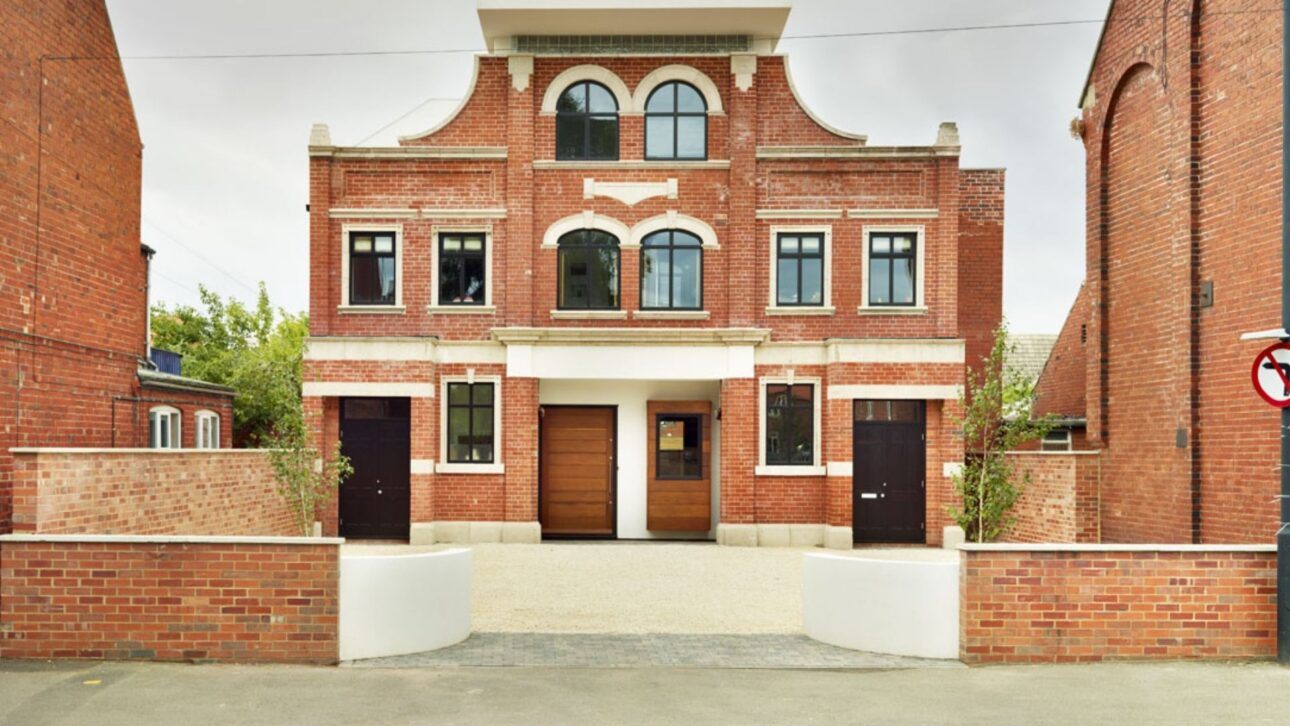
The first major decision was what to preserve. The couple hired designer Jeremy Southgate, an old school friend of Gwyn, based in London, to lead the project. His proposal was radical: keep only the original 1920s facade and demolish and rebuild the entire interior of the cinema.
The concept was based on a minimalist and contemporary look. Southgate envisioned a house with modern lines, dominated by exposed concrete, in stark contrast to the preserved old facade at the front. On the outside, the building still resembles the old cinema; on the inside, it is a completely new construction full of personality.
This type of approach divides opinions but has logic. Retaining the historic facade maintains the property’s identity and connection with the street, while the rebuilt interior allows for the creation of exactly the spaces the family wanted. The renovation, in this sense, was almost like surgery: preserving the shell and redoing the heart of the building.
The old lobby gained a new function right at the entrance. The foyer, where the public bought tickets and entered for the sessions, became a spacious hall that distributes circulation to the kitchen, dining room, and living room. Each space that once served the cinema was reinterpreted for domestic life.
The Audience That Became a Garden
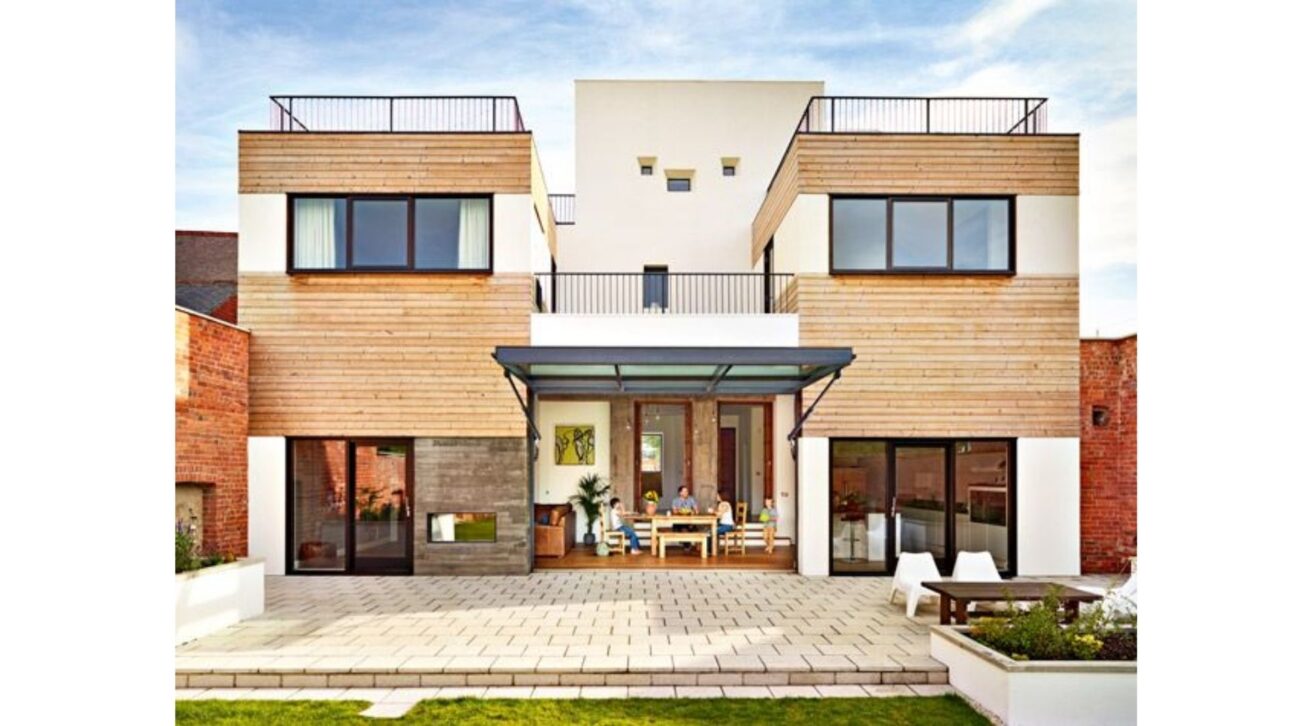
The heart of the project is where the audience used to be. The seating area, with its rows of chairs facing the screen, was completely emptied and transformed into the backyard of the house. Where the city once watched movies, today Gwyn and Kate’s family cultivates an outdoor garden.
The choice fulfilled the couple’s main desire. It was precisely the spacious backyard that was missing in the common properties of Thorne, and the generous area of the former seating offered this ample space. The void left by the demolition of the internal bleachers was converted into a large green area, rare in urban homes.
There is also a beautiful symbolism in this transformation. The place made to gather people in the dark, in front of a screen, became an open space, illuminated by the sun, aimed at family togetherness. The cinema did not disappear: it transformed into another type of meeting point, now private and outdoors.
This use of space is what gives meaning to the work. Instead of squeezing a small backyard into some corner, the project used the building’s own logic, the enormous cinema hall box, to create the garden. Thus, the house inherited the generous proportions that only an old cinema could offer.
The 4-meter window that opens the living room
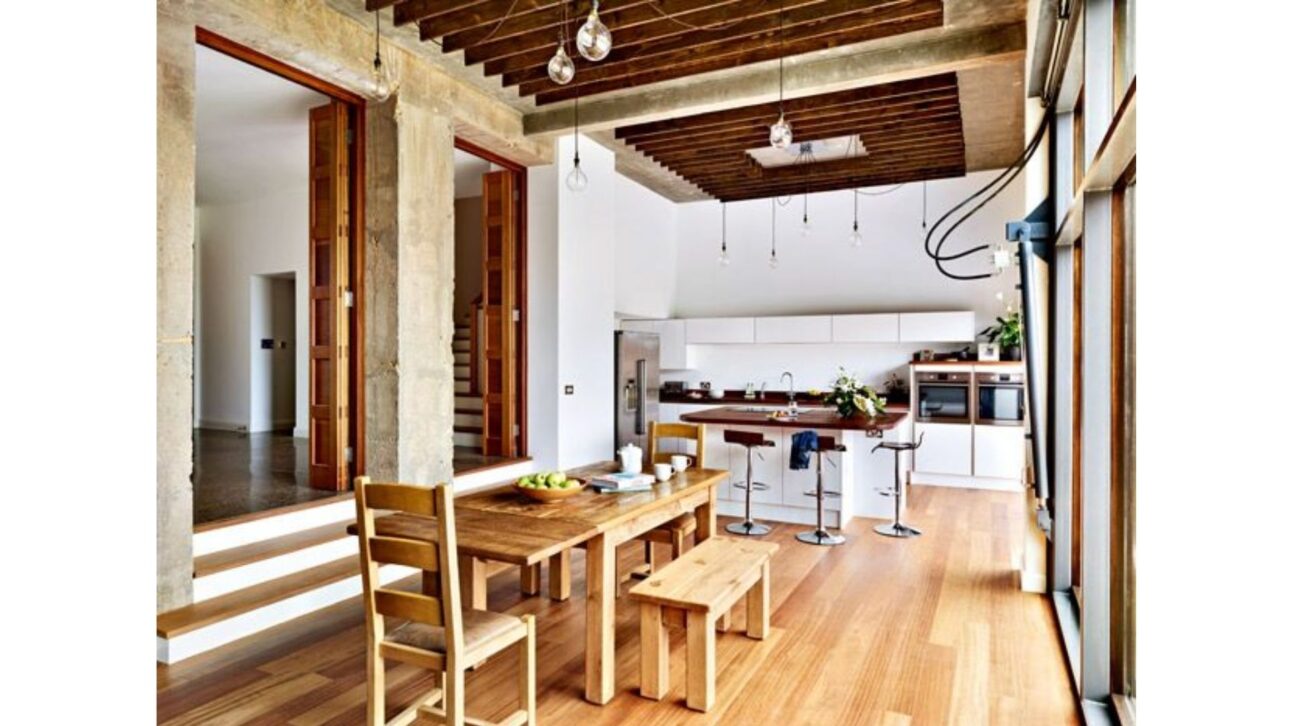
The link between the house and the garden is the star of the renovation. The living room connects to the former audience space through a huge hydraulic glass window, about 4 meters high, which the publication itself compares to an airplane hangar door. When activated, it erases the boundary between inside and outside.
The effect is as practical as it is impressive. According to Grand Designs Magazine, the window is opened most days, fully integrating the living room with the garden and creating a single large living space. Instead of a wall with a regular window, the family gains an internal facade that disappears when desired.
This type of solution is a hallmark of contemporary architecture. Large movable glass panels blur the boundaries between the house and the outdoor area, bring natural light inside, and give a sense of spaciousness. In the case of the old cinema, the giant window still dialogues with the monumental scale the building always had.
Not by chance, this detail is what most impresses those who visit the house. A 4-meter window that moves like a hangar door is the kind of element that transforms a good renovation into a memorable project. It encapsulates, in a single piece, the entire ambition of converting a cinema into a home.
How much the renovation cost and the challenges of the project
The budget was the main villain of the endeavor. The purchase of the cinema was cheap, at 90,000 pounds, but the renovation consumed 450,000 pounds, about 100,000 above the initial estimate. Transforming a ruin into a modern home almost always costs more than planned, and it was no different here.
Bureaucracy also took its toll in time. Obtaining the authorization for the works took about eight months, instead of the eight weeks the couple expected. This type of delay, common in old buildings and local landmarks, pressures the schedule and usually pushes costs up.
Renovations of this magnitude require financial and emotional stamina. Those who buy a degraded property to rebuild need to be prepared for structural surprises, project changes, and extra expenses that arise along the way. The story of Thorne’s cinema is, in this aspect, a realistic portrayal of what a major conversion involves.
Even so, the investment created something difficult to compare. For a total of 540,000 pounds combining purchase and work, the couple not only gained a house but a unique property, with history, unusual scale, and solutions that would hardly exist in a conventional construction. The result helps to understand why so many people take risks on this type of project.
What Grand Designs and Kevin McCloud said
The couple’s boldness caught the attention of British television. The project was followed by the program Grand Designs, from the British channel Channel 4, a world reference in architecture and ambitious renovations, in an episode aired in 2013. The presence of the cameras turned Thorne’s work into a well-known case far beyond the city.
The presenter summed up the size of the risk well. Kevin McCloud, the face of Grand Designs, described the couple as “remarkably brave” for trusting the designer’s radical vision and betting on keeping only the facade of the old cinema. The phrase captures the nervousness of those who bet high on a property full of unknowns.
The chosen aesthetic has clear inspirations. The interior in exposed concrete, with marks of the wooden molds on the surface, was compared to the brutalist look of the National Theatre in London. Even the old terrazzo floor of the cinema was replaced by an aggregate coating, reinforcing the raw and modern character of the house.
This accompaniment helps to explain the project’s fame. By showing step by step the difficulties and design choices, Grand Designs turns renovations like Thorne’s cinema into a reference for those who dream of doing something similar. The house became an example often cited whenever the subject is the daring conversion of old buildings.
Why has transforming old buildings into homes become a trend?
Thorne’s case is not an outlier. Around the world, the number of people buying unused buildings, such as churches, schools, banks, water towers, and even power substations, to turn them into homes is growing. This movement has a technical name: adaptive reuse, or retrofit, the art of giving a new function to an old construction.
The reasons for this are practical and emotional. Such properties usually have good locations, robust structures, and a personality that new constructions rarely achieve, with high ceilings, large spans, and historical details. For many people, living in an old cinema or an old factory is also living within a story.
There is also an increasingly strong environmental argument. Reusing an existing building avoids demolition and the waste of tons of material, besides saving a good portion of the emissions linked to building from scratch. In times of concern for sustainability, renovating what already exists has become a responsible choice, not just an aesthetic one.
Several of these projects have become classics of world architecture. In England, it is common to find old chapels, deactivated train stations, and water towers converted into high-standard residences, some awarded for their design. Worldwide, there are banks that have become restaurants, churches transformed into bookstores, and industrial warehouses that house highly sought-after lofts. The old cinema of Thorne joins this list of constructions that gained new life instead of becoming rubble, proving that almost any building can be reimagined.
The challenge, of course, lies in the costs and surprises. As the cinema renovation shows, transforming a ruin into a home requires money, patience, and good professionals, because hidden problems always arise. When it works, however, the result is a house that no other in the block can replicate.
What this has to do with Brazil
Brazil is well aware of the drama of cinemas that have closed. Between the 1970s and 2000s, thousands of street theaters closed their doors in the country, defeated by the competition from television, video, and shopping malls. Many of these buildings, once the pride of cities, were left empty or hastily adapted for other uses.
The fate of these theaters is often very Brazilian. Across the country, old cinemas have become churches, stores, parking lots, gyms, and even evangelical temples, in renovations that do not always preserve the memory of the place. Thorne’s story shows a different path: transforming the theater into a home while maintaining at least the facade and identity of the building.
There are good examples of reconversion here. In several cities, mansions, factories, and historic cinetheaters have been recovered and transformed into cultural centers, restaurants, hotels, and residences, in a retrofit movement gaining strength in major capitals. The reuse of old heritage is also a trend in urban Brazil.
The topic enters the debate about the future of cities. With so many vacant properties in urban centers, the discussion about transforming empty buildings into housing is growing, especially in São Paulo and Rio de Janeiro, where old buildings have already been converted into apartments. In this scenario, the English case of the cinema becomes a concrete reminder that forgotten structures can once again house people, instead of just collecting dust in the middle of the city.
For Brazilians, the lesson is twofold. On one hand, the case inspires us to look at abandoned buildings with new eyes, which can become housing, culture, or business instead of dust. On the other hand, it reminds us of the importance of preserving the memory of cities, finding a new dignified use for these properties, like the couple who now lives inside an old cinema.
And you, would you live inside an old cinema?
The story of the Thorne couple shows that a condemned building can be reborn as a home. For 90 thousand pounds in purchase and 450 thousand in renovation, Gwyn and Kate transformed a cinema from the 1920s into a concrete house where the audience became a garden and a 4-meter window opens the living room to the backyard. An unlikely dwelling that became an architectural reference.
And you, would you have the courage to live inside an old cinema or another building with history? Share in the comments what you think of this transformation and what type of abandoned construction you would like to see turned into a house around here.


