Portuguese
  Spanish


Saudi Arabia has permanently suspended Trojena — the ski resort in the mountains of Tabuk that was to be the centerpiece of the NEOM megaproject and host the 2029 Asian Winter Games — in a decision that reveals the size of the gap between the mega-ambitions of Vision 2030 and the budgetary, technical, and physical reality of building a ski resort in the middle of the Arabian desert at forty-four degrees north latitude.
What was Trojena and why the whole world was watching
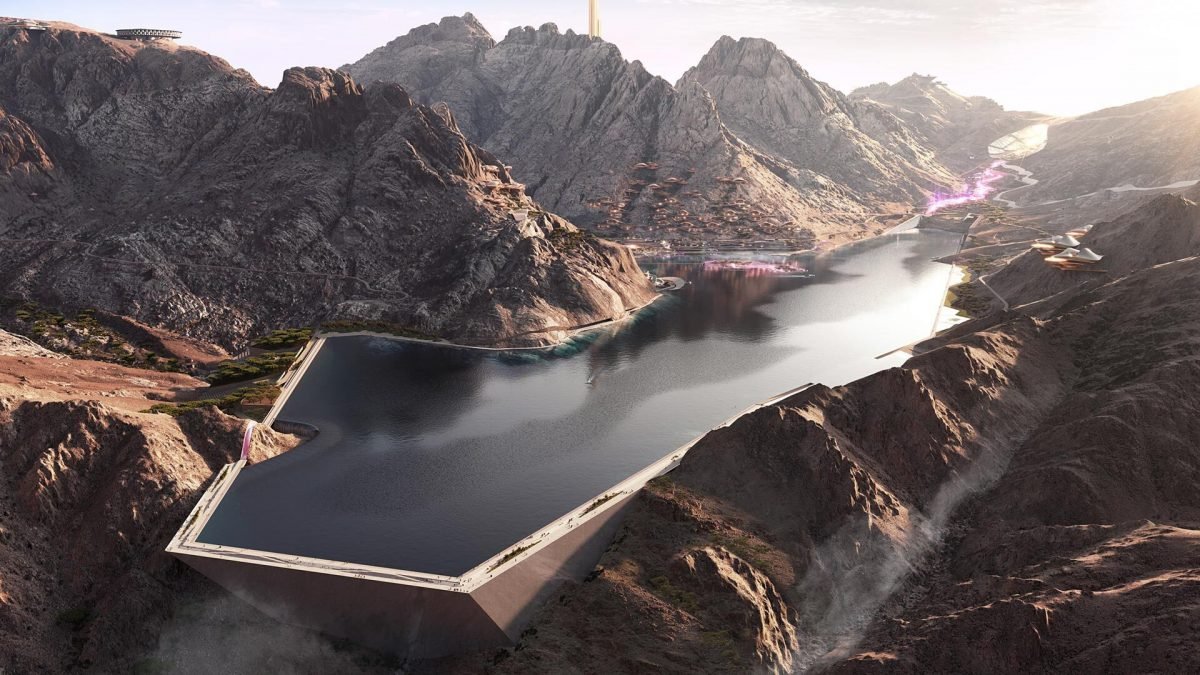
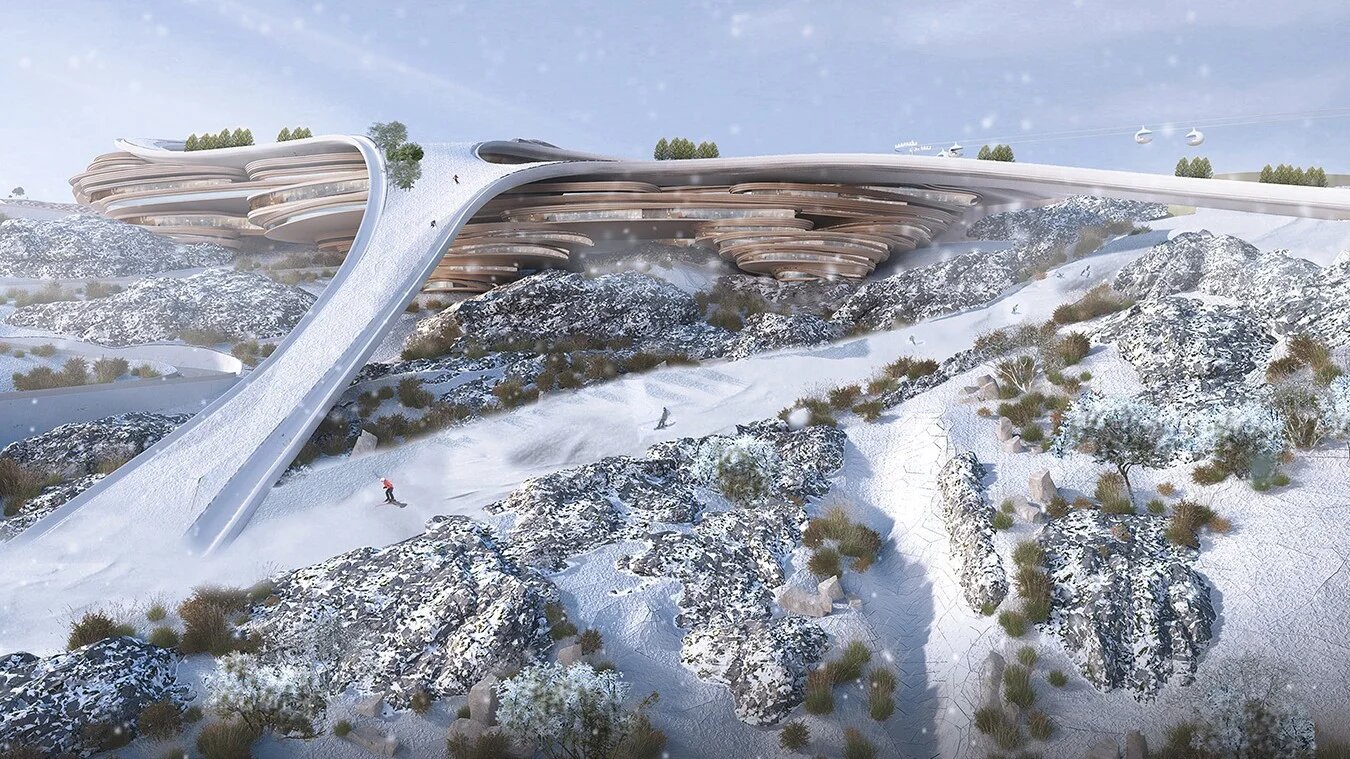
Trojena was the most daring promise of a project that was already itself a daring promise. In the mountains of Tabuk, northwest of Saudi Arabia, where temperatures reach zero degrees in winter and occasional snowfalls have naturally occurred, NEOM planned to build a mountain resort with ski slopes, an artificial freshwater lake, ultra-luxury hotels, cable cars, and facilities for the 2029 Asian Winter Games.
The renderings were spectacular: organic structures embedded in the rock, infinity pools overlooking the Red Sea, cable car cabins over granite valleys. The estimated cost ranged between 4 and 7 billion dollars just for Trojena — within a NEOM that promised to consume 500 billion dollars in total by 2030.
The Asian Olympic Committee elected Trojena as the host of the 2029 Asian Winter Games in 2022, a decision that already generated skepticism at the time. Never in the history of the Asian Games had a host been chosen without a single existing ski slope at the location.
-
Street Vendor Builds Her Own 15m² House in Kenya Using Mushroom Root Panels, Spending Only $208 on Walls Compared to $1,000 for Traditional Bricks

-
At 42, She Left Greater Buenos Aires for a Mountain, Built a 30m² Hexagonal House with Adobe and Straw, and Now Constructs Homes for Other Families
-
Couple Transforms 1920s UK Cinema into Garden with 4-Meter Window After $450,000 Renovation
-
Cost of Installing Electric Fences in 2026: Price Per Meter and Factors Affecting Installation


What was revealed that made the project impossible
Three problems accumulated irreversibly. The first is the snow: the mountains of Tabuk receive natural snowfalls sporadically — less than ten days a year on average, and only at the highest altitudes above 2,500 meters. To keep ski slopes operational during the Games, NEOM would have to use artificial snow cannons on an industrial scale — in the middle of the desert, with temperatures rising above 30 degrees Celsius during the day even in winter.
The second problem is water: artificial snow consumes enormous volumes of water. In a region already facing severe water scarcity and relying on desalination for most consumption, using treated water to make artificial snow was indefensible even by the flexible standards of Vision 2030.
The third problem is cost: the construction of THE LINE — the 170-kilometer-long skyscraper that is the most emblematic project of NEOM — has already consumed tens of billions without completing even 2% of its planned length. The Saudi Public Investment Fund began to prioritize projects with more realistic financial returns, and Trojena was left at the end of the line.
What happens with the 2029 Asian Games
The Asian Olympic Committee has not yet officially announced the relocation of the games, but negotiations are underway with at least three alternative countries — Japan, South Korea, and Kazakhstan, all with existing ski infrastructure and a history of organizing winter competitions.
For Saudi Arabia, the loss of the Games is a public relations blow, but it is not the end of winter sports in the country. Indoor skiing — on artificial, climate-controlled slopes — is rapidly expanding in the Gulf: Ski Dubai in the Mall of Emirates is already one of the largest indoor slopes in the world, and Abu Dhabi has Snow Abu Dhabi. The indoor version of Trojena may come before any outdoor slope.
We’ve seen this happen with other grandiose projects that hit the wall of physics and economics. The Nicaragua Canal promised to connect the two oceans and was abandoned after billions were spent. The floating city project in the Pacific was shelved after years of marketing. Trojena joins this list — but NEOM itself still exists, still has money, and is still building.
What the cancellation reveals about NEOM
NEOM is undergoing a silent and systematic review of its most ambitious projects. THE LINE has been reduced from 170 kilometers to a pilot of a few kilometers. The floating city Sindalah has been postponed. The mountain-resort Leyja has been redesigned on a smaller scale. What is actually being built are projects with closer commercial returns: hotels, marinas, port facilities, energy infrastructure.
This does not mean the megaproject is dead — it means it has come into contact with reality. And the question remains that no one in Saudi Arabia will answer publicly: how much of the money spent on Trojena so far will have any return?
Read also: Australia that built an airport from scratch in the middle of nowhere | the mega-projects that Brazil rushes to finish.
Do you think projects like NEOM are a legitimate vision of the future or a grandeur illusion that doesn’t withstand the test of reality? Comment below.