Portuguese
  Spanish


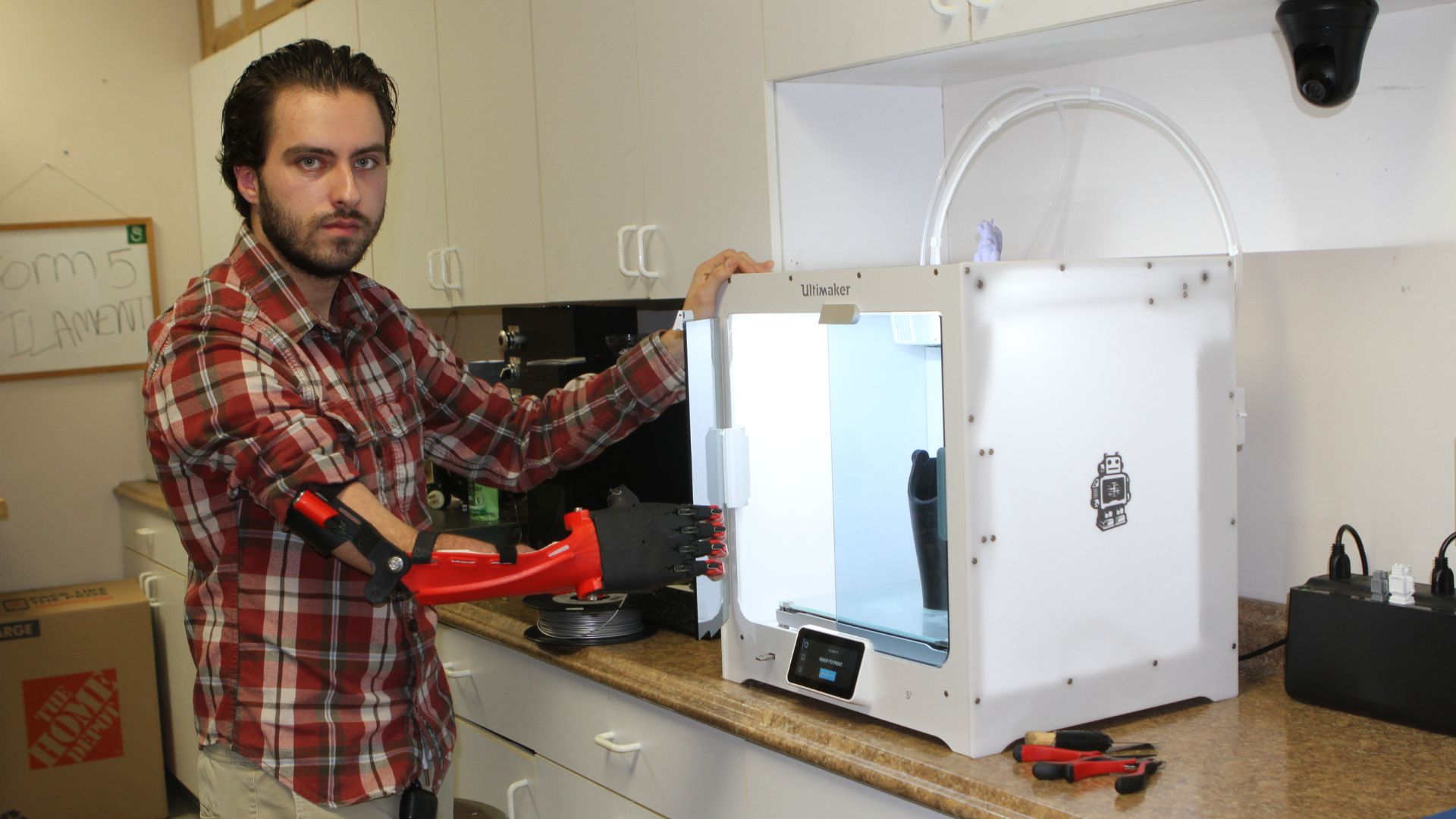

Aaron Westbrook created 3D-printed prosthetics with recycled plastic, reduced costs, and expanded access to customized assistive technology.
As a teenager, Aaron Westbrook received his first prosthetic and directly realized a problem affecting thousands of people: the high cost of traditional devices. Born without part of his right arm, he described the equipment as expensive, uncomfortable, and limited for practical routine, in a scenario where upper limb prosthetics can cost from $5,000 to tens of thousands of dollars, and in some cases reach the range of $40,000.
Instead of accepting this barrier, Westbrook decided to develop his own alternative. With a 3D printer, instructions found online, and plastic waste collected in the school environment, he began creating prototypes and later transformed this experience into Form5 Prosthetics, an organization founded in 2017 to develop customized solutions for people with limb differences.
How Aaron Westbrook used 3D printing and recycled plastic to create lighter, more accessible, and customized prosthetics
According to Ohio State University, one of the first models produced by Westbrook was made with discarded plastic from the school cafeteria.
-
Climate Scientist Who “Proved” Humanity Is Warming the Earth

-
NASA Targets Saturn’s Icy Moon Titan as a Waystation for Interplanetary Travel, Utilizing Its Resources for Fuel and Astronaut Support

-
Researchers Revolutionize Nanotechnology with Rocket-Inspired Modular Nanorobot for Efficient Microscopic Missions
-
Farmer in Ireland Discovers Intact Bronze Age Tomb While Moving Stone on His Land





The prosthetic had a lightweight structure, movable fingers, and an estimated cost of about $40, a huge difference compared to the prices charged in the traditional market.


The price comparison helps explain why the initiative drew attention. Fast Company reported that the conventional prosthetic used by Westbrook cost around $40,000, a price that weighs even more when the user is young and may need to replace the device as the body grows.
3D printing changed this logic by allowing faster production, custom adjustments, and less material waste.
In Westbrook’s case, the technology went beyond being just a manufacturing tool and became a concrete path to expanding access to functional prosthetics.
Form5 Prosthetics transformed a personal experience into customized prosthetics for real everyday needs
The project’s evolution went beyond a school experiment. Ohio State reports that by the end of high school, Westbrook was already using his 3D printer to customize an arm for a 7-year-old girl, work that became the first prosthetic of Form5 Prosthetics.
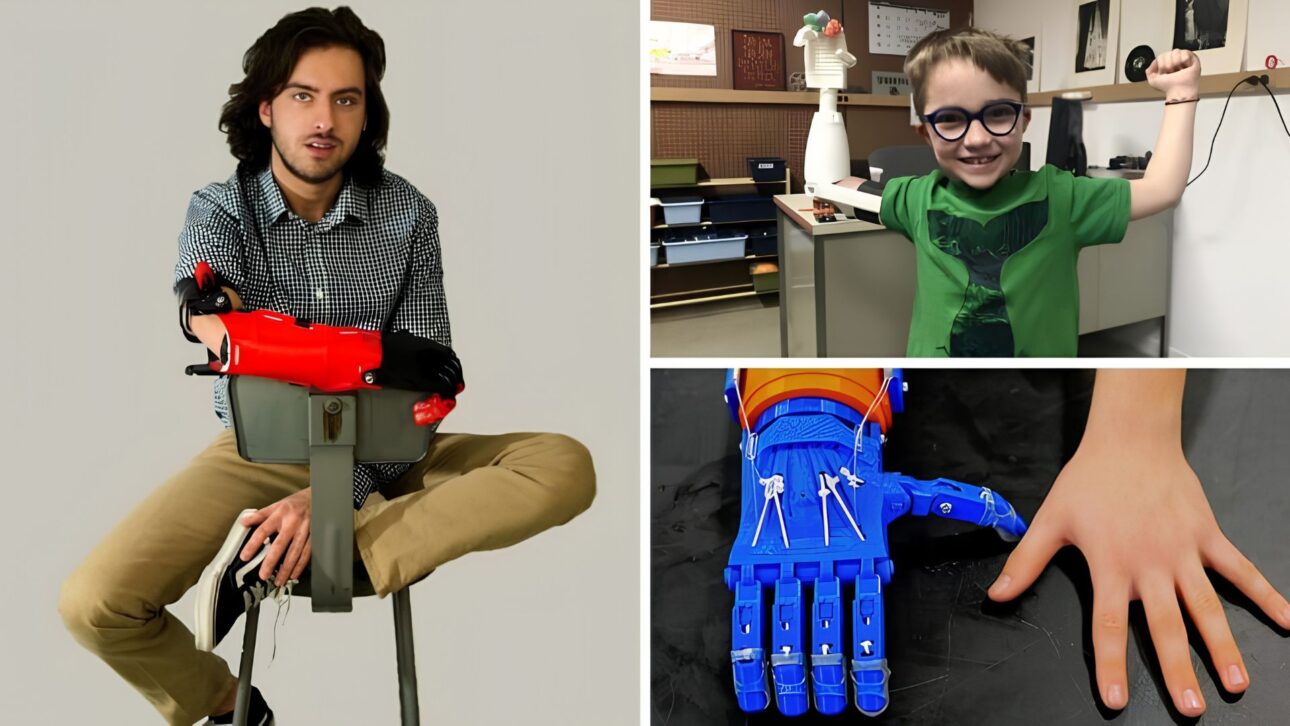
The organization’s proposal is not limited to reproducing a standardized artificial arm. Form5 itself states that it was born with the mission to develop solutions that help people with limb differences interact better with the world through customized and specifically applied products.
This functional focus also appears in examples already reported by Ohio State. The institution records that Form5 developed devices capable of assisting users in activities such as bowling and playing instruments, showing that customization can be as important as price reduction.
High cost of traditional prosthetics opened space for low-cost assistive technology with 3D printing
The story gained traction because it addresses one of the main barriers in the assistive technology sector: the price. When a prosthetic costs thousands or tens of thousands of dollars, access becomes restricted and replacement becomes especially difficult for children, teenagers, and families with limited budgets.
In this scenario, digital manufacturing offers a decisive advantage. 3D printing allows for adapting parts, reducing production steps, and responding more quickly to the practical needs of the user, instead of relying solely on long, expensive, and inflexible processes.
Westbrook also began advocating a critical view of the sector, arguing that many traditional prosthetics are neither practical nor accessible enough for everyday life. This personal experience helped establish Form5 as an example of innovation applied to a real problem of cost, comfort, and functionality.
Recycled plastic, circular economy, and 3D printed prosthetics reinforced the social and environmental impact of the project
Another point that differentiated the initiative was the use of repurposed material. Fast Company reported that Westbrook collected recyclable waste to produce part of the input used in the prosthetics, while Ohio State noted that he used discarded plastic from the school itself in the first prototypes.

This detail expanded the reach of the proposal. Instead of working solely with medical innovation and digital manufacturing, the project began to encompass customized prosthetics, recycled plastic, circular economy, and expanded access to assistive technology, proving that a low-cost solution can also incorporate waste reuse and social impact.
Aaron Westbrook’s journey shows how accessible 3D prosthetics can enhance autonomy and inclusion
Aaron Westbrook’s story didn’t begin at a major medical device manufacturer, but in an attempt to solve a limitation he knew firsthand.
By transforming the frustration with an expensive and uncomfortable prosthetic into an innovation project, he paved the way for a more accessible model more connected to the real needs of each user.
The case of Form5 Prosthetics helps to show why 3D printing is gaining relevance in the debate on prosthetics and inclusion. When combined with customization, lower cost, and material reuse, the technology ceases to be just a technical novelty and becomes a concrete tool for autonomy, mobility, and access.