Portuguese
  Spanish


Discover how a modular nanorobot inspired by space engineering can transform nanotechnology, robotics, and future medical and industrial applications.
Researchers at the University of Basel in Switzerland have developed a modular nanorobot that promises to transform medicine and industry. Inspired by the design of a space rocket, the team led by Voichita Mihali and Cornelia Palivan created a microscopic machine divided into two independent blocks: a magnetic motor and a reusable payload capsule. Connected by DNA strands that function as “molecular velcro,” the components self-assemble in a fully autonomous manner.
According to a publication in Advanced Functional Materials magazine on May 1, 2026, the major innovation of this advancement in nanotechnology and robotics is versatility. Previous devices were limited to a single task, but the new model allows for the exchange of loads and propellants for different missions. In tests with human cancer cells, the device reduced tumor viability to 16% in 72 hours. Besides biomedicine, the reuse of modules reduces material waste, opening doors for industrial catalysis and environmental preservation.
The impact of the space rocket on nano-scale robotics
Space engineering often serves as inspiration to solve dilemmas in the microscopic universe. Just as modern launch vehicles transport satellites in compartments separate from their engines, this device divides its functions to maximize efficiency and allow for the recycling of its parts.
-
NASA Targets Saturn’s Icy Moon Titan as a Waystation for Interplanetary Travel, Utilizing Its Resources for Fuel and Astronaut Support

-
Farmer in Ireland Discovers Intact Bronze Age Tomb While Moving Stone on His Land

-
AI Deciphers 1.4 Meters of Text from a 2,000-Year-Old Scroll Carbonized by Mount Vesuvius Without Unrolling It
-
Ferrari, BMW, Tesla, and Chinese Automakers Shift from Copper to Aluminum Wiring to Reduce Weight and Costs in Electric Vehicles




In conventional robotics, modularity significantly reduces operational costs. Bringing this concept to the nanometric scale solves one of the biggest bottlenecks in the field: the premature disposal of complex structures after their active load is depleted, validating the role of ecological design in science.
Space engineering applied to molecular velcro and self-assembly
Unlike traditional robots composed of wiring and metal, structures built by nanotechnology use biology itself as the construction material. In the Swiss project, the coupling of blocks occurs through complementary DNA strands fixed on the contact surfaces of each module.
- Programmable connection: The DNA strands ensure that the motor and capsule remain stably connected.
- Controlled separation: After the mission ends, scientists can untie the chemical bond to isolate the thrusters.
- Practical refueling: The separated modules can receive new filled capsules and be recombined shortly thereafter.
Payload capsules and the fight against cancer
To test the practical efficiency of this system, scientists used a human tumor cell line known as HeLa cells. The payload capsule of the nanorobot was filled with four polymeric vesicles, previously developed by the team to protect enzymes and control the entry and exit of molecules through pores.
The biological action of the device followed well-defined steps:
- Specific anchoring: The exterior of the capsule was equipped with biomolecules that help the device “land” and attach only to the right cells.
- Internal reaction: External substances entered the pores of the vesicles and reacted with the protected enzymes.
- Tumor destruction: The released bioactive compounds reduced the viability of cancer cells to 16% within a 72-hour interval.
Magnetic propulsion and its multiple uses in industry
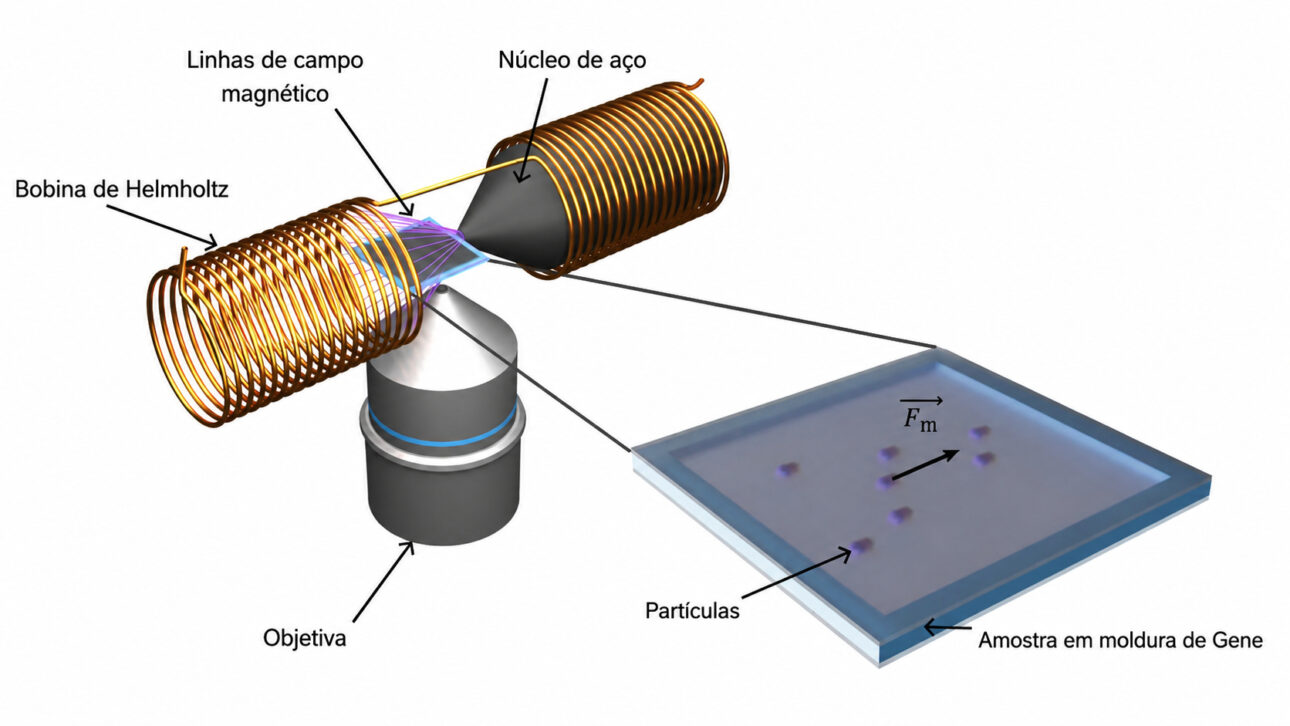
The great advantage of this project inspired by a space rocket comes from the use of a magnetic motor. This mechanism eliminates the need for chemical fuels that could pollute the environment or intoxicate living tissues, operating solely through external physical stimuli for safe direction.
Since magnetic locomotion does not wear out the structure, the nanorobots can be recovered and reused at the end of each process. Although the path to medical application in humans is long, the system is ready to operate in less critical sectors, such as industrial catalysis, simply by altering the substances transported.
The next step of active microscopic missions of the nanorobot
The union between materials engineering and biological sciences has given life to an unprecedented tool. The development of this modular nanorobot not only solves the functional rigidity of past projects but also establishes component recycling as a real goal for the future of the field.
By replicating the division of transport stages, researchers have endowed molecular engineering with a flexibility that will have profound impacts. The ability to guide, recover, and refuel these machines invisible to the naked eye consolidates the definitive transition of these devices from the pages of science fiction to the reality of world laboratories.