






 Portuguese
  Spanish


Redwing’s scientific mission follows an autonomous underwater robot on a five-year global route, with sensors aimed at measuring the ocean and sending data for studies on climate, ocean currents, and marine life.
The autonomous underwater robot Redwing was developed for a scientific mission of about five years, aiming to complete the first circumnavigation of the world by an uncrewed underwater vehicle.
The project, led by Teledyne Marine in partnership with Rutgers University in the United States, aims to collect data on temperature, salinity, depth, and ocean circulation for oceanography research and climate and weather-related forecasts.
The equipment’s launch is scheduled to take place in the Atlantic, off Martha’s Vineyard, Massachusetts, as part of an operation linked to the Woods Hole region, one of the traditional centers for oceanographic research in the United States.
-
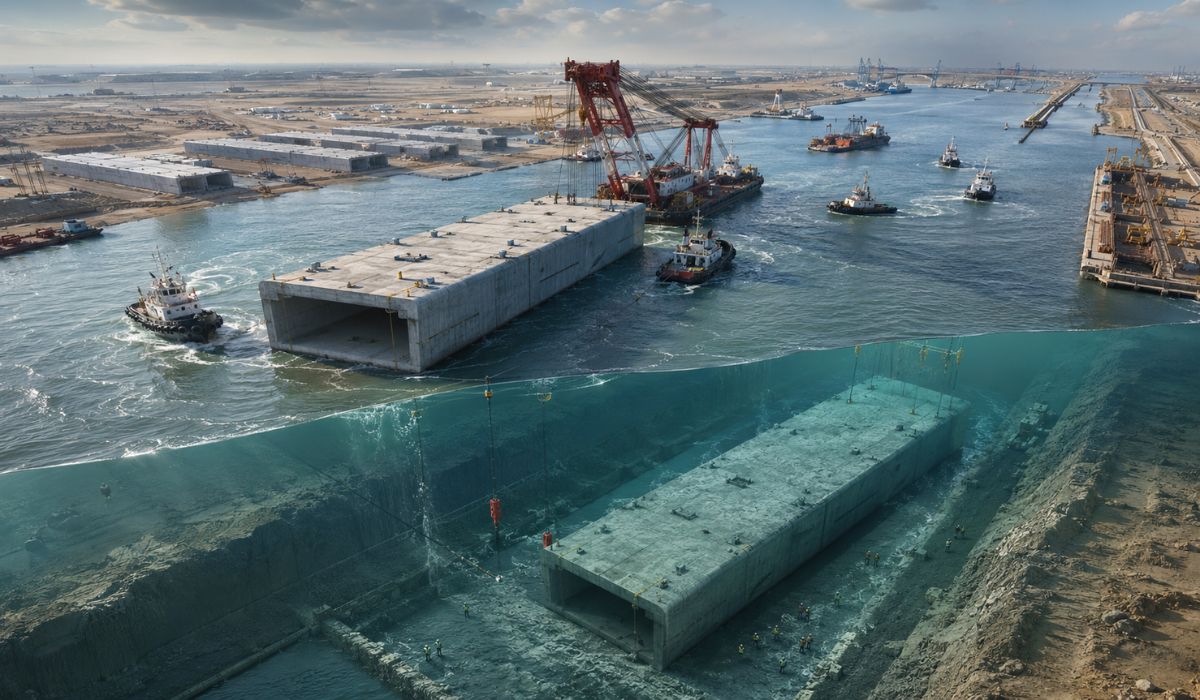
Iraq floats and sinks under an arm of the Euphrates 10 giant concrete boxes of 46,000 tons and 125 meters each to assemble a 2.4 km submerged tunnel and open a new land route between Asia and Europe.

-
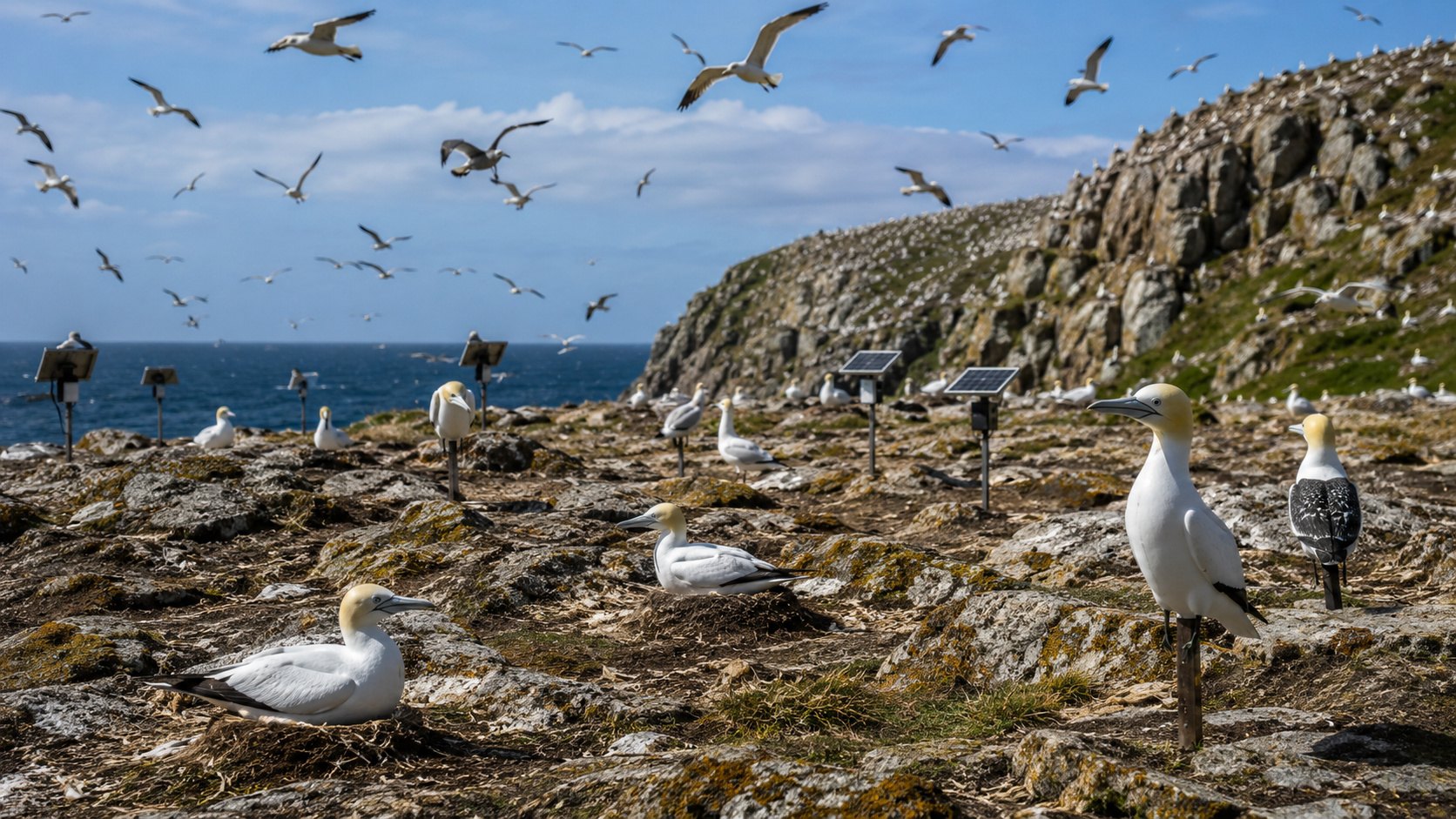
Scientists use more than 20,000 artificial birds and solar speakers to “trick” seabirds, reactivate nesting routes, and revive a colony on an island that seemed abandoned.

-
She spent 73 years breathing inside an iron lung, survived the aftereffects of polio, and became the last woman in the United States dependent on the equipment before dying at 78 years old.
-
Brazilian students created a $1 filter using pine bark, cotton, and 3D-printed parts to clean cassava wastewater, reduce the toxicity of a hazardous waste, and transform contaminated water into biofertilizer.


The planned route includes segments through the Atlantic, Indian, and Pacific oceans, passing through areas influenced by major ocean currents.
Unlike conventional submarines, the Redwing does not rely on a crew or propeller propulsion to move forward.
The vehicle operates as an underwater glider: it alters its buoyancy, sinks, and returns to the surface in repeated movements, following a zigzag trajectory that allows for displacement with lower energy consumption.
According to those responsible for the project, this navigation model was chosen to allow for prolonged missions in the open sea.
Along its route, the robot is expected to dive to different depths and record information that helps researchers observe physical variations in water across various regions of the planet.

How the Redwing moves in the ocean
The Redwing is part of the new generation of the Slocum Sentinel Glider, a vehicle developed by Teledyne Marine for long-duration autonomous operations.
Its structure was designed to withstand extensive crossings and transmit scientific data without researchers on board.
The glider’s operation is based on the change in the equipment’s own density.
When it becomes heavier relative to the surrounding water, it sinks; when it regains buoyancy, it rises towards the surface.
The wings transform this vertical movement into horizontal advancement.
With each descent and ascent cycle, the equipment records data from the water column.
This method allows for tracking variations between surface layers and deeper regions, information used by scientists to study ocean circulation and heat distribution in the seas.
The main sensors measure temperature, salinity, and depth.
These parameters are among the basic variables of physical oceanography and help identify water masses, currents, and changes in monitored regions over time.

Ocean data for climate, weather, and marine life
The Redwing mission seeks to expand direct observation of the oceans, which cover most of the Earth’s surface and influence atmospheric processes.
According to the researchers involved, data collected in the open sea can contribute to models used in the study of hurricanes, marine heatwaves, and ecosystem variations.
Oscar Schofield, one of the scientific leaders of the initiative at Rutgers, stated that “we live on an ocean planet” and that weather and climate are regulated by the ocean.
The statement was used by the team to explain the importance of monitoring areas that still have low coverage of continuous measurements.
In addition to physical sensors, the Redwing must carry equipment capable of detecting marine animals tagged with transmitters.
This function allows for recording the passage of species previously identified by researchers, which can aid studies on the movement of fish and other animals in the open sea.
When it reaches the surface, the glider attempts to send information via satellite to ground teams.
Communication is scheduled to occur at regular intervals, between eight and twelve hours.
If the connection is not established, the vehicle follows its programmed route until a new transmission attempt.
Global route of the Redwing submarine robot
The first leg of the mission involves using the Gulf Stream, in the North Atlantic, to take the Redwing from the region south of Nantucket towards Europe.
Afterward, the route is expected to continue to Gran Canaria, in the Canary Islands archipelago, before heading towards Cape Town, South Africa.
In the next stage, the glider is to cross the Indian Ocean towards Western Australia and subsequently proceed to New Zealand.
The planned route also includes navigation through the Antarctic Circumpolar Current, one of the planet’s main ocean currents, towards the Falkland Islands.
From that point, the mission may include passage through Brazil and the Caribbean before returning to its origin region in the United States.
The project team informs that adjustments may be made according to currents, environmental conditions, equipment performance, and navigation risks.
During such a crossing, the Redwing may also encounter common obstacles in autonomous operations at sea, such as fishing nets, maritime traffic, hull fouling, and periods without satellite communication.
These factors are part of the technical challenges of keeping an uncrewed vehicle in operation for years.
Redwing name honors creator of the Slocum glider
The name Redwing is an English acronym for Research and Education Doug Webb Inter-National Glider.
The choice combines a reference to Rutgers University’s colors with a tribute to Doug Webb, a scientist and entrepreneur linked to the development of the Slocum glider.
Webb founded Webb Research, a company that later became part of Teledyne Marine, in Falmouth, Massachusetts.
He is associated with the creation of the first Slocum glider models, used in oceanographic research by scientific institutions in different countries.
The mission also includes student participation.

More than 50 undergraduate students are following the project in a research course taught by Scott Glenn and Oscar Schofield from Rutgers.
The work involves monitoring the route, supporting navigation tools, and producing educational content about the operation.
The educational initiative also foresees contact with schools in different regions connected to the Redwing’s route.
The proposal described by the team is to promote virtual meetings, sharing of cultural accounts, and interaction among students, researchers, and international collaborators.
Scarlet Knight paved the way for a new ocean mission
Rutgers has already participated in an ocean crossing with an autonomous underwater vehicle.
In 2009, researchers and students led by Scott Glenn and Oscar Schofield sent the Scarlet Knight across the Atlantic.
The robot traveled more than 7,300 kilometers in 221 days and arrived in Baiona, Spain.
In that project, university students remotely monitored the navigation while the equipment collected ocean data.
The crossing was presented by the institution as the first performed by an autonomous submarine robot in the Atlantic.
The Redwing expands the scale of this type of operation.
Instead of crossing one ocean, the mission was planned to pass through several ocean basins and test the endurance of an autonomous glider on a global route.
Scott Glenn, professor of the Department of Marine and Coastal Sciences at Rutgers, stated that the project involves data collection in the world’s oceans and the participation of students, educators, and international collaborators throughout the process.
The statement reinforces the scientific and educational nature presented by the team.


Ocean monitoring without a crewed vessel
For Teledyne Marine, the project serves as a demonstration of technology aimed at continuous ocean monitoring.
Brian Maguire, the company’s director of operations, said the mission could pave the way for a global fleet of autonomous gliders capable of collecting data in different maritime regions.
Shea Quinn, Teledyne’s glider line manager and Sentinel mission leader, stated that the vehicle was expanded to have greater operational capacity.
According to him, the glider was designed to remain at sea for one or two years at each stage, depending on the conditions and mission needs.
Observation by underwater gliders does not replace satellites, buoys, or research vessels, but it can complement these platforms.
Satellites record the ocean surface; buoys monitor specific points; ships allow detailed measurements in on-site campaigns.
Vehicles like the Redwing, however, travel extensive routes at varying depths, which helps fill measurement gaps.
By combining sensors, autonomous navigation, and satellite transmission, the Redwing represents an attempt to monitor the ocean for long periods without relying on the constant presence of vessels.
For researchers, the main scientific question will be to observe what data a mission of this scale will be able to gather throughout the crossing.






That’s a great innovation to save ourselves from unforseen circumstances.