






 Portuguese
  Spanish


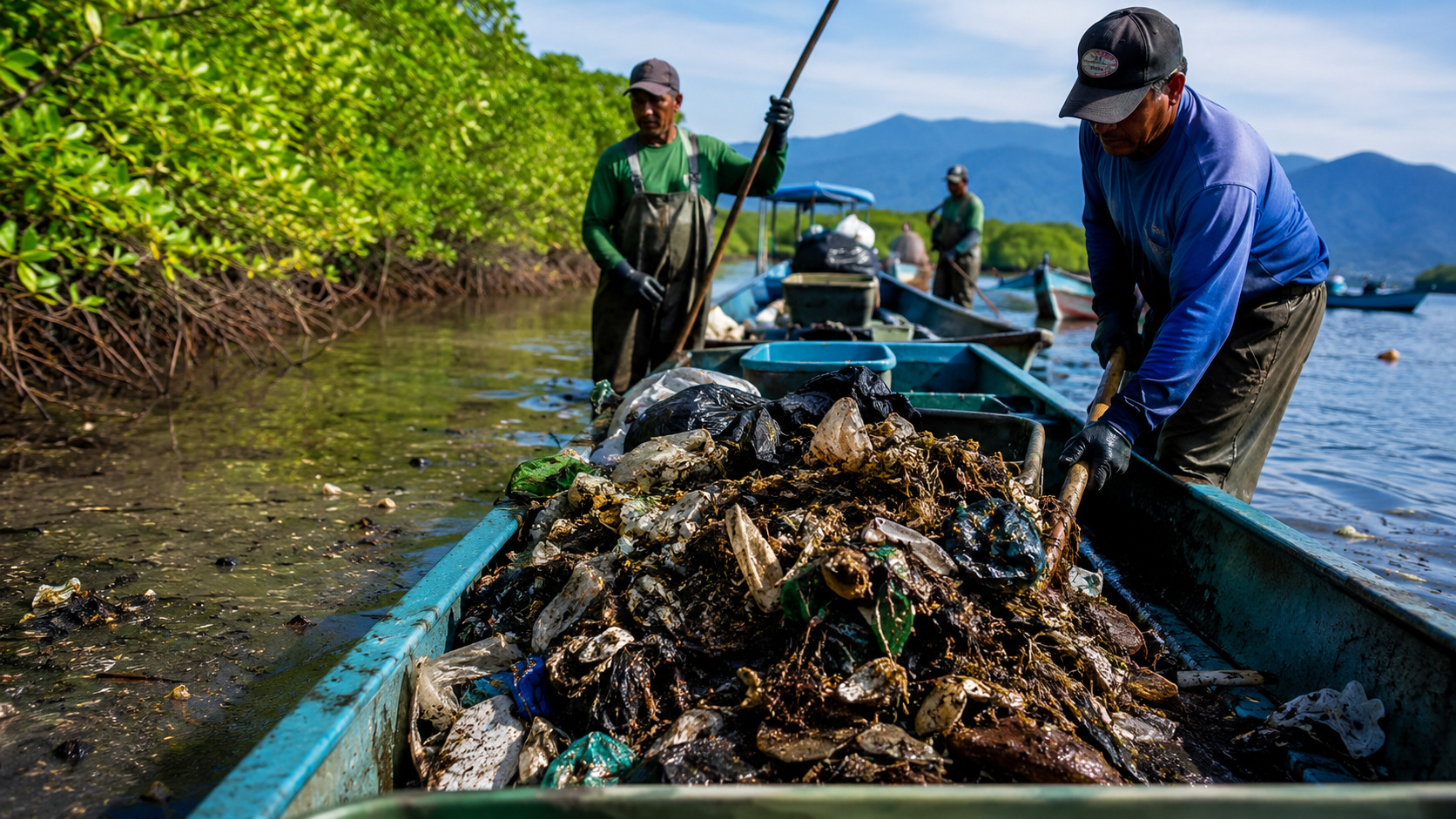

Program on the coast of SP mobilizes artisanal fishermen, removes marine litter, strengthens the circular economy, and boosts environmental preservation.
An initiative that combines environmental protection and social development has been attracting attention for the results achieved on the coast of São Paulo. Since 2023, the Payment for Environmental Services (PES) Program Clean Sea has removed more than 164 tons of waste from the marine environment, directly involving 344 artisanal fishermen in cleaning and conservation actions.
In addition to reducing coastal pollution, the program has already allocated more than R$ 1.2 million to participants. Between February and April 2026 alone, more than 43 tons of waste were collected in six municipalities on the São Paulo coast, representing a growth of 12.9% compared to the same period in 2025.
According to information from One Planet on June 8, the initiative shows how the union between traditional communities, public authorities, and sustainability strategies can generate economic and environmental benefits at the same time.
-
Scientists Discover Antidepressants in Hammerhead Sharks, Revealing Hidden Path of Pharmaceuticals to Brazilian Waters

-
Warm water hidden deep in the ocean has been moving towards Antarctica for 20 years, potentially accelerating glacier melting from below.
-
U.S. Offers Nearly $200,000 to Combat Invasive Mussels Threatening Waterways and Hydroelectric Plants
-
Cigarette Butts Pollute Brazilian Beaches, Sparking Debate on Coastal Environmental Protection Measures


Artisanal fishermen become protagonists of environmental transformation
The program’s differential lies in the active participation of artisanal fishermen, who use the knowledge accumulated over generations to identify critical areas of waste accumulation.
During the shrimp closed season, when commercial fishing is interrupted to ensure the species’ reproduction, professionals participate in cleaning efforts in the mangroves. Outside this period, they continue to contribute by collecting materials found in their nets during fishing activities.
The growth of the initiative can also be measured by the increase in the number of participants. Since the program’s creation, the total number of registered artisanal fishermen has grown by 164%, demonstrating the coastal communities’ adherence to the project.
According to Rodrigo Levkovicz, executive director of the Forest Foundation, the experience shows that conservation of natural resources and social development can advance together when local communities directly participate in the solutions.


Marine litter reveals a problem that starts far from the coast
The numbers gathered by the program help to understand the extent of pollution reaching coastal ecosystems.
Of the 164 tons of waste removed since 2023, about 123 tons were taken exclusively from the mangroves. This means that approximately 75% of all marine litter collected was concentrated in these environments.
According to Sandra Leite, coordinator of PSA Mar Sem Lixo, a large part of this material originates from improper disposal in urban areas. Over time, the waste is transported by rivers and rain until it reaches the mangroves and the sea.
The problem becomes even more severe when the materials fragment, increasing the risks for fish, crustaceans, birds, and other species that depend on these ecosystems.
The portrait of pollution found on the coast of SP
The analyses carried out throughout the project show a very clear pattern regarding the waste found.
Plastics overwhelmingly dominate the coastal pollution scenario. Among the materials identified, the following stand out:
- 97% of the waste found in the mangroves is plastic;
- About 70% correspond to disposable or single-use items;
- Food packaging represents 43.1% of the total analyzed;
- Disposable cups account for 16.7%;
- Waste associated with the consumption of alcoholic beverages represents 12.7%.
Only the material collected during the 2026 closed season period is equivalent to approximately 430,000 plastic bottles improperly discarded in the environment.
The data reinforces a challenge observed in various regions of Brazil: the need to reduce the consumption of disposable plastics and improve disposal and recycling systems.

Environmental preservation gains strength with the recovery of the mangroves
Mangroves are considered one of the most important ecosystems on the Brazilian coast. In addition to serving as nurseries for numerous marine species, they perform essential functions for environmental balance.
Among the main benefits offered by these areas are:
- Natural protection against coastal erosion;
- Filtering of waterborne pollutants;
- Shelter for fish, crustaceans, and birds;
- Blue carbon storage;
- Contribution to tackling climate change.
Therefore, the environmental preservation of these areas is seen as a strategic measure to ensure biodiversity and the health of marine ecosystems.
The fact that 75% of the removed waste was found in mangroves demonstrates how vulnerable these areas are to pollution caused by human activities.
Circular economy transforms waste into income opportunities
One of the most innovative aspects of the PSA Mar Sem Lixo is its connection with the principles of the circular economy.
By compensating participants for the environmental services provided, the program creates a mechanism capable of generating benefits for different sectors of society. Waste ceases to be just an ecological problem and becomes part of an environmental recovery strategy with a positive economic impact.
In practice, the circular economy applied to the project values the work of local communities and encourages the continuous removal of materials that could remain for decades in coastal environments.
The more than R$ 1.2 million already allocated to participants show that environmental initiatives can also help strengthen the income of families that depend directly on natural resources.
Accelerated growth puts the coast of SP in national spotlight
Between February and April 2026 alone, more than 43 tons of waste were collected in Ubatuba, São Sebastião, Cananeia, Guarujá, Bertioga, and Itanhaém. This volume represents about 27% of all material removed by the program since its inception.
Another relevant data point is the 231% growth recorded compared to the first clean-up efforts carried out by the initiative. The numbers demonstrate that the project has gained scale and operational capacity over the past few years.
By combining public management, community participation, and economic incentives, the model is consolidating as an efficient alternative to tackle the challenges of coastal pollution.
An example of sustainability that generates real impact
The removal of more than 164 tons of waste from the marine environment shows that environmental solutions can produce concrete results when built collaboratively.
With 344 registered artisanal fishermen, more than R$ 1.2 million distributed in payments for environmental services, and continuous growth of operations, the PSA Mar Sem Lixo demonstrates that ecosystem protection can go hand in hand with income generation.
By reducing the amount of marine litter, strengthening environmental preservation, encouraging the circular economy, and valuing the work of artisanal fishermen, the initiative establishes itself as one of the most relevant coastal conservation experiences currently being developed on the coast of SP.


