Portuguese
  Spanish


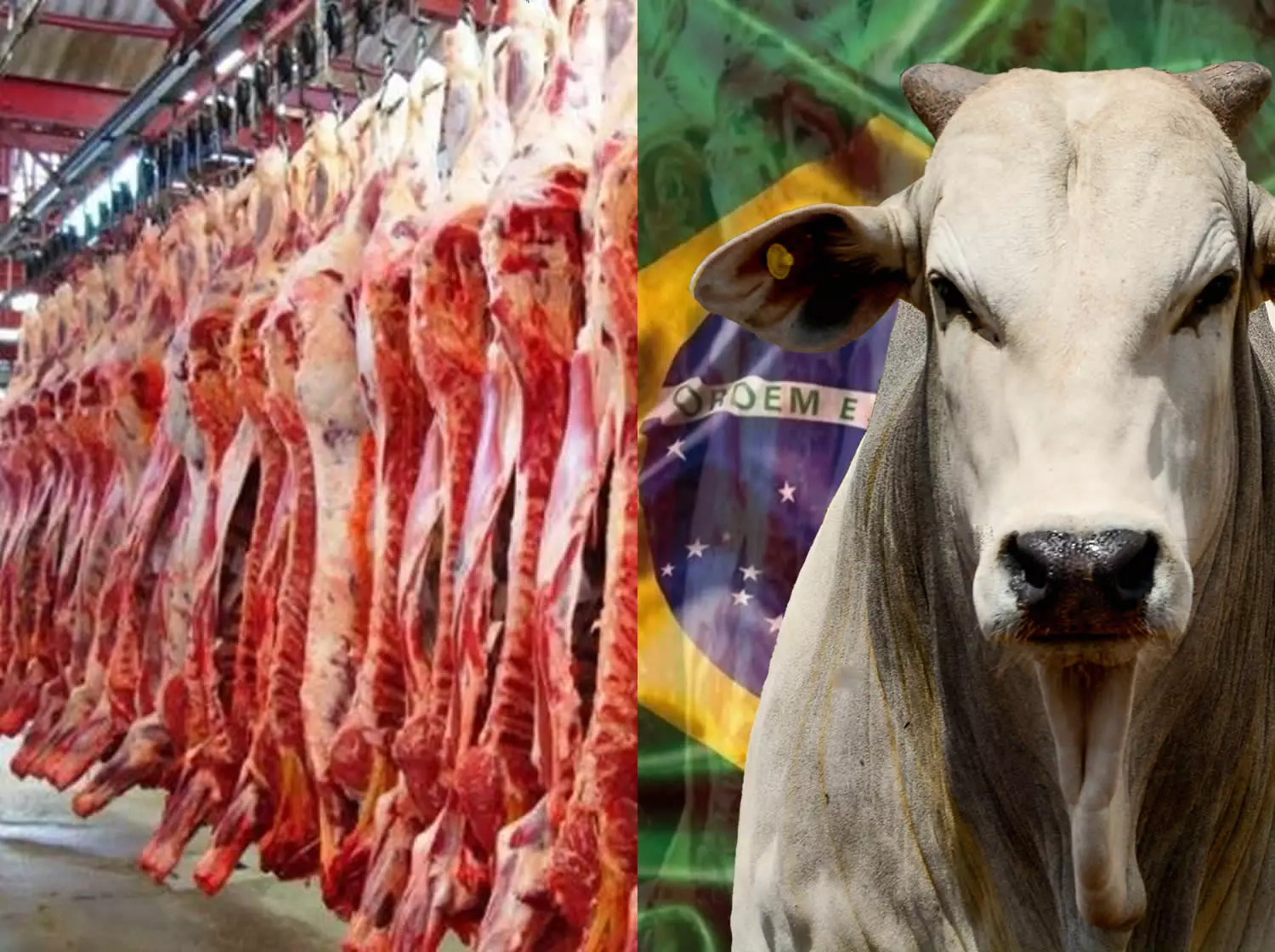


A 26.5% Tariff In The U.S. Market Makes Brazilian Beef Unaffordable For The American Consumer!
The export of Brazilian beef to the U.S. market, one of the most sought after in the world, faces a long-standing challenge that has become even more relevant. A 26.5% tariff on fresh Brazilian beef makes the product financially unviable for the American consumer.
The tariff is not new, but its impact intensifies in a competitive global market scenario.
To provide context, a quota of 64,800 tons of Brazilian beef can enter the U.S. market duty-free.
-
Brazilian Actress Turns Waxing Clinic into 400-Unit Chain with $50 Million Revenue, Sells Stake After 13 Years

-
Major Company Shuts Down 70-Year-Old Factory in Brazil, Relocating Production and Impacting Over 100 Families
-
Toyota Shuts Down Brazilian Plant After Producing Over 1 Million Vehicles, Plans Special Destination for Final Corolla Produced Following $2.1 Billion Investment and Expansion.
-
Shoe Factories Close, Leaving 528 Workers Jobless in Sudden Turn of Events Affecting Hundreds of Families After Decades of Operation.


The problem, however, is that this quota is not exclusive to Brazil. It is shared with other countries, such as Argentina and Uruguay.
This means that, in practice, the volume that Brazil can export with zero tariff is limited, and any export that exceeds this quota, no matter how small, incurs the 26.5% fee.
Competition And The Challenge Of Brazilian Beef Competitiveness
The main challenge for Brazilian beef in the American market is competition with countries that have more favorable trade agreements.
Australia and New Zealand, for example, have access to the U.S. market with much lower tariffs, or even zero, through free trade agreements.
This allows the beef from these countries to reach the shelves of American supermarkets at more competitive prices, which naturally attracts consumers.
The 26.4% tariff is a heavy burden that Brazilian beef must bear. In a tight-margin economy, such a tax is sufficient to make the sale of the product unfeasible.
The Role Of Logistics And The Fluctuation Of The Dollar
The logistics of export also play an important role in this equation. The distance between Brazil and the U.S., combined with transportation costs, already puts Brazilian beef at a disadvantage compared to closer competitors.
Therefore, the tariff is an additional obstacle that makes export even more complicated and expensive. In addition, the fluctuation of the dollar is also a factor to consider, as it can affect the profit margin of Brazilian meatpackers.
History And The Outlook For The Future Of Brazilian Beef
The history of Brazilian beef exports to the U.S. is marked by highs and lows. In 2017, the U.S. government suspended imports of fresh beef from Brazil due to sanitary issues.
Although the ban was lifted in 2020, the return of exports occurred under the same tariff structure, which continues to be a challenge.
Despite the difficulties, the Brazilian beef sector continues to seek alternatives. The main strategy is market diversification, with Brazil looking to open new export doors in other countries.
This way, dependence on the American market is reduced, and meatpackers can find new growth opportunities.
The sector and the Brazilian government are in constant negotiation to seek solutions that may, in the future, alleviate the burden of tariffs and ensure that Brazilian beef can compete on equal terms in the global market.