Portuguese
  Spanish




Electric Car Manufacturer, That Promised to Revolutionize the Brazilian Automotive Market, Ended Its Operations in the Country After Registering Only Eight Vehicles in 2024.
According to information published by the Autoesporte website, Seres, a Chinese manufacturer, arrived in Brazil at the end of July last year with an innovative proposal.
In partnership with Huawei, the brand opted for a differentiated business model, without physical dealerships, and conducted all sales online, similar to the “Tesla style.” However, this strategy did not achieve the expected success.
The Brazilian Electric Vehicle Association (ABVE) revealed that, in 2024, Seres registered only five units of the Seres 3 and three of the Seres 5. The vehicles are imported directly from Shanghai, China, and despite initial efforts, the brand could not establish itself in the Brazilian market.
-
2027 Toyota Corolla Cross Unveiled: New Design, Enhanced Fuel Efficiency, Reduced Maintenance Costs, Advanced Technology, Connected Services, and Up to 10-Year Warranty

-
France Revamps 530 Social Housing Units with Large Balconies and Glass Facades Without Demolishing Existing Buildings

-
Fiat Cronos Precision 2018: Affordable Sedan with Spacious Trunk and Reliable Maintenance
-
10-Year-Old Max Makes History with Paris Fashion Show, Launches Own Brand, Hires Staff, and Sets World Record as Youngest Runway Designer




After the initial setback, Seres attempted to adapt. In October of last year, it opened a store in the Jardins neighborhood in São Paulo, and in February of this year, another one in the São Conrado neighborhood in Rio de Janeiro. However, our team did not receive a response when attempting to contact these dealerships, raising questions about the continuity of these operations.
Models Offered by the Company
According to the aforementioned website, even with the decision to cease operations, the Seres 3 and Seres 5 models are still available for purchase on the brand’s official website.
The Seres 3, an electric SUV with a front-mounted motor delivering 163 hp and 30.6 kgfm of torque, accelerates from 0 to 100 km/h in 8.9 seconds. Its price starts at R$ 199,990, and an armored version is also available.
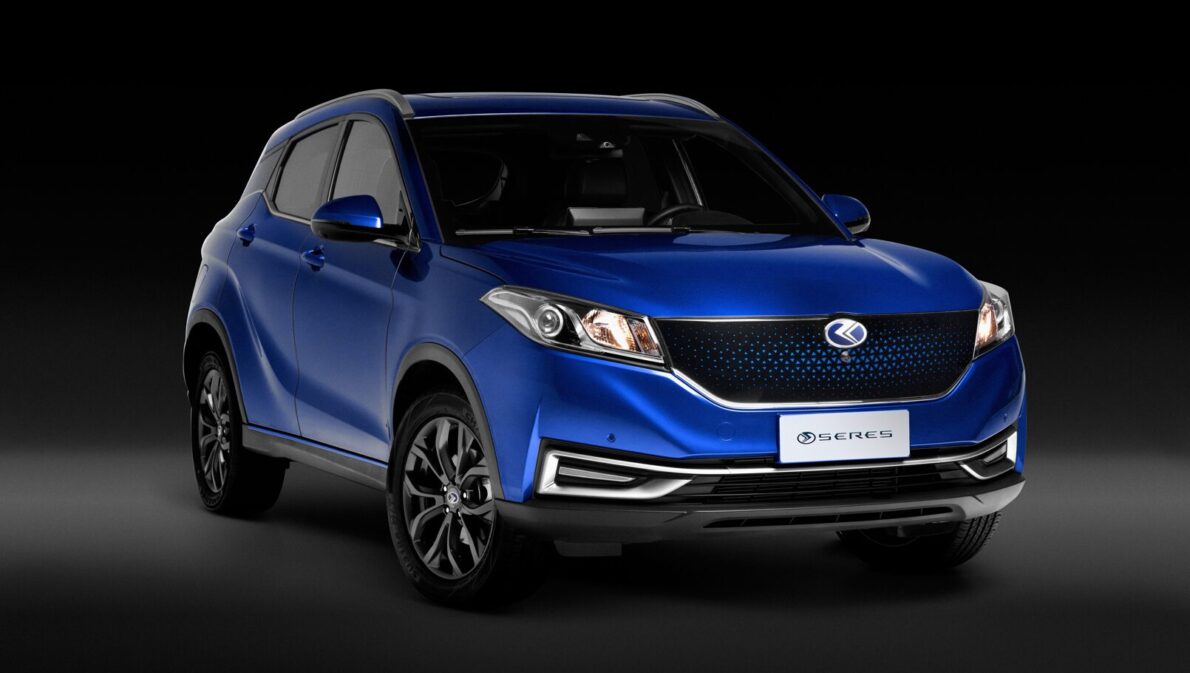
The SUV measures 4.38 meters in length, 1.85 meters in width, 1.65 meters in height, and has a wheelbase of 2.65 meters. The trunk capacity is 318 liters, and the 53 kWh lithium-ion battery offers a range of up to 206 km, according to Inmetro.
The Seres 5, a larger and more powerful SUV, is equipped with two electric motors that deliver 585 hp and 95.8 kgfm, allowing an acceleration from 0 to 100 km/h in just 3.7 seconds and a top speed of 200 km/h.
With a length of 4.71 meters and a wheelbase of 2.87 meters, the model costs R$ 394,000, and there is also an armored version available. The 90 kWh battery can be charged at charging stations (70 kWh DC) in 36 minutes, from 20% to 90% capacity, with a range of 380 km, according to Inmetro.


Internal Restructuring and Future Perspectives
According to Autoesporte, Seres is undergoing an indefinite internal restructuring. Although the brand has not revealed details regarding its future operations in Brazil, new announcements are expected to be made soon.
Meanwhile, other Chinese manufacturers like BYD and GWM continue to stand out in the Brazilian market, and Zeekr is already preparing its entrance with pre-sales starting in September.
Comment below: Do you think Brazil is ready for the electric car revolution? What could have been done differently for Seres to succeed?