Portuguese
  Spanish


Brazilian Government Reinforces Discussions About New Currencies in International Agreements and Seeks to Reduce Dependence on the Dollar, Amid Trade and Diplomatic Conflicts with the United States.
The Brazilian government, under the leadership of President Luiz Inácio Lula da Silva, has intensified the debate on the search for alternatives to the dollar in international trade relations.
During the 17th National Meeting of the Workers’ Party (PT), held in Brasília this Sunday (03), Lula stated that he does not intend to abandon the idea of conducting commercial transactions in currencies other than the US dollar, emphasizing that Brazil has the economic and political conditions to negotiate on equal terms with other world powers.
Dollar Dependence and New International Positioning
At the event, according to the website Poder 360, Lula declared that the United States has acted detrimentally to national sovereignty at historical moments and that this experience serves as a warning for the country’s new diplomatic strategies.
-
Brazil’s 2026 Tax Refund: Record 9.58 Million Filers in Largest Payout Ever, But a Key Detail on Priority Recipients Draws Nationwide Attention

-
Itaú Alters Hybrid Work Model, Increasing Office Days from 2028, Prompting Employees to Adjust to New Routine
-
Facing Labor Shortage, Japan Plans to Invest $34 Million to Attract Foreign Workers in Construction, Healthcare, Industry, and Commerce

-
Brazilian City Makes Remarkable Leap, Becomes 4th Wealthiest in the Country with GDP of R$ 134.1 Billion




“I will also not forget that they have already staged coups here, helped to stage coups. But what I want to know is what I do from now on? And from now on they have to know that we have something to negotiate. We have size, we have posture, we have economic and political interests to negotiate,” said Lula.
The discussion about dollar dependence has gained strength in a global context of questioning the hegemony of the US currency, especially after protective measures and tariffs imposed by the United States on trade partners.
Lula recalled Brazil’s experience in 2004, when the country made bilateral agreements with Argentina using local currencies, an initiative seen as a step to reduce currency dependence on the dollar.
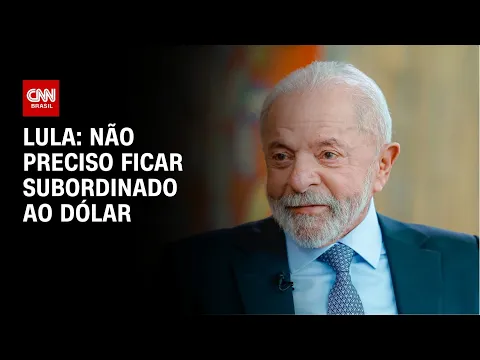
“I will not give up on thinking that we need to seek to build an alternative currency so that we can negotiate with other countries; I do not need to remain subordinate to the dollar. And I’m not saying this now, in 2004 we did this with Argentina,” he emphasized.
Economic Interests and Posture Toward the USA
The Brazilian president highlighted that the country is no longer as dependent on the United States as in previous decades, which provides greater comfort to adopt a more independent stance in the international arena.
Nevertheless, Lula emphasized that the goal is not to break relations with the United States but rather to establish negotiations on equitable terms, without giving up national interests.
As he stated, “We want to be respected for our size. We have economic and strategic interests; we want to grow, and we are not a small republic. Trying to impose a political issue to tax us economically is unacceptable.”
The Brazilian government’s position comes at a time when trade relations with the United States face significant challenges, especially after the imposition of tariffs of 50% on Brazilian products, determined by former President Donald Trump.
Lula assured that the government is working to support affected companies and that Brazil is ready to negotiate, provided there is mutual respect and consideration for Brazilian interests.
“When the US wants to negotiate, the proposals are on the table,” stated the president, signaling a willingness for dialogue but without relinquishing autonomy.

Alternatives to the Dollar in International Transactions
During the speech, Lula also emphasized the need for caution in criticizing the US government, recognizing the strategic importance of the bilateral relationship.
The president explained that despite recent conflicts involving tariff policies, it is essential to maintain a balanced dialogue.
“In this fight that we are having now with the US taxation, I have a limit to my fight with the US government. I cannot say everything that I think I should say. I have to say what is possible to say,” he pointed out.
The search for alternatives to the dollar in international transactions is a recurring theme in multilateral forums such as BRICS (a group formed by Brazil, Russia, India, China, and South Africa), which discusses creating a common currency for the bloc to strengthen trade among member countries and reduce dependence on the American currency.
The Brazilian government itself has, in recent years, advocated for diversifying trade partnerships and using local currencies in bilateral agreements, mainly with South American and Asian countries.
Challenges for the Adoption of Alternative Currencies
The debate over the use of the dollar is also related to the global context of currency instability and market volatility, exacerbated by economic crises and geopolitical disputes.
According to specialists in international relations and economics, the adoption of alternative currencies could strengthen the position of Brazil and other developing countries in international negotiations, as well as provide greater predictability and stability for exporters and importers.
In the current scenario, the real still represents a small share of global foreign exchange reserves and international transactions, but the movement toward a lower dependence on the dollar has been gaining traction in different regions.
In your view, will Brazil be able to increase the use of alternative currencies to the dollar in its international relations, or will US influence remain significant in the coming years?