Portuguese
  Spanish


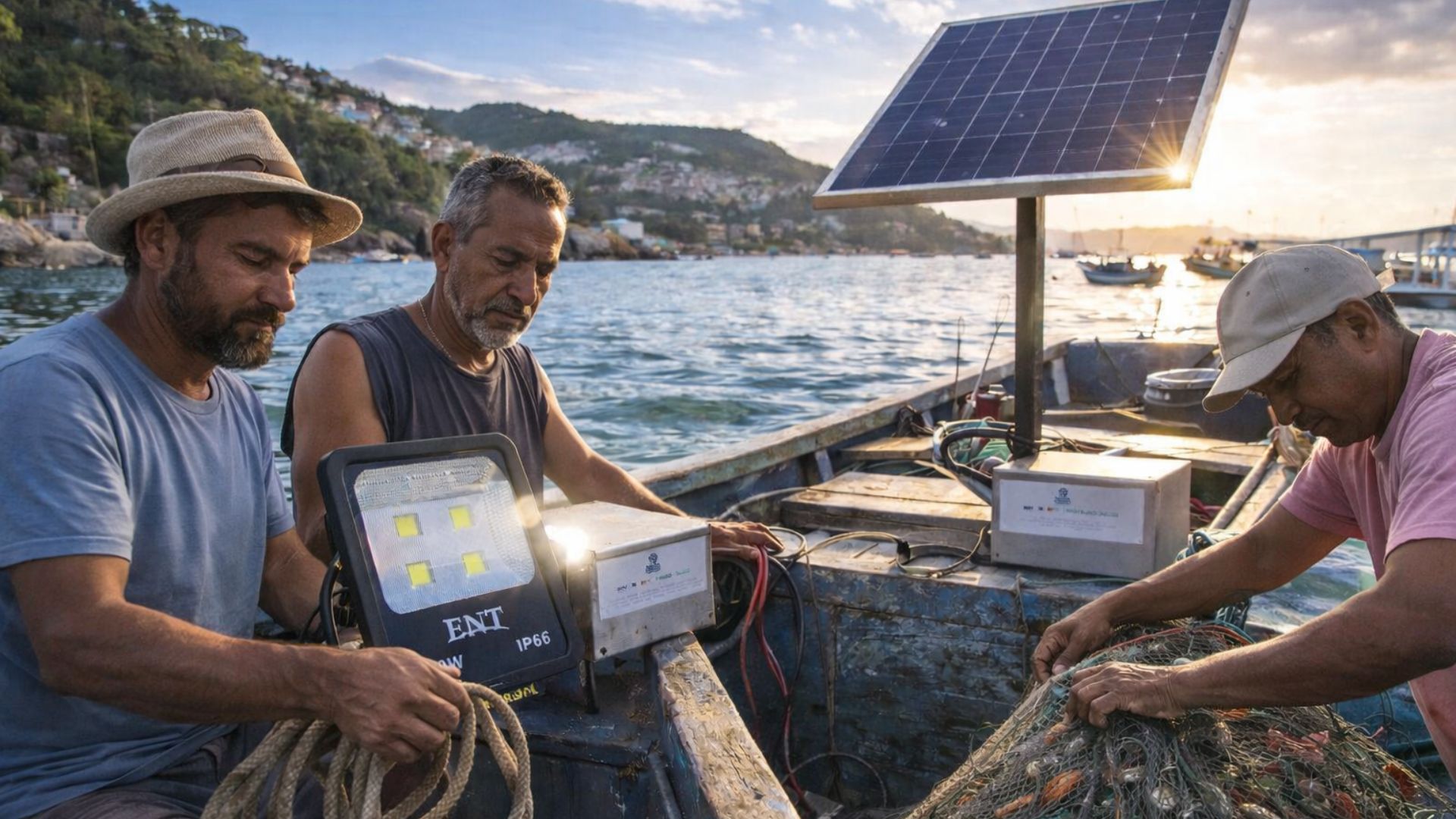

Artisanal fishing in Rio de Janeiro adopts solar energy to reduce costs, expand autonomy at sea, and reduce environmental impacts, boosting sustainability and income for riparian communities.
The routine of artisanal fishing in Rio de Janeiro began to change significantly starting in 2025, when traditional boats began to operate with solar energy, reducing costs by at least R$ 550 during the high season and mitigating the continuous use of fossil fuels. According to a publication by MongaBay, the movement, which already reaches around 285 vessels, reveals a silent transformation: a century-old activity begins to incorporate clean technology with immediate impacts on income, the environment, and quality of life.
Artisanal fishing in Rio de Janeiro gains new dynamics with solar energy
In communities like Arraial do Cabo, artisanal fishing has always been learned in practice, passed down through generations. This traditional model, however, coexisted with limitations — especially during night fishing, when catching species like squid depends on constant lighting.
For decades, this light came from diesel or gasoline generators. The problem went beyond cost: the constant noise, smoke, and maintenance needs made the work more exhausting and less efficient.
-
Solar energy can increase property value by up to 10% and become a selling point.

-
Solar and wind energy surpass natural gas for the first time in the world and accelerate energy revolution

-
Africa has about 500,000 cell towers and most still burn diesel to operate, while companies rush to cover antennas with solar energy and avoid signal blackouts.
-
Farmers swapped diesel for solar panels in Pakistan, powered irrigation pumps almost cost-free, expanded rice fields, and now groundwater has become a red alert in the countryside.


The arrival of solar energy changes this logic. The contrast is clear in daily life: what was once a noisy and polluting environment becomes quieter, more stable, and predictable.

How solar energy redefines the functioning of artisanal fishing
The system adopted on the boats is straightforward but efficient. Each vessel receives a photovoltaic kit that allows it to operate throughout the night without relying on fuel.
This kit typically includes:
- Solar panel for energy capture during the day
- Battery for electricity storage “`html
- Floodlights used in night fishing
Before the change, a generator with about 20 liters of fuel offered an average autonomy of only 6 hours. With solar energy, the lighting works throughout the night, extending productive time.
Another point that makes a difference in daily life is the elimination of repetitive tasks. Many fishermen had to remove batteries at dawn, recharge them on land, and return to the boat. This cycle, which could extend the journey until 8 a.m. after returning at 4 or 5 a.m., practically disappears with the new system.
Projects drive sustainability in artisanal fishing
The transformation did not happen in isolation. Structured projects play a central role in this change, such as SustentaMar, initiated in 2025 with support from environmental resources.
After initial tests, the project installed solar systems on 55 of the 70 vessels linked to a local association in Arraial do Cabo. In addition, a charging point was created near the marina, facilitating logistics.
The gains appear quickly in the pocket:
- Solar battery recharge costs about R$ 20, half the previous price
- Reduction in expenses can exceed R$ 550 during peak activity periods
- Less dependence on traveling to fuel stations
This combination reduces costs and also improves the organization of the work routine.
Safety at sea: when solar energy goes beyond economy
If cost is an important factor, safety has become decisive in regions like São Francisco de Itabapoana, in the north of the state.
The Z-1 Colony, with over 1,500 fishermen spread over about 60 kilometers of coast, faced critical situations. In some cases, vessels were left adrift due to lack of fuel or energy.
With the adoption of solar energy, even in the event of a main failure, fishermen can maintain basic functions, such as charging cell phones and establishing communication.
This is especially relevant for those who spend long periods at sea — there are reports of fishermen who stay up to one month at sea, navigating areas from Ilhabela to the coast of Bahia.

From distrust to adoption: the gradual advancement of technology
The introduction of technology was not immediate. Many fishermen showed initial resistance, questioning the efficiency of solar systems in the marine environment.
This scenario began to change after the first practical results. The installation of solar panels in June 2025 marked a turning point.
The Pescando Sol project, which initially planned for 300 vessels, has already reached around 230 boats. Adding Arraial do Cabo, the number rises to approximately 285 adapted vessels.
Direct experience, more than any technical argument, was decisive in increasing adoption.
Real impacts of sustainability on artisanal fishing
The incorporation of sustainability in artisanal fishing generates concrete effects in different areas.
In the economic aspect, there is an increase in predictability and a reduction in costs. In the environmental aspect, the decrease in fossil fuel use reduces emissions and waste.
In practice, the most perceived benefits include:
- Less exposure to smoke and noise
- Reduction of daily physical effort
- More time available for rest
- Increased efficiency in night fishing
These combined factors help make the activity more viable in the long term.
Technology that respects traditional knowledge in Rio de Janeiro
One of the most relevant points of this movement is that technology does not replace traditional knowledge — it complements it.
Artisanal fishing continues to be based on the experience accumulated over decades. The difference is that now there is a tool that enhances work capacity without altering the essence of the activity.
This balance helps explain why the initiative has potential for expansion. Technology is incorporated without breaking the cultural identity of the communities.
What this movement reveals about the future of artisanal fishing
The advancement of solar energy in artisanal fishing in Rio de Janeiro indicates a broader change than it seems at first glance.
What is underway is not just an exchange of equipment, but a reconfiguration of how these communities deal with energy, cost, and risk.
The combination of:
- reduction of expenses “`
- increased security
- lower environmental impact
shows that sustainable models can emerge within traditional activities, without requiring radical breaks.
As more vessels adopt the system and the results consolidate, the trend is that this transformation will scale — redefining the future of artisanal fishing in different regions of the country.