






 Portuguese
  Spanish
  4 min of reading
  0 comments


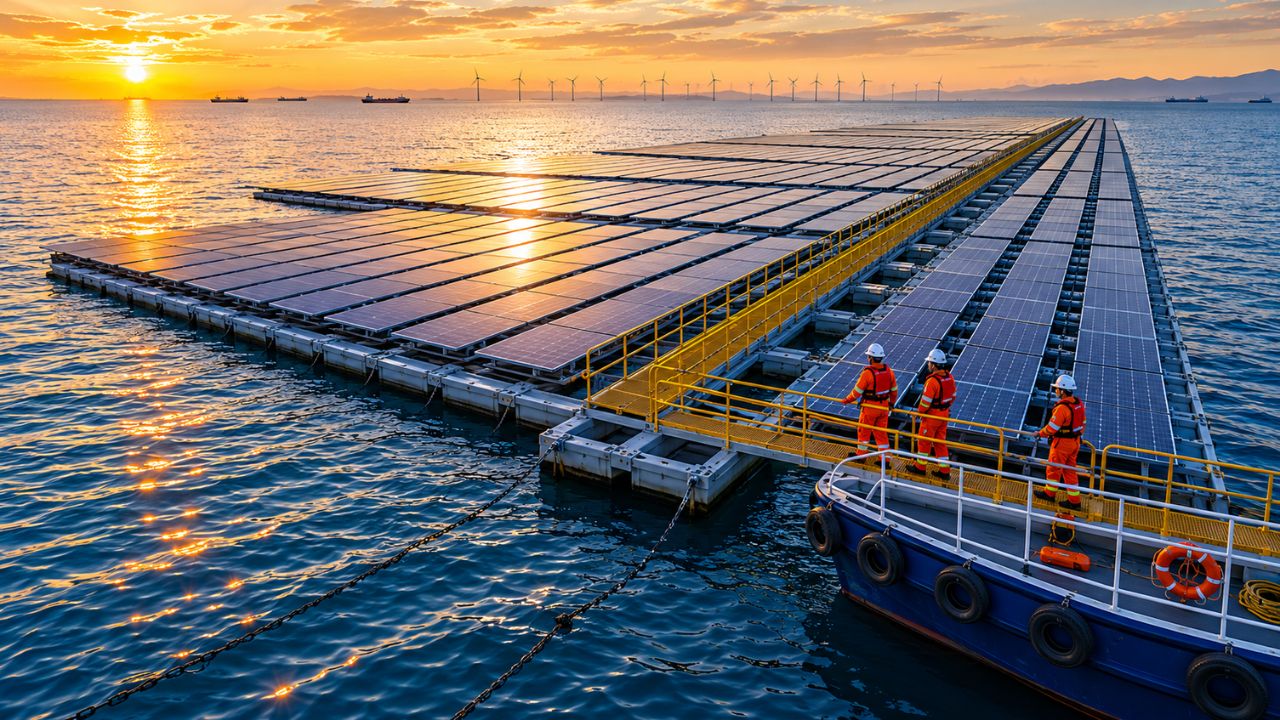
Study reveals that floating solar energy systems at sea can produce up to 12% more electricity than land-based plants.
The expansion of solar energy has gained a new study scenario after researchers from Taiwan identified significant advantages in systems installed over the sea. The research, published this month in the Journal of Renewable and Sustainable Energy, showed that offshore floating solar platforms can produce about 12% more electricity over their lifespan compared to conventional structures built on land.
The survey was conducted by researchers Ching-Feng Chen and Shih-Kai Chen from the National Taipei University of Technology. According to Olhar Digital, the analysis compared two commercial projects operating in Taiwan and concluded that the maritime environment helps improve the performance of solar panels due to the natural cooling provided by seawater.
According to the scientists, the study gains relevance mainly in densely populated countries or with little territorial availability for the expansion of large solar plants.
-
Solar energy can increase property value by up to 10% and become a selling point.

-
Solar and wind energy surpass natural gas for the first time in the world and accelerate energy revolution

-
Africa has about 500,000 cell towers and most still burn diesel to operate, while companies rush to cover antennas with solar energy and avoid signal blackouts.
-
Farmers swapped diesel for solar panels in Pakistan, powered irrigation pumps almost cost-free, expanded rice fields, and now groundwater has become a red alert in the countryside.




Offshore solar energy presents greater energy efficiency
The researchers evaluated two different installations: a solar farm located in the Changbin Industrial Park and the first commercial floating system installed offshore in Taiwan.
To ensure technical balance in the comparison, both systems were adjusted to an equivalent capacity of 100 megawatts-peak.
From this analysis, the authors concluded that maritime platforms can keep the panels at lower temperatures. This reduces efficiency losses caused by excessive heat.
As explained in the study, land-based solar systems suffer more thermal impact, especially in hot regions. When the panels heat beyond the ideal, part of the capacity to convert sunlight into electricity decreases.
How seawater improves solar energy performance
The research indicates that water acts as a natural cooling system. The ocean absorbs part of the heat accumulated in the equipment, creating more favorable conditions for the operation of solar modules.
According to Ching-Feng Chen, the principal investigator of the study, the results were consistent throughout the evaluation.
“What we discovered is that offshore floating solar systems can generate more electricity during their lifetime, about 12% more than land-based systems under the same conditions,” the researcher stated to the site Earth.
Furthermore, the scientists highlighted that the increase in electricity generation also enhances the environmental benefits of the technology.
Solar energy at sea can reduce environmental impacts
The authors claim that the superior performance of offshore platforms helps replace fossil sources on a larger scale. This means a potential reduction in emissions linked to traditional energy generation.
The study used a life cycle assessment method to measure environmental impacts from the start of equipment production to the dismantling of structures at the end of operation.
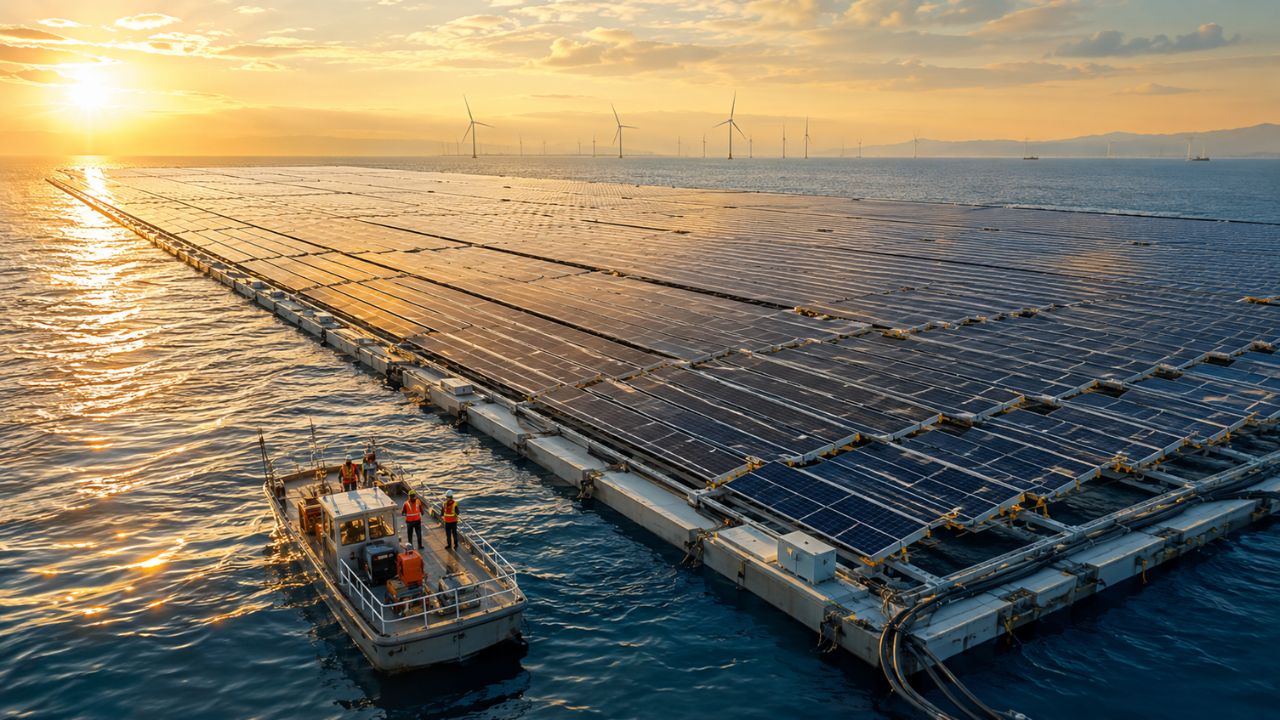
The analysis considered different factors, such as:
- Component manufacturing
- Energy consumption
- Carbon emissions
- Electrical efficiency
- End of operations
According to the researchers, the combination of these data allowed for a more accurate comparison of the two models.
Space limitation drives search for new solutions
Taiwan was chosen as the study’s base due to its characteristics considered strategic for this type of research. The territory combines high population density and significant geographical restrictions.
In practice, this hinders the expansion of large solar plants on solid ground. The growth of land-based solar energy faces obstacles such as competition for agricultural areas, environmental limitations, and scarcity of available space.
In this context, the researchers believe that structures installed at sea may represent a viable alternative for various countries.
“Offshore floating solar energy is not just a technical alternative, but a strategic solution for countries with limited land resources,” stated Ching-Feng Chen in the study published by the scientific journal.
Offshore solar energy can change future projects
The research also reinforces international interest in alternative renewable generation models. As the demand for electricity increases, governments and companies seek ways to expand energy production without further straining urban or agricultural areas.
Maritime solar platforms appear precisely as a possibility to overcome this challenge.
Although the study was conducted in Taiwan, the researchers indicate that regions with similar characteristics can gain similar advantages by adopting offshore systems.
Study broadens debate on new energy technologies
The results presented by the scientists show that the advancement of solar energy can follow different paths from the traditional models installed on land.
By identifying efficiency gains and potential reduction of environmental impacts, the study places maritime platforms at the center of discussions on energy expansion in areas with territorial limitations.
Meanwhile, the superior performance recorded in the tests reinforces the interest in solutions capable of increasing electricity generation without relying exclusively on large spaces on solid ground.
With information from Olhar Digital



Be the first to react!