





 Portuguese
  English
  Spanish
  3 min of reading
  1 comment


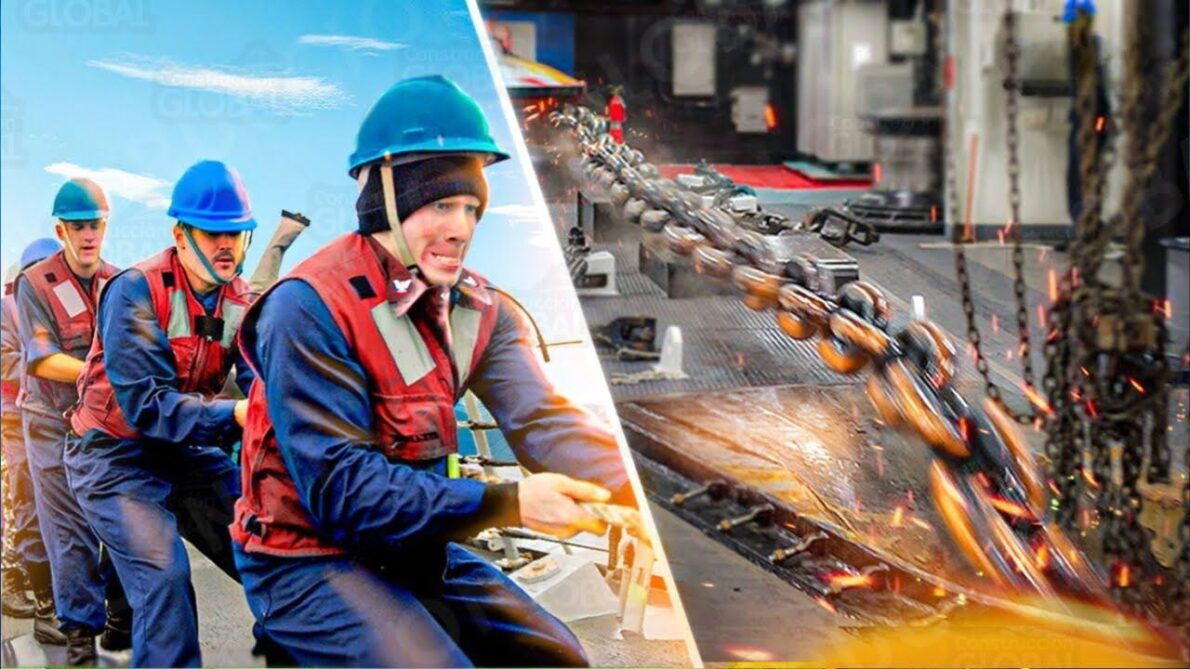

Understand How the Navy Uses Advanced Technology and Rigorous Procedures to Deploy the Anchor of a Giant Aircraft Carrier, Ensuring Safety and Stability Even in the Harshest Conditions.
Imagine the scene: an aircraft carrier 337 meters long, weighing 100,000 tons, sailing at full speed and needing to deploy its anchor. This operation, which seems simple, is actually a complex and highly technical process, essential to ensure the safety of the ship, whether it’s Navy or private, and its crew.
The anchor of an aircraft carrier is a massive piece of engineering. Weighing about 13.6 tons, it is connected to a chain that extends approximately 439 meters, with each link weighing 56 kg. These anchors are not only large; they are designed to withstand enormous stresses and resist corrosion caused by saltwater and constant friction.
When It’s Time to Deploy the Aircraft Carrier’s Anchor, the Process Is Managed by a Powerful Winch
Before deploying the anchor, the crew conducts a series of safety checks. Each link of the chain and every component of the anchor are thoroughly inspected to ensure they are in perfect condition. This process is known as manual review and is crucial to avoid failures during the operation.
-
While rural areas in Namibia suffer from invasive bushes that destroy pastures, a project transforms the brush into edible mushrooms and biological blocks, creating housing and income for local communities affected by the housing deficit.

-
From Waste to Construction: Ground Eggshells Enter Concrete, Reduce Carbon Emissions, Save Cement, and Demonstrate Innovation in Sustainable Materials
-
While tons of grape pomace are discarded in Brazilian wineries, researchers are transforming grape residues into bricks and adobe that reduce waste, improve thermal insulation, and pave the way for large-scale sustainable construction.
-
Used jeans are shredded and transformed into insulation blankets for walls and ceilings, rescuing millions of dollars of textile waste from landfills, increasing comfort in construction, and reducing heating and cooling costs.




When it’s time to deploy the aircraft carrier’s anchor, the process is managed by a powerful winch, located in a special compartment called the chain locker. This compartment houses hundreds of meters of chain, which are released in a controlled manner to ensure that the anchor securely grips the seabed.
On the U.S. Navy’s Aircraft Carriers, for Example, the Gold Color on the Anchors Is a Symbol of Excellence in Retention
The operation of deploying and recovering the anchor places the chain and anchor under enormous tension. Therefore, it is essential to carry out regular maintenance to prevent corrosion and wear. The chain is frequently cleaned and painted to prevent deterioration. On the U.S. Navy’s aircraft carriers, for example, the gold color on the anchors is a symbol of excellence in retention, highlighting the importance of keeping these components in impeccable condition.
In addition to the physical strength of the anchor and chain, modern technology plays a crucial role. Advanced monitoring and control systems ensure that each step of the process is carried out with precision. These systems help the Navy face adverse conditions, such as storms, while keeping the aircraft carrier stable and safe.
The operation of deploying the anchor of an aircraft carrier is a testament to advanced engineering and the rigorous training of the Navy. Every detail, from the manufacturing of the chain links to regular maintenance, is essential to ensure that these giants of the sea can anchor safely, regardless of the conditions. These detailed procedures and cutting-edge technology are fundamental to the safety and operational effectiveness of the U.S. Navy’s aircraft carriers.




Como Capitão de Longo Curso e comandante de navios graneleiros de grande porte, posso afirmar que o artigo em questão possui inúmeras informações erradas. Antes de escrever o artigo, o autor deveria ter consultado alguém que entende do assunto.