






 Portuguese
  Spanish


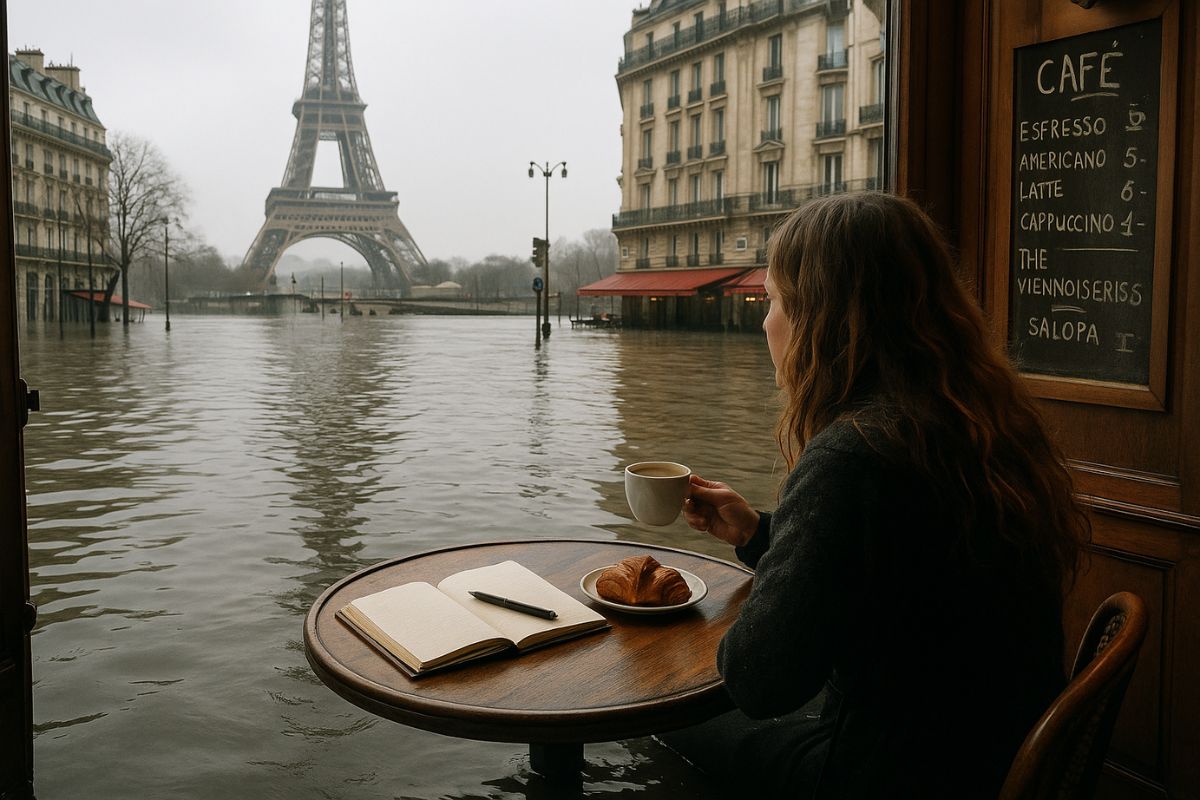

In Editorial In Tone Of Alert, The British Newspaper Argues That Governments And Societies Need To Prioritize Adaptation Against Sea Level Rise, In The Face Of An Inevitable Risk Scenario
The British newspaper The Guardian published an editorial this Sunday (25) giving a clear and direct alert: “the world no longer has time to discuss whether or not it should adapt to climate change, adaptation is now a matter of absolute urgency”. The text criticizes the slowness of governments and the imbalance in global responses, stating that, in the face of the inevitable advance of the oceans, protecting vulnerable populations and rethinking the occupation of coastal areas is as important as reducing carbon emissions.
“Adapting Has Never Been More Urgent”: The Core Of The Opinion Of The Guardian
The editorial opens with a historical reflection, recalling how the Netherlands, since the 17th century, learned to coexist with the constant threat of water, investing in engineering and adaptation. According to the newspaper, this example should be a global lesson on human capacity for protection, but mainly, on the risks of not acting in time.
The text emphasizes that, unlike the Netherlands, much of the world lacks the tradition and sufficient resources to face sea level rise. And it is precisely this imbalance that makes adaptation a global urgency. Countries like Bangladesh, Pacific Islands, and coastal regions of Africa are at the forefront of the impacts, but with few means to react.
-
China Develops Custom 140-Ton Electric Mining Truck with 770 kWh Swappable Battery, Deploys 290 Units in Xinjiang’s Largest Zinc Mine

-
Meta to Launch Arena, a New Prediction App Targeting 3.56 Billion Users, Competing with Polymarket and Kalshi

-
Scientist Challenges Famous Human Evolution Theory, Argues Homo Sapiens Evolved Gradually Over Thousands of Years
-
15-Year-Old American Builds Ocean Generator with PVC Pipe and 3D-Printed Propeller for $12, Wins National Prize, Presents at White House, and Makes Forbes 30 Under 30 List




The Guardian does not downplay the severity of the crisis. On the contrary, it makes it clear that even if the world manages to meet the Paris Agreement goal and limit warming to 1.5°C, something increasingly unlikely, sea level rise will occur. The difference now lies in choosing between planned adaptation or chaotic collapse.
The newspaper warns that catastrophic visions, such as submerged coastal cities and melting glaciers, should not generate paralysis but rather action. It reinforces that postponing adaptation plans is effectively choosing to leave millions of people to their own devices.
Furthermore, the text criticizes direct stances like that of President Donald Trump, who withdrew the United States from the UN fund aimed at helping poor countries face climate disasters. According to the Guardian, this is a “morally indefensible choice” that compromises global security, including that of wealthy nations themselves.
Finally, the editorial summarizes its view in a straightforward phrase: “Preparing for what is to come is not charity, it is a matter of shared survival”.
The Global Imbalance In The Capacity To Face Sea Level Rise
The Guardian emphasizes that the risks of rising seas are not distributed equally. In practice, those who contributed the least to the problem will be the ones to suffer the most consequences.
While developed countries like the Netherlands, England, Germany, and Japan have the technology and resources to build coastal defenses, raise dikes, and even promote planned migrations, millions of people in developing countries live in situations of high vulnerability.
The newspaper cites as an example the coastal plains of Bangladesh, where millions of people live less than a meter above the current sea level, without any physical protection against the advance of the waters. The situation is repeated in Pacific Islands, Southeast Asian regions, and parts of West Africa.
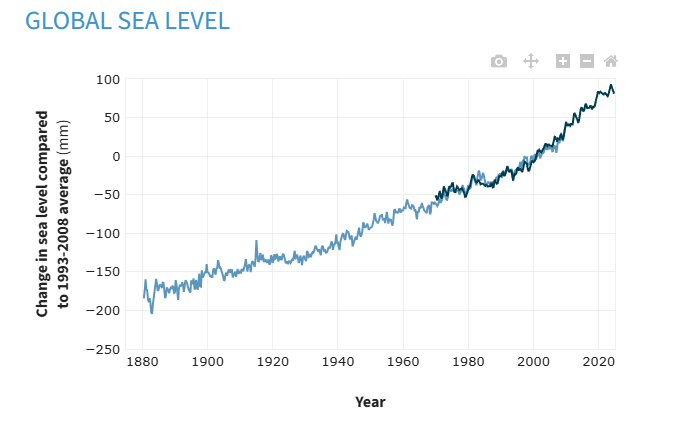
According to data from NOAA, since 1880 the global average sea level has risen between 21 and 24 centimeters, and this rise is already causing regular flooding, destruction of ecosystems, and contamination of freshwater sources due to salinization in various parts of the world.
The editorial makes it clear that without global mobilization and without effective transfers of resources from rich countries to poorer ones, the world is heading toward a scenario of mass displacement, humanitarian crisis, and geopolitical instability.
Preparation Or Collapse: The Two Paths That Remain For Humanity
For the Guardian, there is no longer the illusion that the problem can be avoided simply by reducing emissions. Although this reduction is essential to limit the worst scenarios, sea level rise over the course of this century is an irreversible scientific fact.
The newspaper argues that the nations with the greatest historical responsibility for emissions, such as the United States, European Union, and China, also have the greatest responsibility in leading this process. This includes massive funding for coastal protection infrastructure, community relocation, development of new containment technologies, and unrestricted international support.
Additionally, it warns that the slower the action, the greater the costs will be. Recent studies show that in the US, sea levels will rise in the next 30 years as much as they have in the last 100 years, putting dozens of cities at constant risk of flooding.
The text concludes that ignoring the problem does not make it smaller. On the contrary, the price of inaction will be paid with lives, forced displacements, economic collapse in entire regions, and increased social and political tensions on a global scale.






