Portuguese
  Spanish


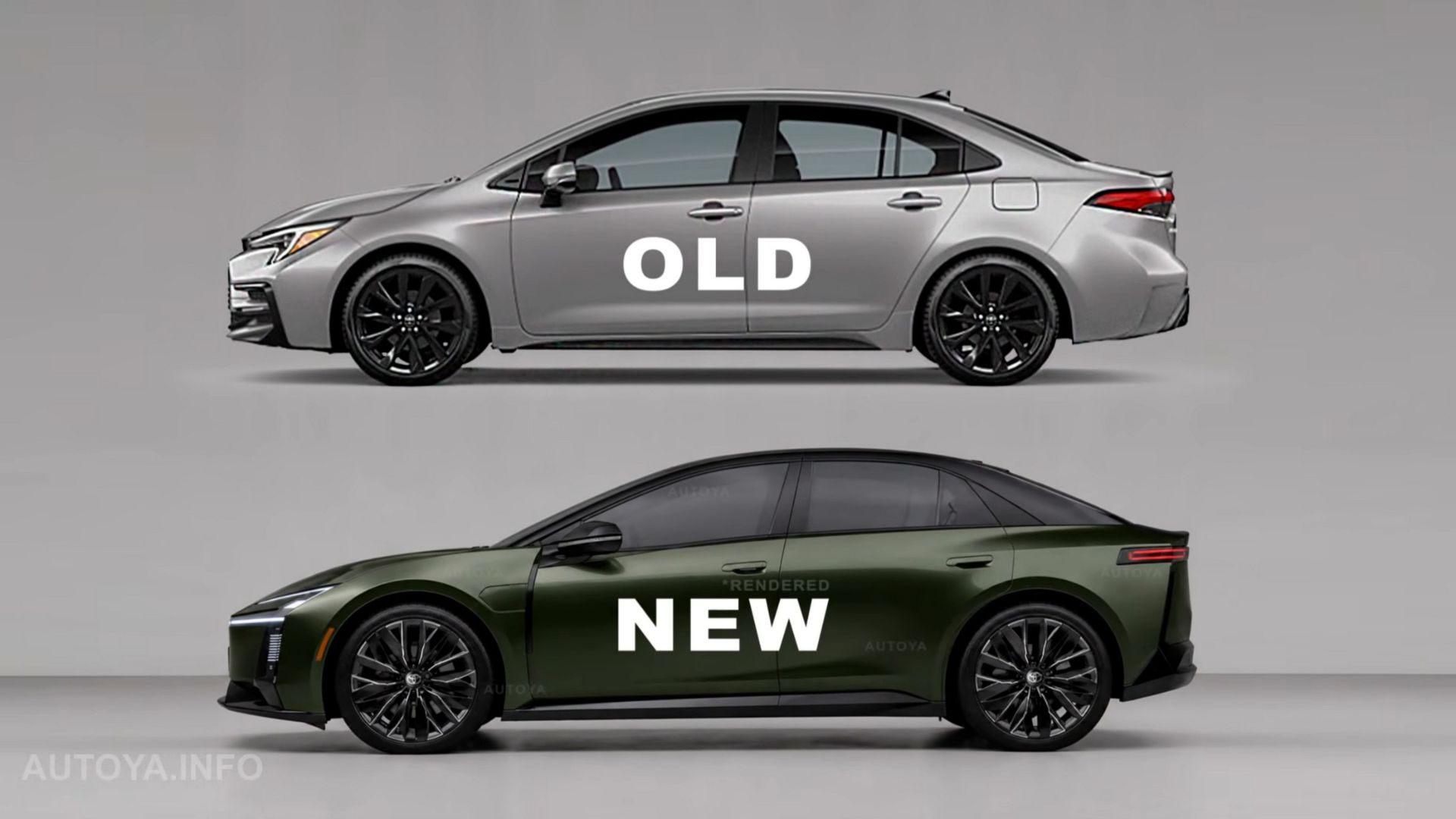


AutoYa has released digital illustrations imagining what the successor to the current model, launched in 2018 and updated in 2022, might look like. The renderings feature lines inspired by the Toyota Corolla Concept, with a visual proposal completely different from the current generation and possible hybrid and all-electric options for the global market.
The classic image of the Japanese compact sedan may be about to change radically. AutoYa, specializing in automotive projections, has released digital illustrations imagining the future of the Toyota Corolla with a look that is practically unrecognizable compared to the current generation, still in production in several countries.
The automaker has not officially confirmed a launch date, but rumors suggest that the new generation’s debut could happen later this year or in 2027. Meanwhile, third-party renderings anticipate what Toyota might be designing behind the scenes, based on clues left by the concept presented at recent events.
The current generation aged too quickly

The current 12th-generation Toyota Corolla was launched in 2018 and received a mid-life update in 2022. Even so, today it is already considered old within the accelerated pace of the contemporary automotive industry, where redesign cycles are becoming increasingly shorter.
-
End of an era in Brazil: beloved sedan by Brazilians is discontinued despite having a 2.0 engine with 151 hp, CVT transmission, 466-liter trunk, and up to 650 km of range.

-
New Law Proposal in Brazil Could Heavily Penalize Drivers: Dangerous Overtaking May Become a Serious Offense with Fines Increased Tenfold and a 12-Month License Suspension; Update on 2026 Progress

-
Electric Revolution: Watts W125 Motorcycle Offers 160 km Range, 90 km/h Speed, and Affordable Price Starting at $3,000
-
General Motors Replaces Over a Thousand Workers with 50 Cobots at Electric Vehicle Plant, UAW Union Criticizes Move Amid Industry’s Automation Push



This aging is mainly apparent on the outside. The current silhouette seems somewhat bland compared to rival models of similar size, a feeling reinforced by the wave of Chinese and electric cars with more aggressive lines that have entered the market in recent years.
The interior has aged better than the bodywork. The cabin is still considered competitive for compact segment standards, with embedded technology and materials that sustain the package even after eight years of commercial use by the Japanese automaker.
Therefore, the redesign work for the next generation tends to focus more on the exterior than on internal changes. Visually updating the sedan without losing the identity that made the model the best-selling car in the world has become a considerable challenge for Toyota designers.
The new front end and the LED bar that changes everything

The most striking point of AutoYa’s projections is the front of the vehicle. The new front end appears much more tapered, with headlights and daytime running lights completely redesigned compared to the model currently in circulation.
The big novelty is a continuous light bar. This element spans the entire width of the body, separating the main headlights from the daytime running lights, a feature already present in several recent launches in the global industry and which is becoming a dominant aesthetic trend.
The air intake also became smaller in the rendering, a sign that the next generation may adopt more electric or hybrid architectures, which require less front cooling. An integrated splitter adds a sportier touch to the ensemble, contrasting with the usual sobriety of the traditional Corolla.
This combination brings the Japanese sedan in line with Toyota’s current design language, clearly influenced by the Corolla Concept presented at institutional events. The familiarity with the concept is no coincidence, and anticipates the aesthetic path the automaker should follow in the coming years.
Recessed door handles and a more aerodynamic profile


The vehicle’s side profile received treatment aligned with the evolution of contemporary design. The roofline now ends with thicker rear pillars, a shape that alters proportions and gives a more robust look to the overall silhouette.
Another striking change is in the doors. The flush door handles replace the traditional model, a feature that reduces aerodynamic drag and gives a cleaner look to the profile, similar to what is seen in premium models and several electric vehicles recently launched on the global market.
The side skirts also received a sportier treatment, and the wheels appear in a larger diameter than those of the current model. The rear overhang became shorter, a change that could slightly compromise trunk space if this configuration is confirmed in the production version.
The rearview mirrors, however, maintain the traditional shape. The rendering preserves this detail possibly because current regulations in many countries still do not allow for complete replacement by digital cameras, a feature adopted by some rivals in specific markets.
The futuristic rear with a license plate on the bumper
The rear is where AutoEvollution’s projection most dares in relation to the current model. The rear assembly appears with two light strips that cross the entire width of the body, going from one side of the panel to the other.
This design is more associated with modern electric cars than compact sedans. The license plate has been repositioned to the bumper, abandoning its traditional location on the trunk lid, a change that frees up space for the aesthetic treatment of the rear assembly.
The Corolla emblem virtually appears below the taillights, while the Toyota logo has been placed above them, a configuration that reinforces the family’s identity. The taillights themselves became more striking, contributing to the futuristic look that the channel bet on in the final rendering.
Another curious detail is the presence of a USB charging port on the left front fender. This type of external connector may indicate that the sedan will be offered in a plug-in hybrid or fully electric version in some markets, in line with Toyota’s global trend of accelerated electrification.
Hybrids, electrics, and the survival of the GR letter
The question of powertrains is one of the most anticipated by fans of the model. The future Toyota Corolla is expected to offer hybrid and all-electric options in global markets, a format that aligns with the Japanese automaker’s recent strategy to reposition itself against the competition.
The model should also deliver a more engaging driving experience compared to the current generation. The GR version, dedicated to a sportier character, may survive the transition, although there is no official confirmation yet on which variants will be produced after the global redesign.
For the segment, the continuity of the Corolla is strategic. Compact four-door cars have been losing market share, with consumers migrating to SUVs and crossovers, and maintaining a global Toyota sedan helps sustain this category that many consider to be in accelerated decline.
The sedan version arouses special curiosity. In markets like Brazil, where the Corolla is a strong reference in the mid-size and compact sedan segment, any radical change in appearance can divide opinions between traditional fans and younger consumers looking for automotive modernity.
What is still a projection and what could become reality
It is important to remember that everything circulating so far comes from independent renderings. Toyota has not yet officially presented the model, and none of the features seen in the AutoYa video can be guaranteed as definitive in the product that will arrive at dealerships in the coming years.
This type of projection is often very influential in conversations among enthusiasts. Independent designers often anticipate real trends that appear in official launches, but it is also common for specific details to be softened or altered when the vehicle actually enters global production.
The specialized press itself treats renderings as an exercise in imagination calibrated by real clues. The Corolla Concept presented by Toyota set the general tone, and the AutoYa video merely exaggerates or refines some elements to show what the production version would look like within that proposed visual language.
Now, all that remains is to await official confirmation from the automaker regarding the launch date. When the new Toyota Corolla finally appears in real photos, it will be possible to compare with the projections and measure how much of this digital imagination corresponded to the final design chosen by the company’s engineers and designers for this new generation of the global sedan.
And you, did you like the projection made by the AutoEvollution channel for the next generation of the Toyota Corolla or did you find the look too aggressive for a classic family sedan?
Tell us in the comments if you would buy a Corolla with this new design, if you prefer the sobriety of the current model, or if you think the brand is late in adopting this more futuristic language that other automakers have already embraced. Also tell us which engine you would choose between hybrid and electric, and if you believe the GR version will truly survive the transition. The discussion helps to understand how the Brazilian consumer views the planet’s most famous Japanese sedan.