






 Portuguese
  Spanish
  4 min of reading
  0 comments


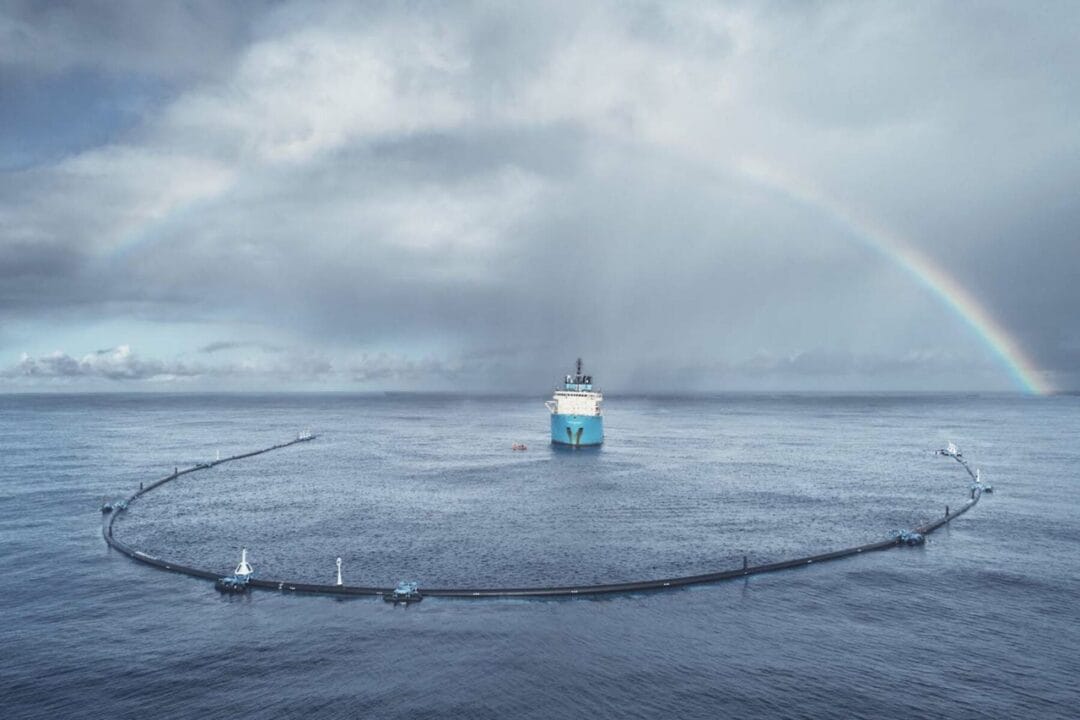
Learn How “The Ocean Cleanup” Is Leading The Fight Against Plastic Pollution In The Oceans. An Innovative Solution!
Did you know that 1.8 billion pieces of plastic are currently floating on the surface of the “Great Pacific Garbage Patch”? This is a serious problem that needs to be addressed urgently. Fortunately, “The Ocean Cleanup” is leading the way with an innovative technological solution.
The concept is simple yet extremely effective. The team at “The Ocean Cleanup” has created a 600-meter-long floating barrier, complemented by a 3-meter-deep umbrella below it. This smart structure is designed to concentrate floating plastic and remove it from the ocean.

How It Works In Practice
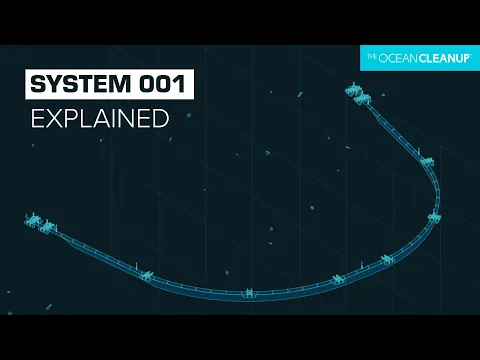
The floating barrier prevents plastic from floating over it while the umbrella below prevents smaller particles from escaping underneath. This creates a downward current that allows marine animals to safely pass underneath without any negative impact on their marine life.
-
13-year-old Indian girl impresses the world by leading the planting of 200,000 trees in over 120 locations and gaining international recognition while still in childhood.

-
Coral reefs gain new hope after scientists identify 165,000 km² with potential to resist heat in 71 countries, serve as living recovery banks, and protect food, jobs, and coastlines of nearly 1 billion people under climate threat.

-
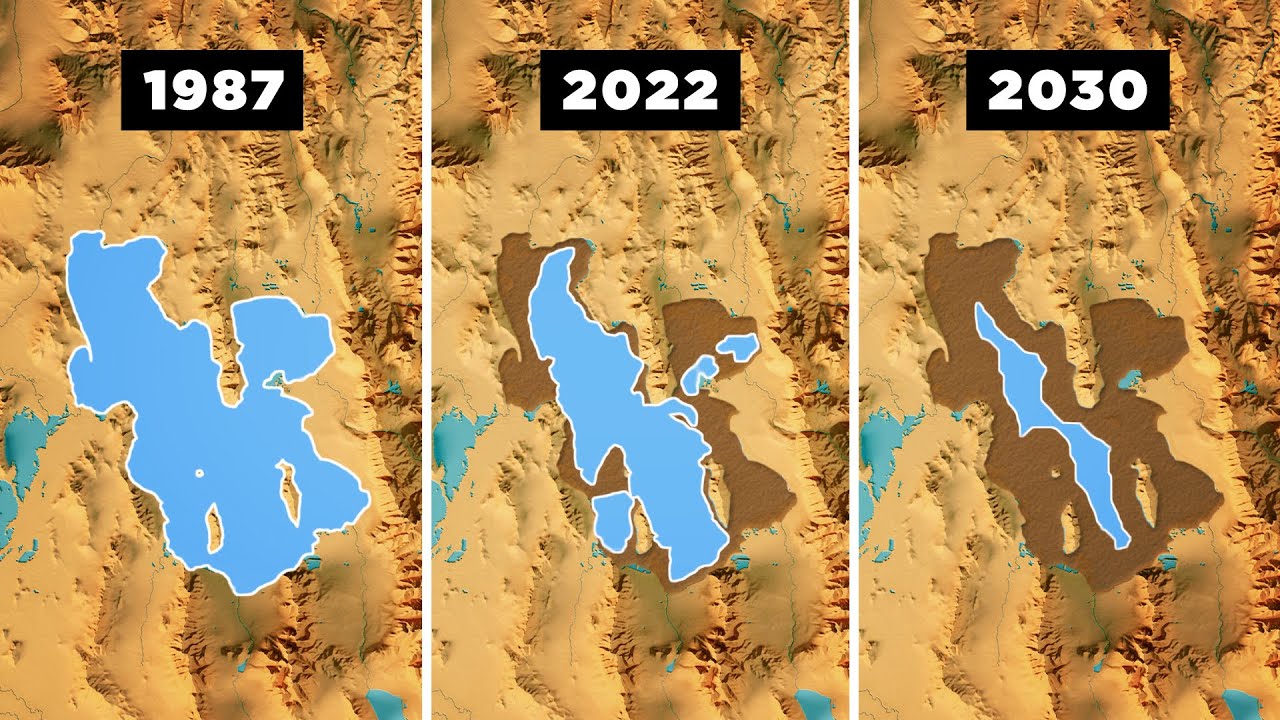
An American giant could disappear in five years: Utah’s Great Salt Lake has already shrunk by two-thirds, exposing a bed full of arsenic, and scientists are calling its collapse an “environmental nuclear bomb” about to explode over a city of more than a million people.
-
Children give more meaning to life, but not more happiness: study with over 5,500 people in 10 countries reveals surprising discovery about well-being, relationships, and the true impact of parenting throughout life.



The system harnesses natural forces of the sea, such as wind, waves, and currents, to move and capture plastic. The floating barrier drifts on the water, propelled by the wind and waves, while the plastic accumulates just below it. This allows the system to efficiently capture plastic.
Key Quick Facts
- Eight million tons of plastic enter our oceans annually. The main items of marine plastic debris are cigarette butts, food wrappers, bottles, and beverage caps.
- Ocean currents pull plastic into convergence zones called “gyres” that form waste clusters at their centers. The largest is the Great Pacific Garbage Patch, which is twice the size of Texas.
- Plastic poses a significant threat to aquatic life, killing 100 million marine animals each year.
- Plastic waste degrades rapidly in the ocean, especially along coastlines, releasing microplastics into marine environments.
- Rivers act as arteries, transporting large amounts of waste to the oceans. Only 1,000 rivers are responsible for 80% of all ocean plastic.
- Various technologies are being employed to clean plastic from the oceans: Seabins suck up trash and microplastics; Wasser 3.0 makes hybrid silica gels spin in a vortex to form clumps of microplastics; the Great Bubble Barrier pushes plastic to the surface of Amsterdam’s canals using air bubbles.
- The Ocean Cleanup is one of the most well-known cleanup efforts in the oceans, primarily targeting the Great Pacific Garbage Patch. The organization aims to eliminate 90% of floating plastic in the oceans by 2040.
- Cleanup efforts have been criticized for their impact on marine ecosystems, especially on the floating neuston at the ocean’s surface and fish caught in plastic capture nets.
The Invisible Threat of Microplastics in The Oceans
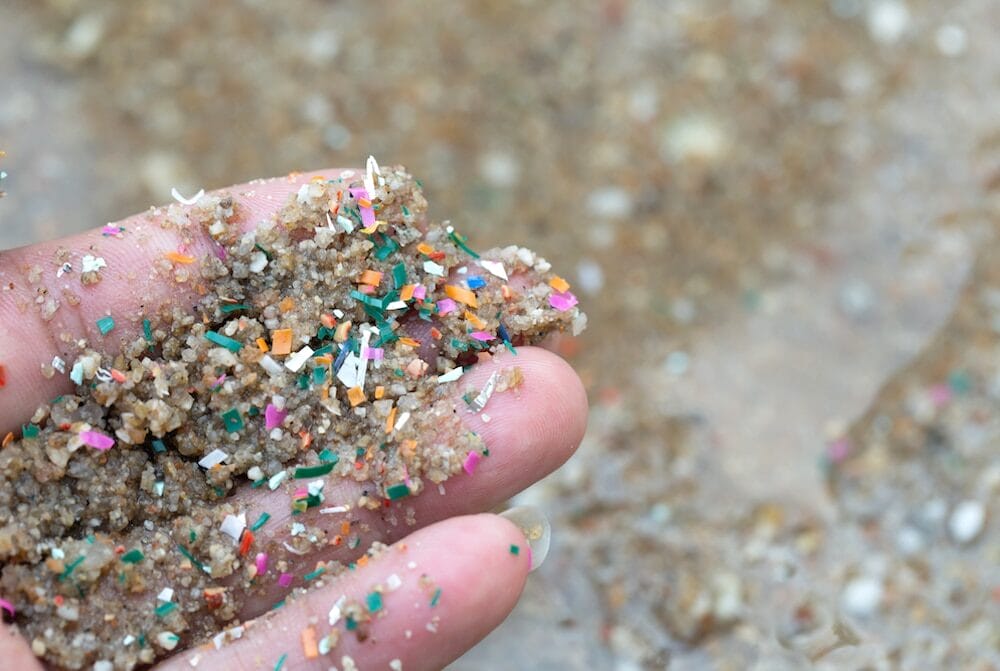
Since the early 2000s, scientists have been aware of the presence of microplastics in the oceans, although they have been present in these marine ecosystems since the 1960s. Microplastics are tiny fragments of plastic measuring five millimeters or less in diameter. “Primary” microplastics were created at this size for products like microbeads and plastic fibers used in synthetic fabrics, while “secondary” microplastics form from larger pieces of plastic as they degrade in the environment under the action of water, wind, and UV rays. Microplastics are now ubiquitous in our environment and can be found almost everywhere on Earth, from the deepest ocean trenches to the highest mountains, as well as in the air and water we consume. It is estimated that there are between 82 and 358 trillion plastic particles (about 2.4 to 10.8 billion pounds) floating just on the surface of one foot of seawater.
Microplastics are particularly problematic in the oceans, where they degrade more easily and are readily ingested by wildlife — thus, when plastics enter the ocean, they will eventually release microplastics as they break down. Since these tiny plastic fragments are not filtered by current sewage technology, removing plastic from the ocean (and preventing it from entering in the first place) is crucial to mitigating the impact of microplastics on marine environments.
Monitoring And Data Collection
Equipped with advanced technology, including solar lights, anti-collision systems, cameras, sensors, and satellite antennas, the system is capable of sharing its position in real-time and continuously collecting performance data. This helps the team monitor the system and ensure it is functioning as efficiently as possible.
So far, this is the first system of a planned fleet of 60 systems. When all are operational, the fleet is expected to be able to clean 50% of the “Great Pacific Garbage Patch” every 5 years. This represents a significant step forward in the fight against plastic pollution in the oceans.
The technology developed by “The Ocean Cleanup” is an inspiring example of how innovation can be used to tackle the most urgent environmental challenges of our time. We hope to see more advancements like this in the future as we continue to protect and preserve our precious planet.





Be the first to react!