Portuguese
  Spanish


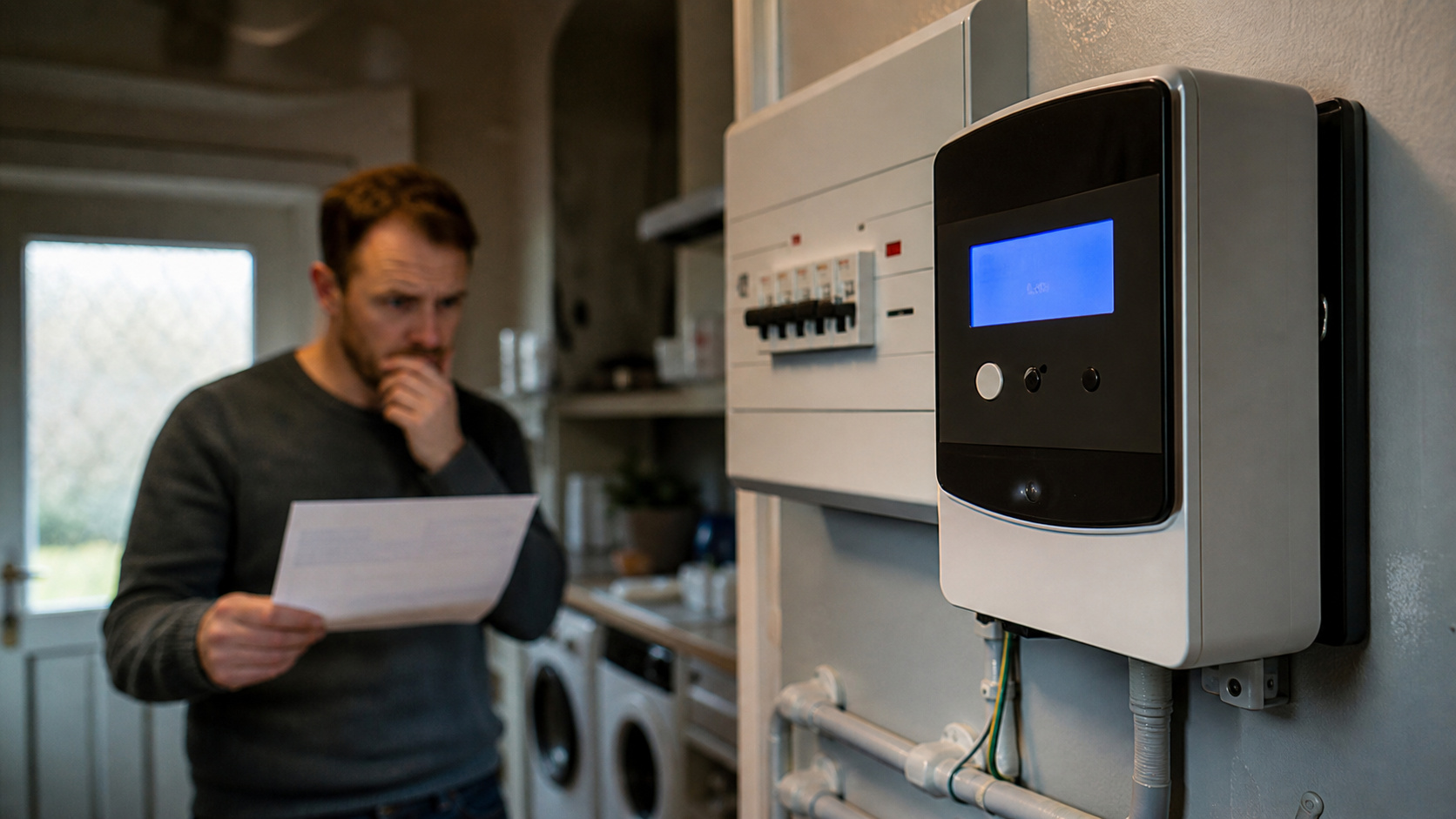


The promise of smart meters was to reduce errors, show energy consumption more clearly, and help families control expenses, but progress in the United Kingdom ran into fear of surveillance, technical failures, low adoption, and doubts about who would truly have control over the energy bill inside the home
The smart energy meter that was supposed to modernize the British energy bill ended up becoming a reason for rejection in many homes.
The idea seemed simple. Smart meters would replace old meters, help reduce billing errors, and give consumers a clearer view of their own consumption. But the British program faced delays, technical failures, and public distrust.
The information was released by the UK Parliament, the British legislative body. In March 2023, only 57% of gas and electricity meters in Great Britain were smart, while approximately 3 million devices were not working correctly.
-
Father Lives with 3 Children on a 15-Meter Off-Grid Houseboat, Reduces Living Costs to £500 a Month, and Filters Canal Water with a £300 System He Built

-
In 1961, Hollywood held a unique audition with 152 black cats to cast the perfect feline for the horror film The Black Cat.

-
Brazilian Truck Driver in the U.S. Earns $11,200 Commission on Heavy Haul, Highlights High Income Potential and Demands of the Job

-
Teen without prom date invites pet cat to dance, goes viral with tuxedo and pink dress photoshoot




The smart meters program promised control over the energy bill, but consumer confidence did not keep pace with technology
The British smart meters program was created to modernize energy metering. The promise was to make billing more accurate, reduce incorrect readings, and allow families to better monitor daily consumption.


In practice, the technology entered a sensitive environment. The meter is inside the house or directly connected to the domestic routine. Therefore, any doubt about privacy, billing, or operation carries much greater weight.
The rejection didn’t arise solely from fear. The slow progress, real failures, and difficulty in convincing part of the population showed that essential technology needs trust before scale.
Only 57% of meters were smart in March 2023, even after more than a decade of deployment
The central data exposes the extent of the delay. In March 2023, only 57% of gas and electricity meters in Great Britain were smart.
This number is striking because the program was already over a decade old. The deployment was supposed to transform how consumers monitor energy, but adoption fell short of expectations.
When a public policy depends on a device entering people’s homes, the persuasion needs to be clear. Without it, consumers look at the novelty with caution and begin to question whether the benefit outweighs the perceived risk.
Around 3 million faulty devices reinforced distrust in the smart energy meter
The technical problem increased resistance. Approximately 3 million smart meters were not working correctly in March 2023.
For the average consumer, a meter needs to fulfill a basic function: accurately measure consumption. When the device fails, the promise of control turns into concern about their own energy bill.
The UK Parliament, the British legislative body, provided the cited numbers and deadlines. The body also pointed out that some equipment could lose functionality with the end of 2G and 3G mobile networks, which increased pressure on the program.
Fear of surveillance, radiation, increased bills, and remote control turned a common device into domestic suspicion
The most curious point of the case is that an energy meter came to be seen by part of the population as a threat inside the home.
Among the concerns associated with smart meters were surveillance, radiation, possible bill increases, and remote control. Even when some of these fears stemmed from misinformation, doubt grew because there were concrete failures in the program.
Technology began to carry a symbolic weight. It wasn’t just a new device on the wall. For many people, it was a connected system that could monitor consumption, alter billing, or allow some kind of external interference.
Misleading information increased concern and reduced support for smart meter installation
Public perception played an important role in the slow progress of the program. Research on the topic shows that familiarity with misleading information about smart meters increases concern and reduces support for installation.
The University of Florida, an educational and research institution, analyzed the relationship between misinformation, public concern, and support for smart meters. The case shows how consumer opinion can change when technical doubts mix with fear and lack of clarity.
This effect is strong because energy is an essential expense. When the topic involves the electricity bill, consumers don’t want to take risks. They want to know if the device measures correctly, if their data is protected, and if no one can control their supply without a clear reason.
Technology entered people’s homes before gaining the necessary trust
The British case shows that innovation does not only depend on investment and new equipment. It also depends on simple communication, reliable operation, and respect for the fears of those who will use the technology.
A smart meter can help monitor energy consumption. However, this advantage loses strength when the consumer associates the device with incorrect billing, surveillance, or remote control.
The main lesson is straightforward. A home technology can be modern, useful, and necessary, but still fail if it arrives before public trust.
The real impact was public policy delays, additional costs, and strategic review
The rejection of smart meters was not restricted to homes. The program suffered public policy delays, faced additional costs, and began to require strategic review.
The modernization of energy metering depended on large-scale adoption. With low trust, technical failures, and privacy concerns, progress became more difficult.
The problem also reveals an important point for other countries. When consumers don’t fully understand a technology or don’t trust it, implementation ceases to be merely a technical issue and becomes a social challenge.
The smart energy meter in the United Kingdom became an example of how an innovation can face resistance when it promises to simplify life but arrives surrounded by doubts.
The electricity bill is a sensitive topic; the device is close to the family routine, and any failure impacts the wallet. Therefore, trust became as important as the technology itself.
Would you agree to install a smart energy meter at home if it promised cost control but also raised doubts about privacy, billing, and remote control? Leave your opinion in the comments and share this post with anyone interested in energy and technology.