






 Portuguese
  Spanish
  3 min of reading
  0 comments


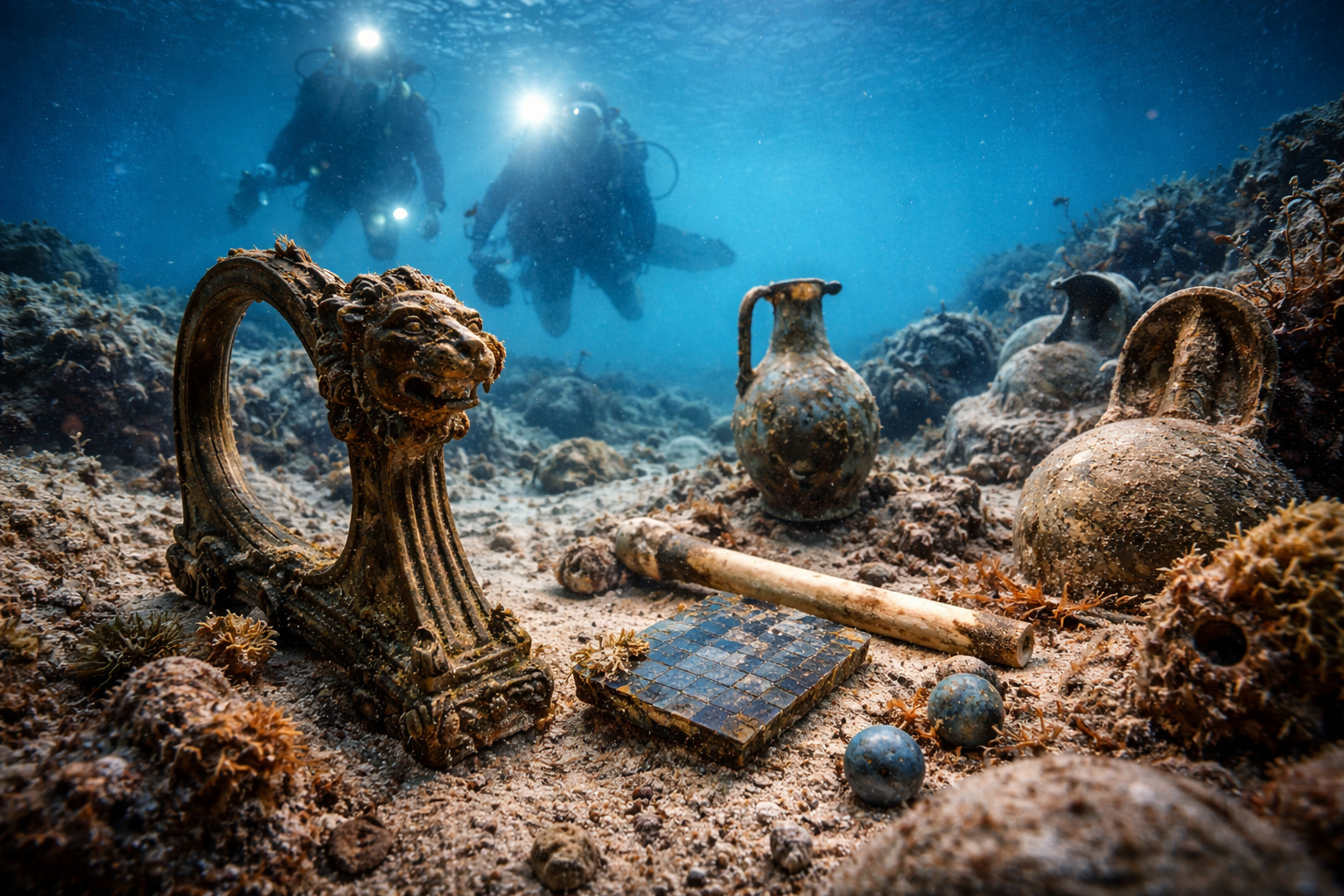
More than 50 artifacts were retrieved from the Antikythera wreck, expanding clues about the cargo, the origin of the ship, and ancient customs
More than 50 artifacts were recovered from the Antikythera wreck, near a remote Greek island, as part of the Return to Antikythera project, which excavates one of the richest underwater sites ever explored.
Excavation expands wreck map
The Antikythera wreck dates back about 2,050 years and continues to attract archaeologists due to the scale and variety of the cargo. The project was launched in 2014 and focuses on what remains under sediments.
The work is led by the Woods Hole Oceanographic Institution and conducted under the supervision of the Greek Ephorate of Underwater Antiquities.
-
Helicopter Drops 180 Tons of Sand and Gravel on Swedish River to Revive Ecosystem Damaged by Decades of Exploitation

-
Brazilian Company Launches Retro Smartphone with 48 MP Camera, T9 Keyboard, and Privacy Features for Social Media-Free Use

-
Self-Taught Chinese Farmer Builds 5-Ton Submarine from Scrap, Launches It in Anhui River
-
Invisible Induction Technology Enables Wireless Power for Blenders, Coffee Makers, and Air Fryers, Reducing Countertop Cables




Finds emerge from the seabed
The expedition represented a breakthrough in understanding the wreck. Divers spent about 40 hours on the seabed, using specialized equipment to conduct controlled excavations.
Metal detectors revealed buried and scattered objects at the site. The results confirmed that a large part of the cargo is hidden beneath the sediments.
Many artifacts were recorded using 3D modeling before and after retrieval. This process allows for precise tracking of each piece’s position and preserves the context of the finds.
Theotokis Theodoulou stated that the team was very lucky this year, as several items were excavated within their original context, enhancing the value of the information obtained.

Objects mix luxury and everyday life
Among the items recovered from Antikythera were more than fifty artifacts, including a bronze armrest that may have belonged to a throne.
Nails, a possible fragment of a utensil, and a fragile mass of bronze also emerged.
Next to this mass of bronze, a blue bead was found. The set helps to compose a picture of the content transported by the ship before the wreck.
The archaeologists also identified fragments of glass mosaic, clear glass vessels, and an ornate lagynos used as a table jar.
The recovery in original context helps to understand how these objects were used.
Other discoveries seem linked to personal life on board, such as parts of a bone flute and a game piece from a board game.
Laboratory seeks origin of the cargo
The team recovered fifteen lead artifacts, including a life ring and parts of anchors, for isotopic analysis.
The researchers believe that the examination may indicate where the lead was extracted and possibly the origin of the ship.
DNA samples were also collected from parts of wood from the hull and intact ceramic vessels. The objective is to expand the tracking of materials linked to the vessel.
Sediments may reveal ancient diet
The team gathered sediment samples to study starch grains and phytoliths. These traces may indicate what the ship was carrying and provide clues about ancient diets.
In a statement released on the Woods Hole Oceanographic Institution’s website, the team noted that the 2015 expedition provided the best knowledge to date about this shipwreck and its cargo.
The same statement reported that metallic targets are scattered over an area of approximately 40×50 meters.
This field of wreckage would indicate the size of the ship that sank in the Antikythera cliffs.
With information from Daily Galaxy.




Be the first to react!