Portuguese
  Spanish


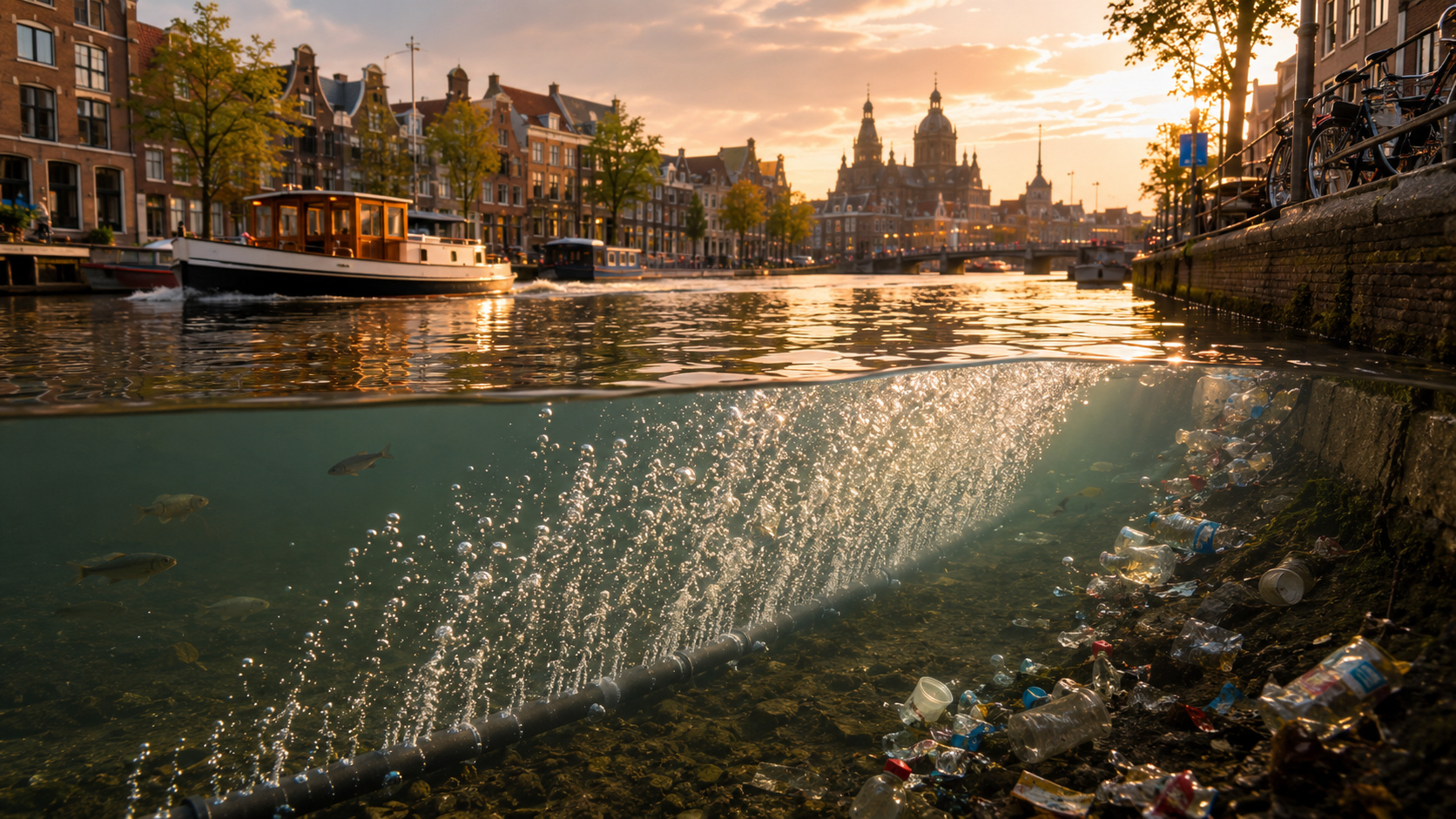


A bubble barrier in Amsterdam was installed in the Westerdok canal to divert plastic before it flows into the IJ river and reaches the North Sea, using air in the water instead of grates, nets, or physical walls
The invisible bubble wall in Amsterdam tries to block plastic without looking like a common structure. It’s not made of concrete, doesn’t appear as a wall, and remains hidden at the bottom of the canal.
The information was released by The Great Bubble Barrier, an environmental technology organization focused on bubble barriers. The system was installed in the Westerdok canal to prevent plastic waste from advancing through the canals, reaching the IJ river, and continuing to the North Sea.
The impact lies in how the city attempts to clean the water. The technology pushes trash to the bank, but it doesn’t block boats, doesn’t impede fish, and doesn’t turn the canal into a closed area.
-
14-Year-Old Student Wins Gold at Brazil’s Largest Math Olympiad After Six Months Without a Math Teacher, Becomes Sole Medalist from His City

-
Brazilian YouTube Sensation “Galinha Pintadinha” Celebrates 20 Years, Amassing 65 Million Subscribers and $700 Million in Annual Revenue

-
Fifth-grader’s Project Turns Used Cooking Oil into Over 160,000 Gallons of Biodiesel, Cuts CO₂ Emissions, and Inspires Law in Rhode Island

-
Started with $80 at 17 Selling Used Clothes, Now Aiming for $18 Million with a Network of 50 Thrift Stores



The bubble barrier creates a wall within the water without using concrete, metal, or netting
The technology works with a tube installed at the bottom of the canal. This tube releases air into the water, forming a curtain of bubbles that rises to the surface.
This curtain is positioned diagonally. As a result, the movement of the bubbles helps guide the plastic to a collection point on the bank.
The most curious part is that the barrier doesn’t look like a barrier. There isn’t a hard wall crossing the canal. What exists is air bubbling within the water.
For those looking from afar, the solution might go almost unnoticed. Nevertheless, it acts in the path of trash before it advances into larger waters.
The Westerdok canal became a strategic point to prevent plastic from advancing to the North Sea
The Westerdok canal is located at one of the exits from Amsterdam’s historic canals to the IJ river. Through this path, trash that escapes through the water can continue towards the North Sea.


The bubble barrier was placed at this point to intercept plastic before it spreads. Instead of waiting for the debris to reach the sea, the system tries to act while still within the city.
This makes a difference because urban waste can move silently through the canals. Often, packaging, bags, and smaller pieces pass through the water unnoticed.
The proposal is simple to understand: hold the plastic in its path, guide the waste to the bank, and facilitate the removal of the material.
The Great Bubble Barrier shows how compressed air can become a weapon against plastic waste
The Great Bubble Barrier, an environmental technology organization focused on bubble barriers, detailed that the system covers the width and depth of the canal. This allows it to reach waste circulating on the surface and also below it.
This point is important because not all plastic floats visibly. Some of the trash can pass underwater and continue with the current.
The bubble barrier helps guide this waste to the collection system. The plastic is concentrated at one point, which makes removal more practical.
The technology was commissioned by the municipality of Amsterdam and the local water authority. The idea is to integrate canal cleaning with a solution that doesn’t hinder city circulation.
Boats continue to pass through the canal and fish do not encounter a physical wall in their path
A common barrier could close the water passage. This would hinder boats, make fish circulation difficult, and change the canal’s routine.
The invisible bubble wall works differently. It creates movement in the water but doesn’t place a grate or net across the canal.
Therefore, boats can pass through the area without being stopped by a rigid structure. At the same time, fish do not encounter a physical blockage impeding their passage.
This is the difference that makes the solution appealing. The city tries to capture plastic without turning the canal into an obstacle.
The technology draws attention because it seems simple, but it tackles a difficult urban problem
Plastic waste in canals is a persistent problem. When not collected, it can flow through the water and reach rivers, larger canals, and the sea.
The bubble barrier acts before this advance. It tries to prevent plastic from leaving Amsterdam’s canals and increasing pollution in the North Sea.
The solution also has a curious visual effect. The city created a wall that isn’t seen as a wall, made only of bubbles, without concrete and without visible metal.
This combination helps explain why the project draws attention. It uses an easy-to-visualize idea, but applied to a real environmental challenge.
The bubble curtain shows that cleaning canals can require less heavy construction and more intelligence
The experience in Amsterdam shows an alternative for cities with canals, urban rivers, and navigation areas. Water cleaning doesn’t need to rely solely on large, visible structures.
In this case, the focus is on using the movement of the water and bubbles themselves to guide the waste. The technology doesn’t eliminate the need for proper disposal, but it creates an extra defense against plastic already present in the canal.
The bubble barrier in the Westerdok canal brings together three noteworthy points: it tries to hold back waste before it reaches the sea, it preserves the passage of boats, and it avoids a physical wall for fish.
Ultimately, the wall that almost no one sees from afar shows that a discreet solution can play an important role against plastic pollution. Do you think technologies like this should be tested in urban rivers and canals in Brazil, or should the focus first be on reducing litter thrown on the streets?