






 Portuguese
  Spanish
  5 min of reading
  0 comments


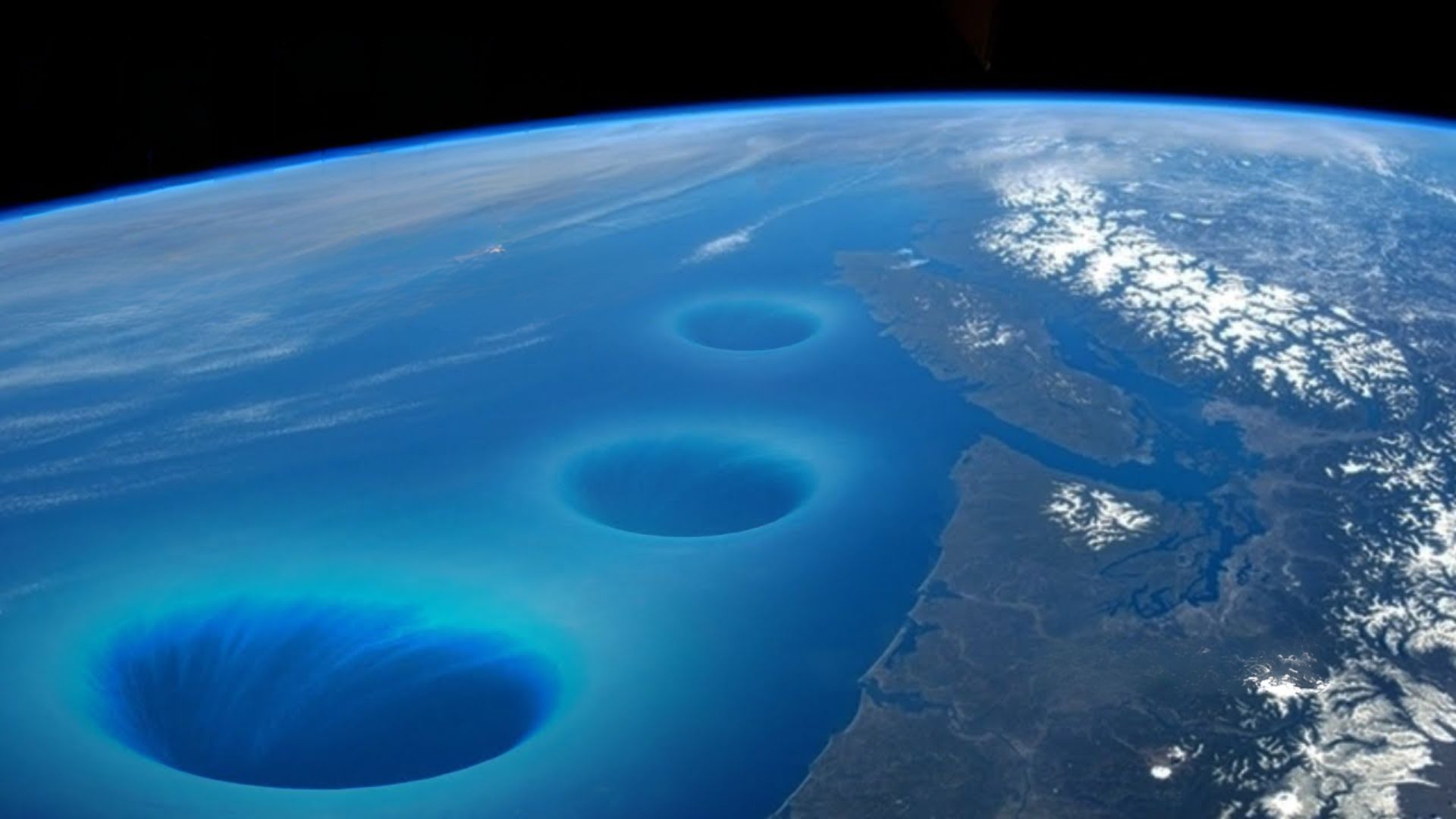
The shape is almost always the same, round and enigmatic, but the story behind each hole can be completely different. In one place, it’s gas escaping from the underground. In another, it’s a dolphin digging in the sand for lunch. The discovery forces science to distrust easy explanations.
Thousands of circular craters scattered across the seabed have always been attributed, almost automatically, to methane leaks rising through the sediment. But recent studies show that many of these marks have very different origins, ranging from dolphins hunting buried fish to slow sediment slides and the thawing of ancient ice ages, overturning an explanation that seemed too obvious to be questioned.
The new interpretation of these formations, technically known as pockmarks, was compiled in a May 2026 report and is based on research published in scientific journals in recent years. First of all, it is worth clarifying that it is not about discarding methane, which remains the correct explanation in many cases, but about recognizing that the same circular shape on the ocean floor can hide completely different stories, something that only careful analysis of each region can reveal.
What are these circular craters

The so-called pockmarks are circular depressions that appear in large quantities on the ocean floor, and for decades the most repeated explanation was the release of methane or other fluids rising through the sediment and leaving rounded cavities as they escape into the water.
-
Survivor of 1966 SS Daniel J. Morrell Shipwreck in Lake Huron Recounts 38-Hour Ordeal in Extreme Cold

-
The Greatest Hoax in World Cup History? The Film That Denied Brazil’s 1958 Victory and Exposed How Fake Evidence Can Seem Convincing on TV
-
Fake South Korean Online Stores Offer Shopping Thrill Without Spending Money or Receiving Products
-
The War of Jenkins’ Ear: How a Severed Ear Sparked One of the 18th Century’s Most Unusual Conflicts


This interpretation remains valid in many places, and the gas indeed forms craters in various regions.
The problem is that scientists have started to realize that it does not account for all cases.
With high-resolution maps of the seafloor, it became clear that structures that look very similar may have been formed by much less obvious processes than gas leaks, which had been leading to misinterpretations.
When the “culprit” is a dolphin
The most surprising explanation came from the North Sea and involves animal life.
A study led by geoscientist Jens Schneider von Deimling from the University of Kiel, Germany, published in 2023, concluded that more than 40,000 shallow depressions in that region were probably not linked to methane, but rather to the behavior of common porpoises, small cetaceans related to dolphins, as they hunt fish buried in the sand.
According to the research, published in the journal Communications Earth & Environment, the porpoises dive to the bottom to hunt sand eels, slender fish that live hidden in the sediment, and as they stir up the sand, they leave small marks that tidal currents later enlarge.
It is worth noting that this is a strong hypothesis, but not yet confirmed by direct images, as the murky water of the North Sea and the shyness of the animals make it difficult to capture, according to the researcher himself.
In California, gravity explains
In another part of the world, a gigantic field of craters had a different explanation.
Off the coast of Big Sur, California, researchers from the Monterey Bay Aquarium Research Institute, the United States Geological Survey, and Stanford University analyzed an area of depressions comparable to the size of Los Angeles and found no significant evidence of gas or fluids in the location.
The study, published in the Journal of Geophysical Research: Earth Surface, pointed to a very different mechanism: gravity.
The seafloor there has a gentle slope, and the sediments have been slowly sliding downhill for at least 280,000 years, with a more recent event about 14,000 years ago.
It was this gradual sliding of material, not methane, that would have shaped the depressions over an immense geological time.
When methane really is the culprit


Despite the new discoveries, gas has not been ruled out.
In the Barents Sea, in the Arctic, giant craters were associated with the end of the last ice age: about 12,000 years ago, an ice sheet up to 2 kilometers thick covered the seafloor and trapped methane in the form of hydrates, a solid compound similar to ice.
With warming and glacier retreat, this gas concentrated and was released abruptly, creating enormous depressions.
The most interesting thing is that the process remains active in some areas: more than 600 columns of gas bubbles still bubble around these formations in the Arctic.
This case shows how climate, ancient ice, and gas combine to sculpt the seabed, and reinforces that each scenario needs to be analyzed on its own, as the same shape may have been created by completely different forces.
Why this matters beyond curiosity
These craters are not just a beautiful enigma on ocean maps.
The correct interpretation of these marks affects how scientists calculate the global carbon cycle because depressions erroneously attributed to methane can inflate estimates of gas emissions that, in fact, never occurred in certain regions, distorting important environmental data.
There is also a very practical impact related to infrastructure.
Submarine internet cables, oil and gas pipelines, and offshore wind farms depend on an accurate reading of the ocean floor’s relief, sediment stability, and terrain movement risks.
Knowing whether a crater was caused by active gas, a landslide, or an animal can make all the difference when planning and installing these structures safely.
The story of the circular craters on the seabed is a beautiful lesson in science: it shows how an explanation that seemed obvious, methane, needed to be revised in light of new evidence, revealing an underwater world shaped by gas, gravity, ancient ice, and even the hunger of dolphins.
More than deciphering holes in the ocean, these studies teach us to distrust easy answers and to look at every detail carefully.
On the seabed, as in life, similar shapes can hide surprisingly different stories, waiting for someone willing to investigate them. here.
And you, had you imagined that holes in the ocean floor could be made by dolphins hunting or by glaciers from thousands of years ago? Which of these explanations surprised you the most? Leave your comment, tell us what you thought of this sea mystery, and share the article with those who love science, oceans, and the enigmas of nature.





-

1 person reacted to this.