






 Portuguese
  Spanish
  6 min of reading
  0 comments


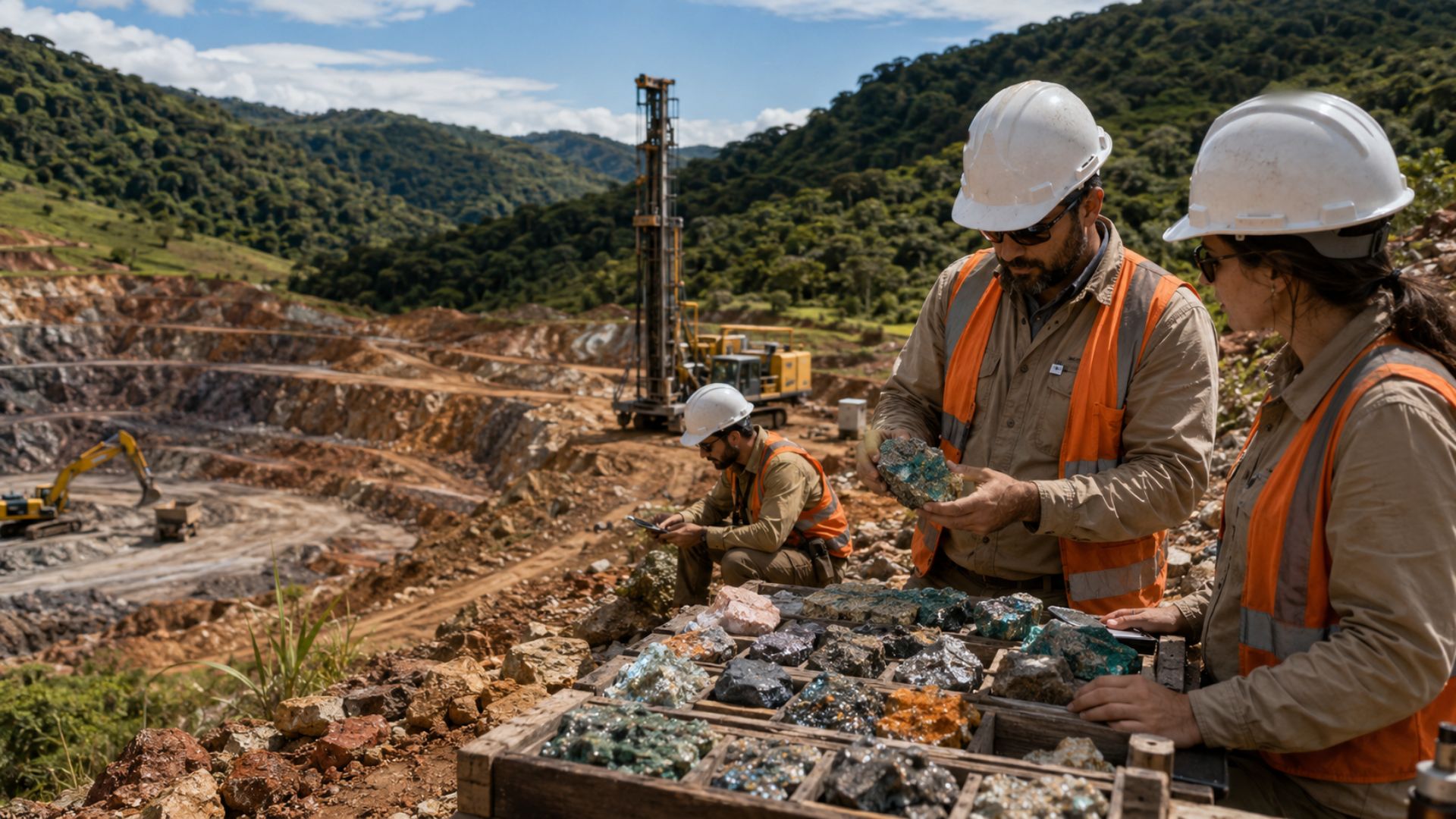
The discovery places the North of Santa Catarina on the map of one of the hottest disputes on the planet, that of minerals that power electric cars and clean energy. But pay attention to the size of the news: what exists so far is promising geological potential, not a mine ready to operate nor authorization to extract.
The northern region of Santa Catarina could become a new hub for strategic minerals after the Geological Service of Brazil found high concentrations of rare earths in Joinville and Garuva. The highlight is neodymium, one of the elements used in the manufacture of high-performance magnets that power electric motors and wind turbines, although any mining in the region still depends on new and in-depth studies, according to the federal agency itself.
The results were released by the federal government on May 11, 2026, and detailed in a report by Gazeta do Povo in early June. First of all, it is essential to correctly size the news: this is a preliminary phase geological potential survey, not the discovery of a deposit ready for exploitation. The SGB is emphatic in stating that the inclusion of an area on the potential map does not represent authorization for mining nor guarantees the existence of an economically viable deposit.
What the study found in Joinville and Garuva
The numbers caught the researchers’ attention for their expressiveness.
-
China could reduce iron ore imports from 80% to 50% of consumption by 2030, while its share in global steel production falls from 52% to 46%, in a shift that could reshape the global market, says CMRG.

-
Brazil is sitting on one of the largest lithium reserves in the world, in the Jequitinhonha Valley, but national mining has almost become an appendage of China: 97% of the metal’s export goes to a single country, which also dominates refining.
-
Iron ore falls to 762 yuan in China as real estate sales decline and steel production hits lowest level since 2018
-
Brazil has minerals, clean energy, and a waiting market, but it could miss a billion-dollar opportunity if it doesn’t speed up the race for green minerals, while the steel industry seeks to reduce emissions.


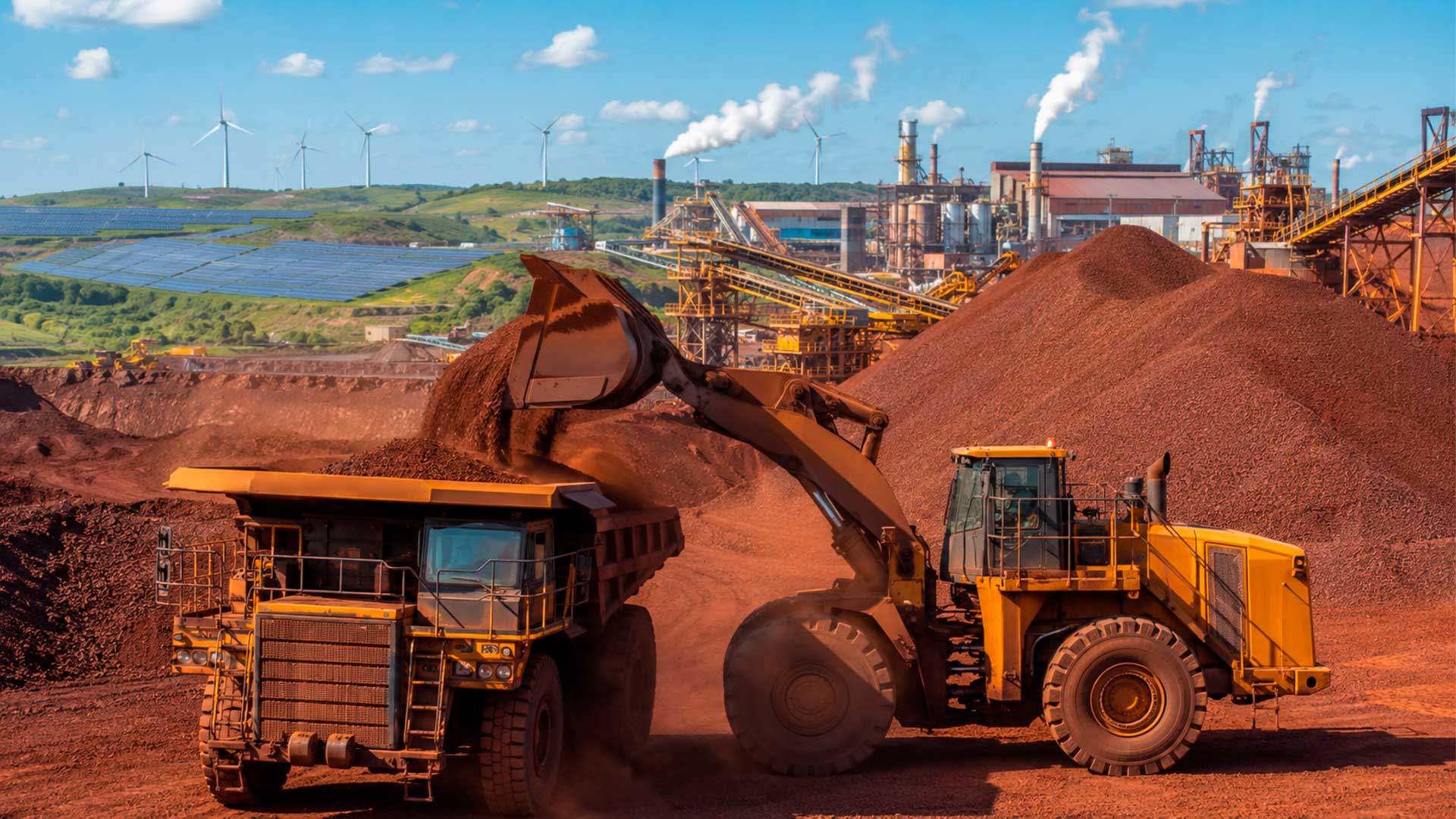
According to the SGB, some soil and rock samples collected in the region exceeded 8,000 parts per million of total rare earths, a level considered high for this type of occurrence, and certain areas recorded more than 3,000 parts per million of magnetic rare earths, such as neodymium and terbium, indicating what geologists call significant enrichment.
According to SGB researcher Guilherme Iolino Troncon Guerra, the initial results are “quite promising,” with the identification of high concentrations in different points studied.
These minerals, according to him, are valued in the market precisely for their use in high-performance magnets, essential for technologies such as electric motors and renewable energy generation, which explains the enormous interest sparked by the discovery.
What are rare earths and why are they so coveted
Behind the curious name, there is a group of vital elements for the modern world.
Rare earths comprise 17 strategic chemical elements for the high-tech industry, present in the manufacture of batteries, electric vehicles, wind turbines, electronic equipment, medical devices, and even defense systems, often being called the “new oil” of the global economy.
Neodymium and terbium, found in significant concentration in the Santa Catarina region, are among the most valuable because they are used in powerful permanent magnets.
These magnets are the heart of electric car motors and turbines that generate clean energy, directly linking the discovery to the global energy transition.
Not by chance, there is currently an intense international competition for these minerals, a market historically dominated by China.
The Ribeira Belt, an ancient geological treasure
The explanation for such wealth lies in the deep history of the planet.
Joinville and Garuva are part of the so-called Ribeira Belt, an ancient mountain range formed over 500 million years ago, from the collision between continents and the closing of oceans, in a geological formation that extends through São Paulo, Paraná, and Santa Catarina.
According to geologist Daniel Fernandes, this belt is an orogenic structure, formed by folds and faults, linked to the so-called Brazilian Orogeny, with about 1,400 kilometers in length.
It is precisely the granites and alkaline formations of this ancient mountainous region that attract the attention of geologists in the search for strategic minerals, as they bring together favorable conditions for the occurrence of rare earths.
Attention: potential is not the same as a mine
Here is the point that requires more caution when reading the news.
The Geological Service of Brazil makes it clear that the presence of geochemical anomalies and favorable geological characteristics does not, by itself, prove the existence of economically viable deposits, and that inclusion on the potential map does not authorize any immediate mining in the region.
Any future exploration project would depend on a series of steps: the precise definition of mineral resources and reserves, specific technological studies, and environmental licensing processes conducted by competent companies and agencies.
In other words, between the promising current result and a potential operational mine, there is a long, technical, and uncertain path that can take years and does not always materialize.
What the municipalities say and the next steps
In light of the repercussions, the involved municipalities have adopted a cautious stance.
The Secretary of Innovation and Communication of Garuva, Rafael da Luz, stated that the city hall is monitoring the SGB studies and is awaiting official data from federal agencies, promising to evaluate everything “with responsibility and transparency” if the discovery is confirmed, while the city hall of Joinville reported that it is still gathering technical information on the subject.
The study is still in its preliminary phase and is expected to continue until 2027, with new collections and geochemical and geophysical analyses.
The SGB research also covers municipalities in Paraná, such as Cerro Azul, Castro, and Tijucas do Sul, and in São Paulo, expanding the mapping of the mineral potential of the South and Southeast regions.
The expectation is that, with more data, it will be possible to truly understand the size and viability of these occurrences.
Opportunity and Responsibility
The possible mineral vocation brings promises but also requires caution.
If the viability is confirmed, the exploration of rare earths could open paths for economic development and job creation for the North of Santa Catarina, inserting the region into a strategic global production chain, at a time when the world is seeking alternatives to dependence on China in this sector.
On the other hand, it is important to remember that rare earth mining can involve significant environmental impacts, requiring rigorous licensing and dialogue with local communities.
The balance between harnessing this mineral wealth and protecting the environment and quality of life will, therefore, be a central theme if the exploration advances, something that deserves close monitoring by the population and authorities.
The discovery of high concentrations of rare earths in Joinville and Garuva places the North of Santa Catarina on the map of one of the most strategic disputes of the century, that of minerals that support technology and the energy transition.
Even though the result is promising, it is essential to keep grounded: this is a geological potential under study, not a guaranteed mine.
The future will tell if the region will indeed become a new hub of strategic minerals, but the mere fact of entering this map is already a milestone that deserves attention and responsible monitoring.
And you, do you live in or know the region of Joinville and Garuva and were surprised by this potential of rare earths? Do you think the mining of these strategic minerals would be a good opportunity for the North of Santa Catarina, or do you fear the environmental impacts? Leave your comment, share your opinion, and share the article with those from the region who are interested in economy, mining, and technology.




Be the first to react!