






 Portuguese
  Spanish
  5 min of reading
  0 comments


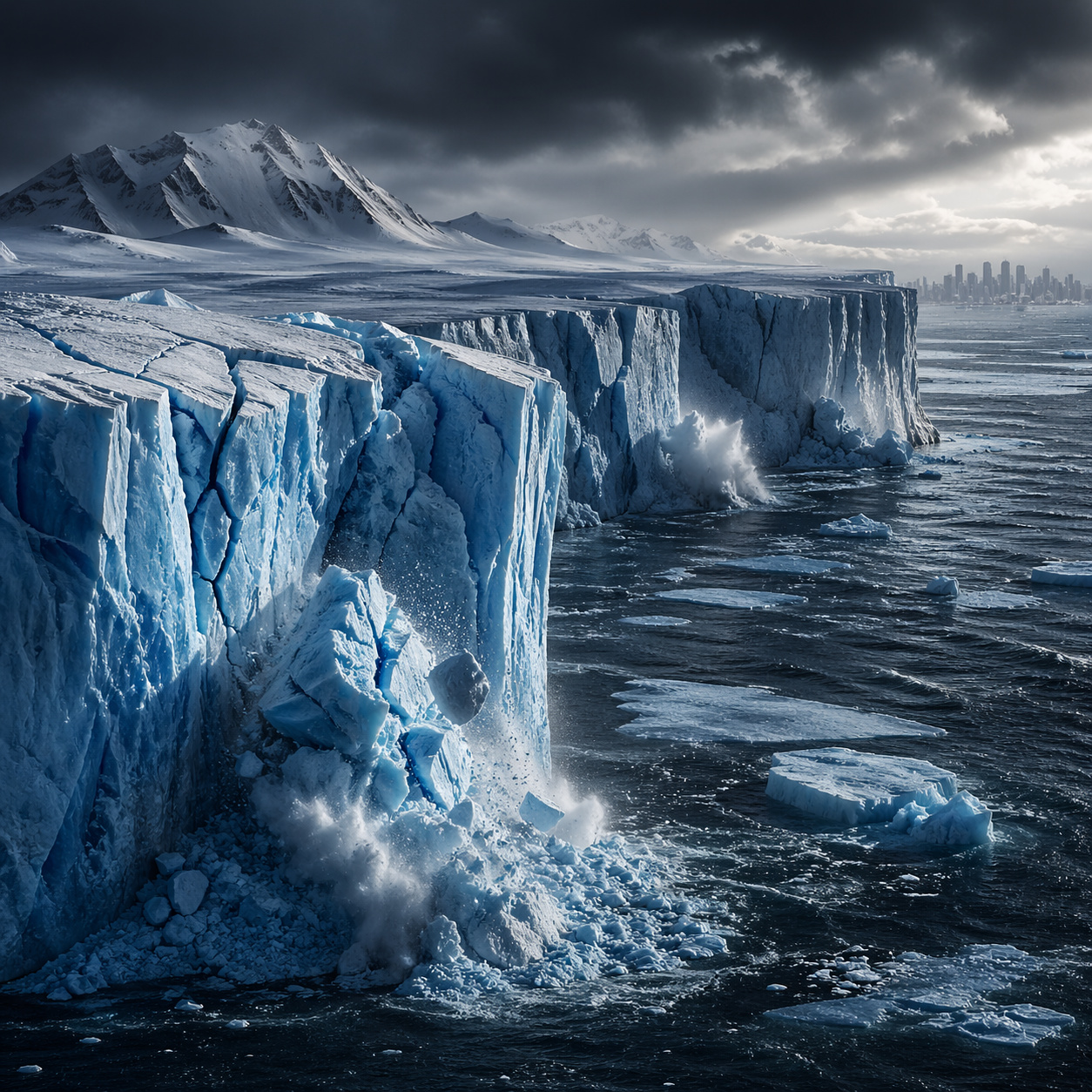
Thwaites and Pine Island Glaciers could collapse with current warming and raise sea level by up to 1 meter, according to recent studies.
On January 23, 2025, a study published in the scientific journal The Cryosphere, authored by Tim van den Akker and collaborators, analyzed the stability of the West Antarctic ice sheet, focusing on the Thwaites Glacier and Pine Island Glacier, two of the region’s most sensitive systems for the future of global sea level. The work combined ice modeling, satellite observations of mass loss, ice thickness and velocity, in addition to adjusting oceanic thermal forcing to reproduce current conditions. The conclusion was incisive: if this oceanic forcing persists over centuries, Thwaites and Pine Island collapse in all members of the simulation ensemble tested by the authors.
This is the central point. The study does not only address a risk conditioned by additional warming in extreme scenarios, but a process that may already be underway under current oceanic conditions. According to the authors, the mass loss observed today already functions as a precursor to large-scale deglaciation in West Antarctica, with the potential to raise the global average sea level by at least 1 meter over the coming centuries.
Why Thwaites and Pine Island are considered the most dangerous glaciers on the planet
The Thwaites and Pine Island glaciers are not isolated structures. They function as true “buttresses” for West Antarctica, holding back large volumes of ice within the continent.
-
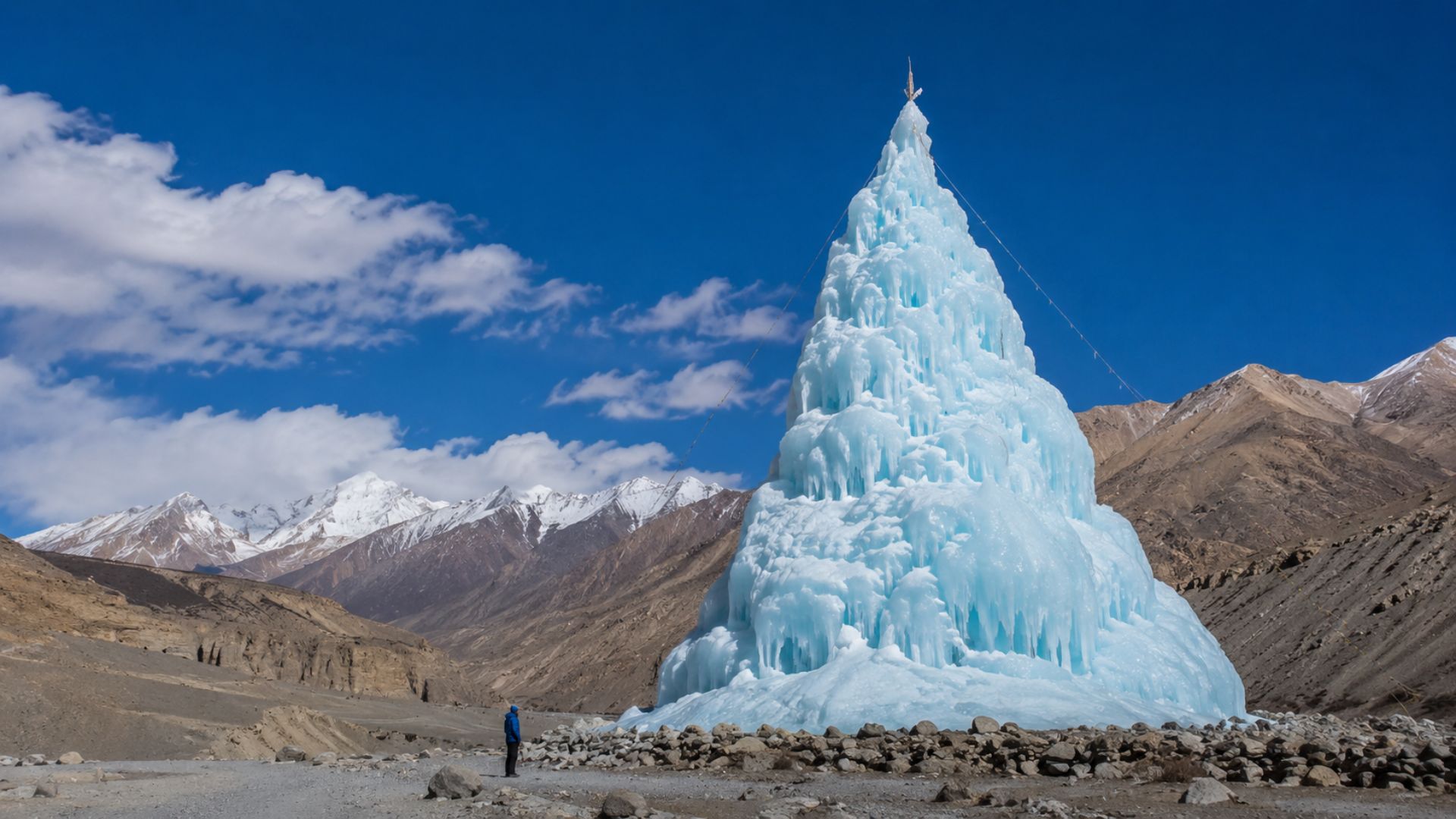
In the cold desert of Ladakh, where it hardly rains, engineer Sonam Wangchuk created the ice stupa, a tower that freezes winter water and stores it for irrigating crops in the spring, a simple engineering feat that mimics nature.

-
For the first time in history, solar and wind energy generated more electricity than natural gas worldwide in a single month, April 2026, a milestone in the energy transition that shows renewable sources taking the lead in the global electric system.
-
The Amaterasu particle, a cosmic ray with energy millions of times greater than that of the world’s largest accelerator, hit the Earth coming from the Local Void, a region of space that is practically empty where, in theory, there should be nothing capable of creating it.
-
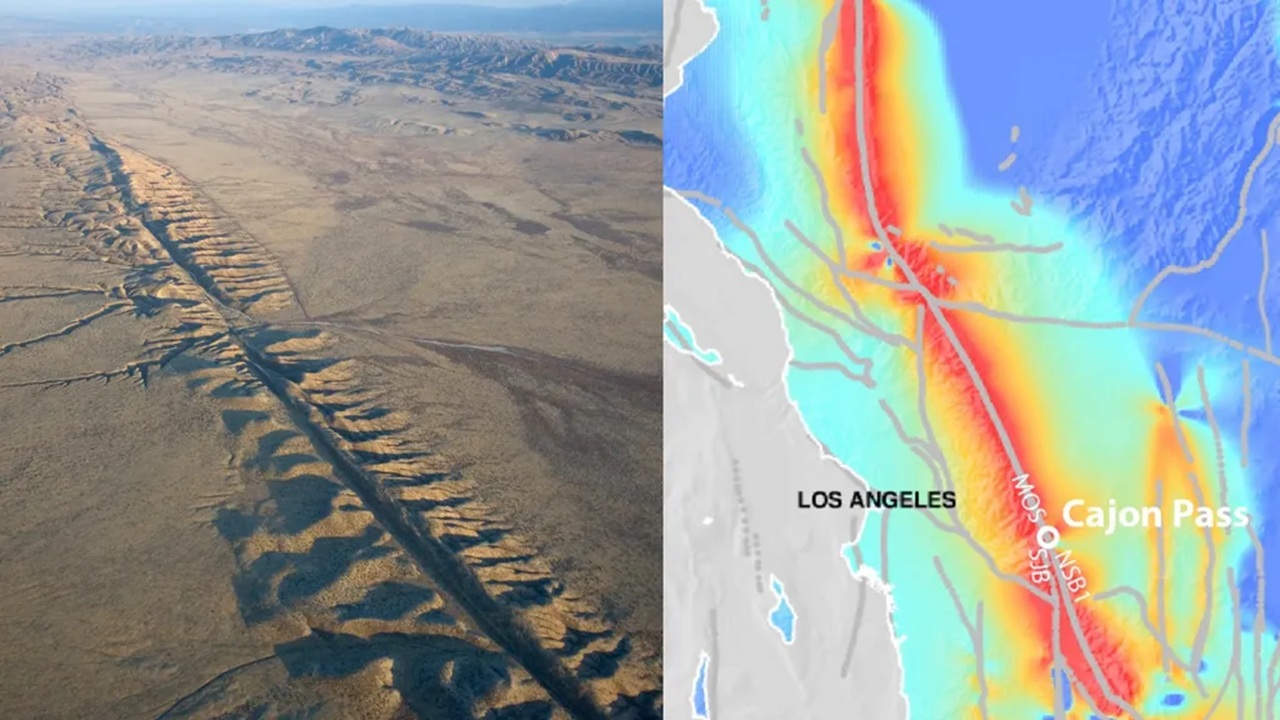
Giant earthquake returns to haunt California after study points out San Andreas and San Jacinto faults at highest stress level in 1,000 years, with risk involving Los Angeles and other populated areas.



If these glaciers lose stability, they could allow giant masses of ice to begin flowing into the ocean, accelerating sea level rise.
Thwaites, in particular, is often called the “doomsday glacier” due to its potential global impact.
Together, these two glaciers control a region that contains enough ice to raise sea level by several meters over time.
Ocean warming is eroding glaciers from below
The main factor in the instability of these glaciers is not on the surface, but beneath them. Warmer ocean waters are penetrating beneath the floating ice shelves, melting the base of the glaciers.
This process weakens the supporting structure and reduces the friction that keeps the ice attached to the continent. With less resistance, the ice begins to flow more quickly towards the sea.
This phenomenon is known as “basal melt” and is considered one of the most dangerous mechanisms of ice loss.
Study indicates collapse may occur even without new temperature increases
One of the most concerning points of the study is the conclusion that the system may have crossed a critical threshold. Even if global warming were stabilized today, the heat already accumulated in the oceans may be sufficient to continue the melting process for centuries.

This means that the system may have entered a state of self-acceleration. This type of behavior characterizes a tipping point, where reversal becomes extremely difficult or impossible on a human timescale.
Collapse could trigger a domino effect across West Antarctica
The Thwaites and Pine Island glaciers are connected to a larger ice network. If they lose stability, they could initiate a process known as “marine ice sheet instability.”
In this scenario, the retreat of the glaciers exposes deeper areas of the bedrock, allowing the ocean to advance even further beneath the ice.
This process could propagate to other regions, triggering a chain collapse. The result would be the destabilization of large parts of West Antarctica.
Sea level rise could exceed 1 meter with global impact


The study indicates that the collapse of these glaciers could contribute to a rise of at least 1 meter in the global average sea level over time.
This number, while seemingly moderate at first glance, has profound implications. An increase of this magnitude could directly affect hundreds of millions of people living in coastal areas.
Cities, ports, infrastructure, and ecosystems would be impacted. Furthermore, the rise in sea level amplifies the effects of storms, tides, and extreme events.
Impacts will not be uniform and may hit more vulnerable regions with greater intensity
Sea level rise does not occur uniformly. Factors such as ocean currents, gravity, and local characteristics can intensify the impact in certain regions.
Densely populated and low-lying areas are among the most vulnerable. This includes deltas, islands, and large coastal cities.
The impact can also vary over time, with cumulative effects becoming more evident in the coming decades.
Glaciers already show signs of instability in recent observations
Observational data indicate that both Thwaites and Pine Island already show signs of change.
Among them are:
- Increased ice flow velocity
- Thinning of floating ice shelves
- Grounding line retreat
These signs are consistent with the onset of destabilization processes. While they do not indicate immediate collapse, they show that the system is undergoing transformation.
Antarctica goes from distant symbol to direct factor in the future of coastal cities
For a long time, Antarctica was seen as an isolated environment, distant from everyday life. However, changes on the continent have a direct impact on global sea level.
This connects polar processes to urban, economic, and political decisions worldwide. What happens beneath the ice of Antarctica can influence the future of coastal cities on different continents.
Despite the worrying conclusions, researchers acknowledge uncertainties in the models. Factors such as ice dynamics, ocean behavior, and complex interactions are still being studied.
However, the general trend points to increased risk, not reduction. This means that, even with uncertainties, the scenario demands attention.
What is at stake with the possible instability of the planet’s most critical glaciers
The stability of the Thwaites and Pine Island glaciers is not just a scientific issue. It involves the future of sea level, coastal infrastructure, and the safety of millions of people.
The process is slow on a human scale, but continuous. Once started, it can last for centuries.
The case of these glaciers raises a fundamental question. How to deal with processes that are not immediate, but that can profoundly alter the planet over time?
Antarctica ceases to be just a remote environment and becomes part of a global equation. The question that remains is direct: to what extent is humanity prepared to face change


-

1 person reacted to this.