






 Portuguese
  Spanish


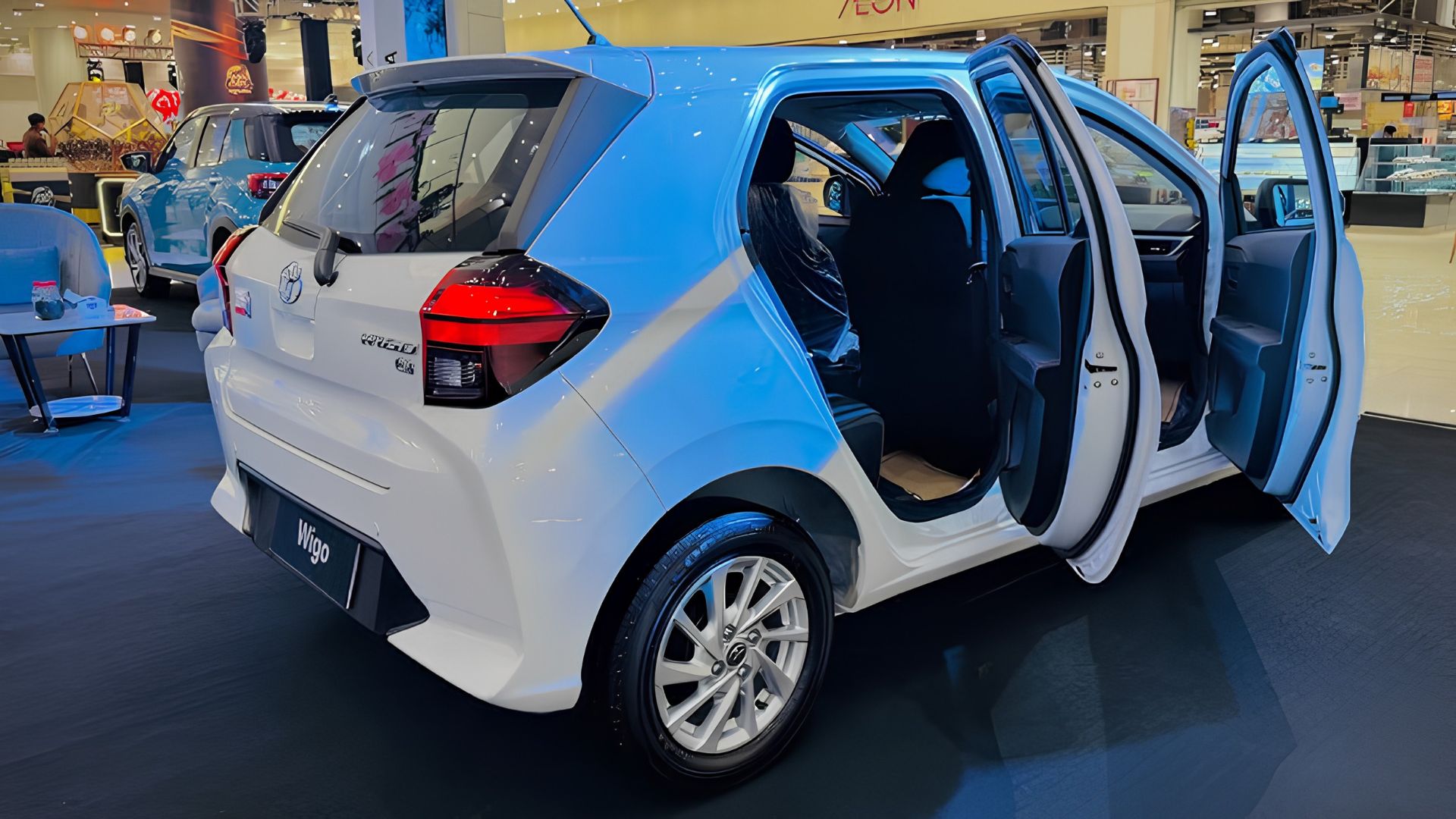


Toyota Wigo sold in the Philippines combines 1.0 engine, CVT transmission, rear camera, and price equivalent to a popular car in direct conversion.
While the Brazilian market has practically abandoned truly cheap compact hatches, Toyota continues to sell a small, economical, and relatively affordable urban model in Asian countries. The Toyota Wigo remains one of the brand’s entry points in the Philippines and stands out precisely because of the contrast with the Brazilian scenario.
In the approximate direct conversion of May 2026, the simplest version of the Wigo costs around R$ 49,000. Even being a compact urban hatch, the model already offers the option of CVT transmission, rear camera, multimedia, and a safety package that many old popular cars never had.
The Toyota Wigo was created to be a compact and economical urban hatch
The Wigo was born as a hatch mainly aimed at emerging Asian markets. The model is developed on the DNGA-A platform, a compact architecture linked to Daihatsu, a Toyota subsidiary focused on small and affordable cars.
-
2027 Toyota Corolla Cross Unveiled: New Design, Enhanced Fuel Efficiency, Reduced Maintenance Costs, Advanced Technology, Connected Services, and Up to 10-Year Warranty

-
Fiat Cronos Precision 2018: Affordable Sedan with Spacious Trunk and Reliable Maintenance
-
Volkswagen to Cut Production by 1 Million Cars by 2030, Reducing Jobs and Platforms, Focusing on More Profitable Models

-
Toyota Launches First 100% Electric Car in Brazil: bZ4X with 343 HP, All-Wheel Drive, 361 km Range, Priced at $419,990 BRL, Limited to 99 Units



The proposal is extremely urban. The hatch measures about 3.76 meters in length, dimensions that help with maneuvers, parking, and heavy traffic.


Even though it’s small, the Wigo tries to deliver a modern appearance with more aggressive lines, updated lighting, and a more technological cabin than many old compacts sold in Brazil. This makes the car seem more sophisticated than its size really suggests.
The price draws attention because it is below many basic Brazilian cars
According to Toyota Philippines, the Wigo starts at ₱615,000 in the manual version and goes up to ₱735,000 in the more complete CVT configurations. In the approximate direct conversion of May 2026, this represents something between R$ 49,000 and R$ 59,000.
Naturally, these values do not include Brazilian taxes, freight, homologation, or import costs. Even so, the editorial impact is strong because many Brazilian compact cars easily exceed the range of R$ 80,000 or R$ 90,000.
The contrast becomes even greater because it is a Toyota, a brand normally associated in Brazil with more expensive models like Corolla, Hilux, and SW4. The Wigo shows precisely another side of the Japanese manufacturer’s global strategy.
The 1.0 three-cylinder engine prioritizes economy and urban use
The hatch uses a naturally aspirated 1.0 three-cylinder engine identified as 1KR-VE. According to specifications released by Toyota Philippines, the engine delivers about 65 hp and torque close to 89 Nm, paired with a five-speed manual gearbox or CVT transmission depending on the version.
The focus is clearly not on sporty performance. The idea of the Wigo is to offer low operational cost, reduced consumption, and ease of use in large urban centers.
Being light and compact, the hatch manages to deliver relatively agile behavior in urban commutes even using a small engine.
The CVT transmission helps the model appear more modern than older compacts
An important detail is the presence of the CVT gearbox in higher versions. For many years, cheap compact cars were stuck with simple manual transmissions or automated ones criticized for poor performance.

In the Wigo, Toyota bets on the CVT precisely to improve urban comfort and the feeling of smoothness in heavy traffic. This helps the hatch appear more refined than entry-level compact models sold in previous decades.
Even in a small and relatively cheap car, the brand tries to deliver a driving experience closer to larger modern models.
The hatch also brings important urban equipment for daily use
Depending on the version, the Wigo can offer a rear camera, multimedia center, push-button start, sensors, and basic connectivity features. The higher versions also add convenience items and more elaborate finishes.
In the safety package, the model includes airbags, electronic controls, and basic assistance systems for the category.
This set reinforces the idea of a simple urban car, but technologically updated to current standards.
Technical specifications — Toyota Wigo
| Item | Toyota Wigo |
|---|---|
| Category | Urban compact hatch |
| Engine | 1KR-VE |
| Cylinders | 3 inline cylinders |
| Displacement | 998 cm³ |
| Maximum power | 65 hp |
| Maximum torque | 89 Nm |
| Fuel | Gasoline |
| Manual transmission | 5 gears |
| Automatic transmission | CVT |
| Drive | Front |
| Length | 3,760 mm |
| Width | 1,665 mm |
| Height | 1,515 mm |
| Wheelbase | 2,525 mm |
| Fuel tank | 36 liters |
| Seats | 5 occupants |
| Trunk | about 260 liters |
| Steering | Electric |
| Rear camera | available |
| Multimedia center | available |
| Airbags | available depending on version |
Data may vary depending on market and configuration.
The Toyota Wigo shows a type of car that has practically disappeared from Brazil
In recent years, the Brazilian market has lost a good portion of truly affordable compact hatches. Many manufacturers have reduced the offering of small models while compact SUVs have come to dominate sales.
The Wigo represents precisely the opposite direction: a small, light, urban car designed for low daily use costs. This explains why the hatch draws so much attention when it appears in international comparisons.
While in Brazil Toyota is mainly associated with medium sedans and expensive SUVs, in other markets the brand still maintains relatively affordable compact cars aimed at entry-level urban consumers.
And perhaps this is exactly what makes the Wigo so intriguing to the Brazilian public: it shows a simple and cheap Toyota that has practically ceased to exist here.









