






 Portuguese
  Spanish
  3 min of reading


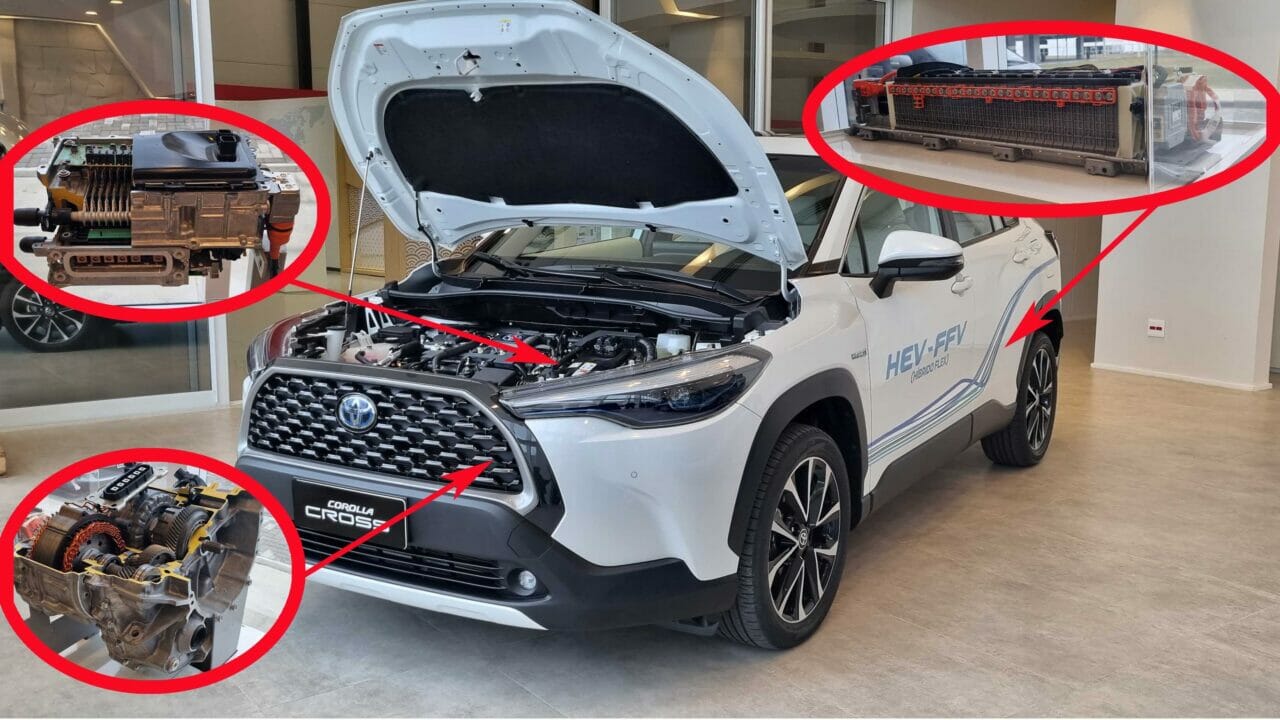
New Toyota Battery Will Have Four Versions and Promises to Completely Change the Global Electric Car Market. The New Technology Will Meet the Demand for 1.7 Million Electric Cars.
Toyota has fully entered the electric car sector and, after announcing a new factory exclusively for battery vehicle production in 2026, the automaker also revealed that it is working on four new next-generation batteries. Some reduce the vehicle cost by up to 40% and can deliver a range of 1,200 km.
New Toyota Battery Will Meet Demand for 1.7 Million Electric Cars
According to data from the website Inside EVs, Toyota will have four types of batteries. Three of them will feature new liquid electrolyte technologies and one will have solid-state battery technology. For the company, the new Toyota battery will meet the demand for 1.7 million cars among the 3.5 million that Toyota plans to sell worldwide by 2030.
Additionally, the website states that the brand has divided the liquid electrolyte batteries, the first type, into three categories: Performance, High Performance, and Popularization.
-
Uber Faces Shareholder Scrutiny as Board Accused of Ignoring Safety, Compliance, and Harassment Warnings Amid Over 3,500 U.S. Lawsuits

-
Ferrari’s First Electric Car Divides Fans, Priced at $630,000, Amid Concerns Over Limited Editions; Brand Clarifies It’s Not Just for Future Perks
-
BYD Dolphin Mini: The Electric Car That Defies Depreciation, Losing Only 3.58% in a Year and Becoming the Best-Selling Retail Model Under $22,000

-
Electric Car JAC E-JS4 Loses $19,000 in Value in One Year, Leading Record Depreciation of Used Cars in Brazil Due to Expensive Battery and New Models


This type of device is currently the most widely used in the electric car industry, and Toyota’s categorization is linked to improvements aimed at greater energy density, competitive pricing, and charging speed.
The new performance-oriented Toyota battery would provide a range of over 800 km and a price 20% lower than the cost of the bZ4X model. Furthermore, it would recharge in approximately 20 minutes, taking into account improvements made to the models (in terms of weight and aerodynamics) to accommodate it. The new component is expected to reach Toyota’s electric cars by 2026.
Learn About the Other Batteries for Toyota Electric Cars
Battery Type 2: Popularization will have lithium iron phosphate (LFP) chemistry and aims to be cheaper to popularize electric cars. The table provided by the automaker shows that it should cost up to 40% less than the bZ4X. However, its range is lower, reaching only 600 km, and it takes about 30 minutes to charge. This new Toyota battery is expected to hit the market between 2026 and 2027.
The high-performance battery aims to deliver a 10% reduction compared to the current model with approximately 20 minutes of charging time. Its distinguishing feature is its range, which can reach 1,000 km.
This version is expected to hit the market between 2027 and 2028. Finally, the fourth type of battery, the solid-state battery, does not yet have defined savings; however, it is also expected to provide a range of 1,000 to 1,200 km. The attraction of this new Toyota battery would be its charging time, which is just 10 minutes. These are expected to hit the market starting in 2027, with some still without a defined date.
Toyota Advances with Solid-State Batteries
In July, a report published by The Guardian, citing the president of Toyota’s research and development center for carbon neutrality, Keiji Kaita, stated that the multinational has simplified the production of the material used to produce solid-state and liquid-based batteries, which will allow for a reduction in weight by half, as well as size and cost of the packages that will be installed in electric cars.
Kaita emphasizes that both for its liquid batteries and for its solid-state batteries, the automaker’s focus is to dramatically change the current situation, where batteries are very large, expensive, and heavy. In terms of potential, Toyota aims to reduce all these factors by half.





Be the first to react!