Portuguese
  Spanish


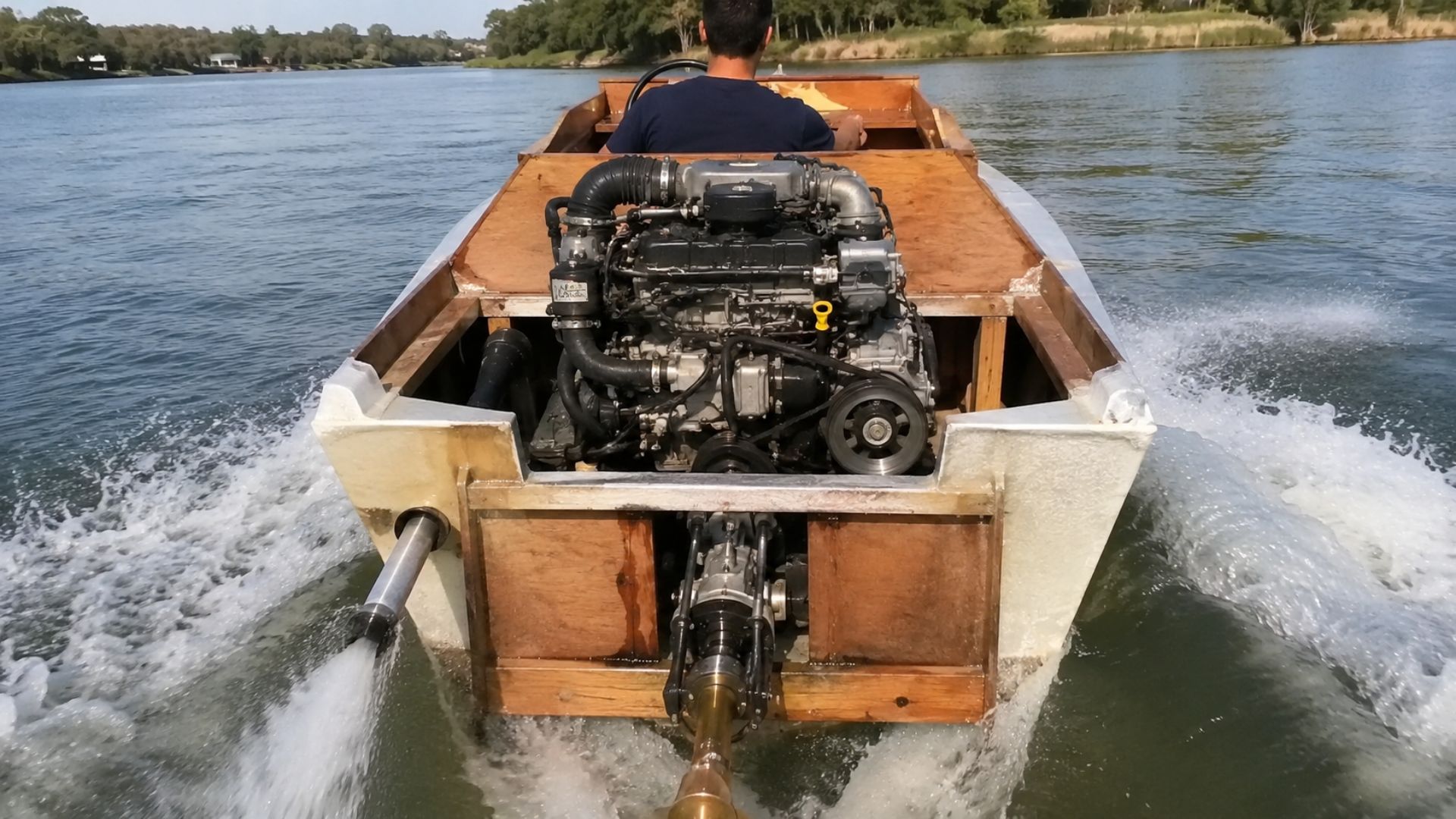

Artisanal project repurposes automotive engine in functional vessel, combines low-cost mechanical solutions, structural reinforcement with fiberglass, and adaptations for safe navigation, while drawing attention to technical challenges related to cooling, ventilation, corrosion, and propulsion system alignment.
The use of an automotive engine in artisanal vessels has gained traction among independent projects seeking to reduce costs without sacrificing performance, although the adaptation requires rigorous technical care related to safety, cooling, and structural resistance.
In this type of construction, the repurposing of parts joins the use of a reinforced hull and the integration between engine, shaft, propeller, and cooling systems, forming an alternative solution that sparks interest among artisanal navigation enthusiasts.
Adapted automotive engine becomes an alternative for artisanal vessel
In many regions, dedicated nautical engines still present high prices, specialized maintenance, and difficulty in component replacement, a scenario that encourages independent builders to seek more accessible alternatives for small vessels.
-
Suitcase-sized hydrogen engine spins at 25,000 rpm, nearly doubling the efficiency of conventional cars and replacing exhaust smoke with water vapor

-
1983 Chevrolet Runs Over 100,000 km Without Gasoline, Powered by Wood Chips, Reaches 125 km/h in Airport Test

-
Workshop Converts Giant Tractor Tire Tricycle into a Three-Wheel Drive Hybrid with 36,000-Watt Electric Motor Capable of Climbing Hills

-
Sales of Brazil’s Cheapest Electric Car Halted Before First Deliveries: E-Motors Suspends Emova Easy Due to Import Tax Increase and Rising Freight Costs




In this context, used automotive engines appear as a viable option due to the wide availability in the market and the familiarity of mechanics with this type of setup, which facilitates repairs, periodic overhauls, and acquisition of replacement parts.
Even so, the adaptation goes far beyond positioning the engine inside the hull, as equipment developed for terrestrial vehicles begins to operate under constant humidity, continuous vibration, and direct exposure to corrosion caused by the marine environment.
Cooling system and mechanical adaptation require attention
A large part of the project’s complexity is concentrated on the integration between engine, power transmission, and vessel structure, as the system needs to transfer torque to the propeller without causing misalignments, excessive clearances, or vibrations harmful to the hull.
While vehicles use radiators and air circulation to control engine temperature, vessels usually rely on thermal exchange systems with external water, requiring components prepared to withstand frequent contact with moisture and debris.
Another sensitive point involves gasoline engines installed in enclosed compartments, a situation that demands efficient ventilation to prevent the accumulation of flammable vapors and reduce risks associated with fires or explosions during navigation.
According to recommendations from ABYC, an international technical reference in the nautical sector, ventilation systems should act in the removal or dilution of combustible vapors accumulated in areas near the engine and tanks.
Reinforced hull needs to withstand vibration and thrust
In most handcrafted projects, the hull is constructed with marine plywood coated with resin and fiberglass, a combination that offers structural resistance and allows for better distribution of the forces generated by the mechanical assembly during navigation.
Besides supporting the engine, shaft, and rudder, the structure needs to receive specific reinforcements in the stern area, a region constantly subjected to the thrust of the propeller, engine vibrations, and loads transmitted by the propulsion system.
If the engine positioning is done incorrectly, problems such as premature wear, loss of energy efficiency, increased noise, and even structural compromise of the hull in continuous use situations may arise.
For this reason, builders usually conduct out-of-water tests and progressive inspections before the first navigation, a procedure that helps identify abnormal heating, fastening failures, leaks, and misalignments in the assembly.
Safety on the vessel defines project viability


Although the reuse of automotive engines reduces costs in handcrafted projects, adaptation for nautical use involves specific risks that do not usually appear in conventional vehicles, especially in enclosed environments subject to the accumulation of flammable vapors.
Electrical failures, overheating, and fuel leaks are among the main risk factors during navigation, which is why ventilation systems and periodic inspections become indispensable steps in the operation of the vessel.
According to guidelines cited in technical manuals of the United States Coast Guard, compartments with permanently installed gasoline engines must remain open to the atmosphere or have adequate mechanical ventilation.
In Brazil, vessels need to comply with the rules established by the maritime authority, including requirements related to documentation, mandatory equipment, and minimum safety conditions compatible with each type of navigation.
Low-cost project increases access but requires responsibility
Even in low-cost projects, technical planning remains crucial for the reliability of the vessel, as the engine, hull, shaft, propeller, electrical system, fuel, and ventilation work in an integrated manner throughout the operation.
In this scenario, anticorrosive protection, sacrificial anodes, specific painting, and frequent inspections help to extend the durability of the assembly, especially in regions subject to continuous contact with moisture and saline atmosphere.
Despite the economic advantages, automotive components were not originally developed to operate in a marine environment, a characteristic that requires constant maintenance and careful technical monitoring throughout use.
Handcrafted projects of this type show how independent solutions can expand access to motorized navigation, provided they are conducted responsibly, with respect for safety standards, and permanent monitoring of the vessel’s conditions.