Portuguese
  Spanish


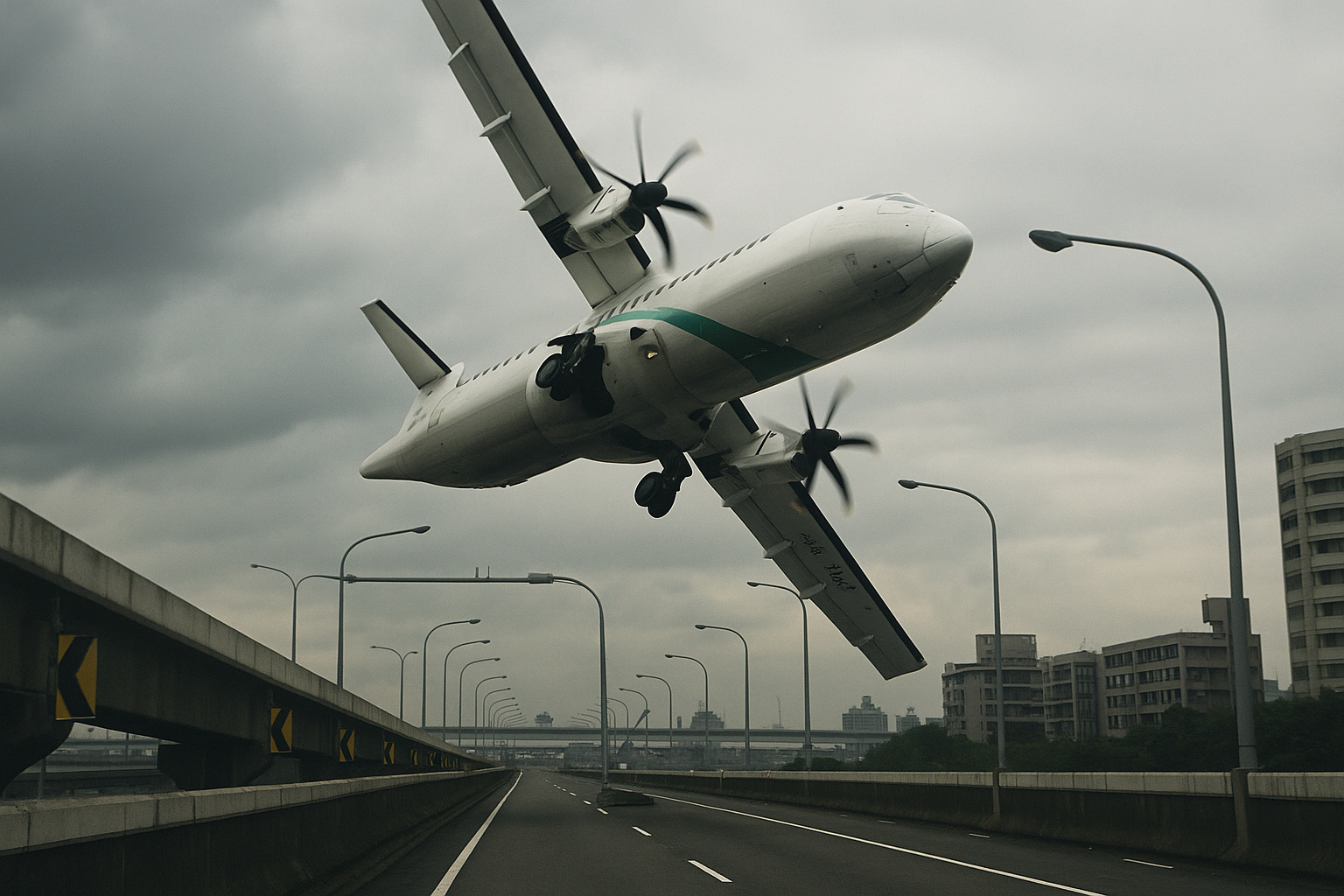


The TransAsia 235 Pilot Shut Down The Wrong Engine Causing The Plane To Crash In Taiwan. Understand The Errors And Curiosities About The Accident.
When A Human Error Changes Everything: The TransAsia 235 Case
The TransAsia 235 flight accident, which occurred on February 4, 2015, remains one of the most shocking episodes in modern civil aviation.
The ATR 72-600 aircraft, with 53 passengers and 5 crew members, crashed shortly after takeoff in Taipei, the capital of Taiwan, after the pilot shut down the wrong engine amid a technical failure.
The impact was devastating. The aircraft struck a taxi on Huandong Boulevard and fell into the Keelung River, killing 43 people. Images of the moment, captured by security cameras, circulated worldwide and shocked the public due to the sequence of human errors and training failures that led to the tragedy.
-
Brazil Welcomes Spanish Wamos Air and Nigerian Air Peace, Potentially Transforming International Routes and Increasing Competition

-
Offshore air transport soars in Brazil, surpasses 2.5 million passengers, and reveals how oil has transformed Rio’s airports into key pieces of national logistics.

-
Latin America becomes the “global champion” of aviation taxes, tickets may become more expensive in Brazil, and IATA’s warning exposes risk for flights, tourism, and passengers.
-
Brazil has lost 85 air routes since 2019 and is still flying less than before the pandemic, leaving passengers with fewer destinations, fewer frequencies, and a more limited air network.


The Start of The Flight And The Error That Cost Lives
The TransAsia Airways flight 235 departed from Songshan Airport bound for Quemoy Island, on a short and routine route. The flight was commanded by Captain Liao Chien-tsung and First Officer Liu Tze-chung, accompanied by a third pilot in training.
Seconds after takeoff, the ATPCS system — responsible for controlling engine power — failed. Despite being alerted by the First Officer, the Captain decided to proceed with the takeoff, going against civil aviation protocols.
With the aircraft already in the air, the system automatically cut power to the right engine and signaled “Engine 2 flame out.” Confused, Captain Liao shut down the left engine, which was functioning normally. With power cut on both sides, the plane lost lift and entered stall — when the aircraft loses the ability to maintain flight.
Seconds of Panic And The Fatal Shutdown
Voice recordings from the cockpit reveal the chaos in the final seconds. Alarms sounded, and the pilots were confused about which engine had failed. “Ok, engine 2 shutdown confirmed,” said the First Officer. Liao responded “ok,” but continued to throttle back the power on engine 1 — the only one still operating.
Realizing the mistake, the First Officer tried to alert him: “Thrust! Thrust!.” But it was too late. As the cries of “Terrain Ahead!” echoed, the Captain tried to restart the engines, with no time to regain altitude. The last recorded phrase before impact was the tragic realization: “I pulled the wrong throttle.”
Training Failures And Accumulated Errors
Investigations revealed a chain of failures that went beyond human error. The ATPCS system had internal fissures that caused incorrect readings. However, what drew more attention was the Captain’s history of deficiencies.
Liao had been failed multiple times on qualification tests and showed nervousness, slowness, and difficulty managing emergencies. Despite this, TransAsia Airways promoted him to Captain of the ATR 72-600.
Official reports pointed out serious failures in the airline’s selection and training process, especially regarding CRM (Crew Resource Management) — a set of techniques that teaches pilots to work as a team under pressure.
Curiosities And Consequences In Civil Aviation
After the accident, Flight TransAsia 235 became recognized as an international case study on human error in civil aviation. In addition, the tragedy provoked diplomatic tensions between Taiwan and China, since 31 passengers were Chinese and relations between the two countries have always been delicate.
With the strong global repercussion, TransAsia Airways could not withstand the image crisis and went into financial collapse, ceasing operations in November 2016.
Since then, the case has influenced new safety standards and pilot training in several countries, reinforcing the importance of standardized procedures and emotional control in emergency situations.
Lessons Left By The TransAsia 235 Accident
The disaster of TransAsia 235 is thus remembered as a tragic example of how a small error can quickly escalate amid a series of failures.
Thus, the case reinforces the need for continuous training, rigorous technical reviews, and effective communication among crew members.
Moreover, more than a tragedy, the episode left valuable lessons about how the human factor and psychological preparedness are essential for safety in civil aviation.
By doing so, the accident became a permanent alert for the aviation sector and for the importance of well-executed procedures in emergency situations.