Portuguese
  Spanish



Ship-to-Ship Operations Gain Traction as a Logistic Alternative for Crude Oil Offshore Flow
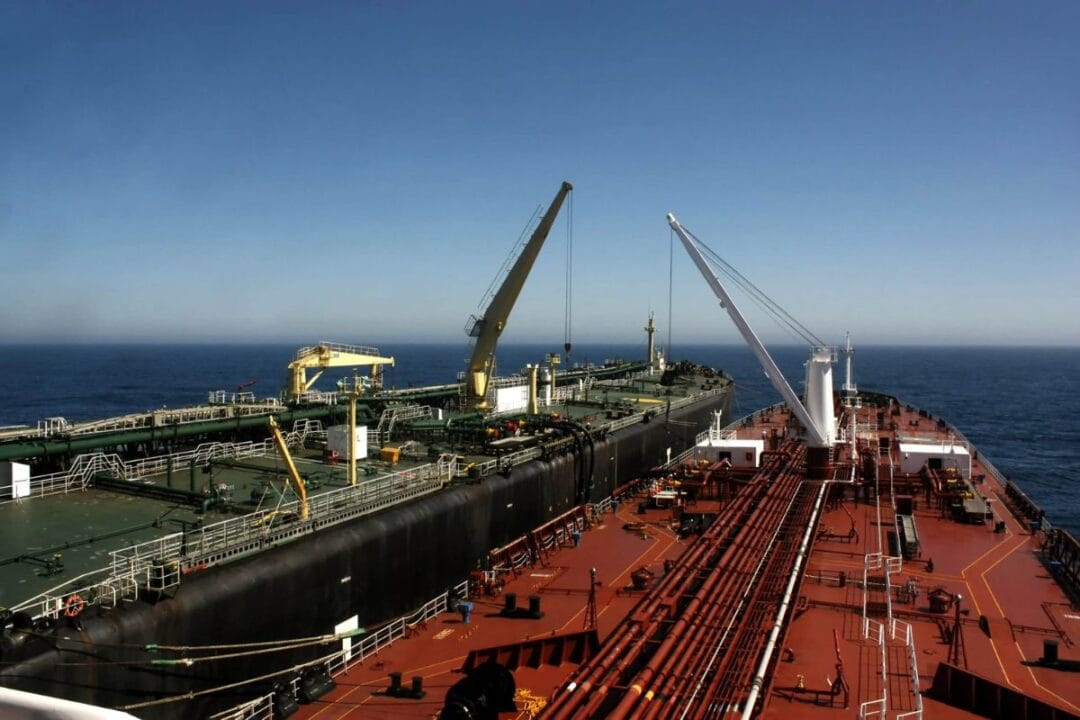
The transfer of oil cargo directly from one ship to another has gained prominence in the national logistics sector. Known as ship-to-ship (STS) operation, the practice responds to the expansion of national production and the limitations of the country’s port infrastructure.
Understand How the Transfer of Oil Cargo Directly from One Ship to Another Works
In the ship-to-ship operation, the cargo is moved without the need for terminals on land. The maneuver can occur with ships parked side by side (double banking) or moving at sea (underway), usually in offshore areas.
With the growth of Brazilian crude oil production, direct transfer has become an essential tool to keep export logistics active, especially for destinations in Asia and Europe.
-
A 24,200-ton oil platform is removed from the North Sea in just 10 seconds and taken to be scrapped on land, in an operation where more than 97% of the Brent Delta structure was reused or recycled.

-
Ocyan takes AI and data to the FPSO Brazil Congress 2026 to showcase how digital technologies can enhance safety, integrity, and performance in next-generation FPSOs.

-
Sodexo debuts unique maritime hospitality on Seagems ship to transform the well-being, food, and comfort of offshore professionals.

-
European ship will transport captured CO₂ to be stored under the North Sea as the Greensand project prepares the first industrial offshore storage in the European Union to operate in 2026 with an initial target of 400,000 tons per year in Denmark.




Why Is the Transfer of Oil Cargo Directly from One Ship to Another on the Rise?
The increase in national production has surpassed current refining and storage capacity. As a result, the volume of oil available for export requires agile logistic solutions.
The transfer of oil cargo directly from one ship to another, especially in the offshore modality, allows continuous flow without overloading ports. The alternative reduces costs, travel time, and avoids logistical bottlenecks.
Safety and Technology Drive Ship-to-Ship Growth in Brazil
The STS operation involves significant risks, such as inaccurate docking, cargo control failures, and environmental leaks. Therefore, safety is a priority.
The Brazilian Navy, ANTAQ, and ANP have created specific regulations and signed cooperation agreements to reinforce control. The use of modern equipment and the technical qualification of operators are mandatory to minimize risks.