Portuguese
  Spanish


Ship Carbon Destroyer 1 brings Project Greensand closer to the commercial phase, transporting captured, liquefied CO₂ for storage under the Danish North Sea, with a start planned for mid-2026, an initial target of 400 thousand tons per year, and future expansion to 4 to 8 million annually planned.
The Carbon Destroyer 1 ship has entered the center of a new stage of carbon capture and storage in Europe. In 2026, Project Greensand, led by INEOS, is preparing to start offshore CO₂ storage operations in the Danish part of the North Sea, scheduled for mid-year.
According to Greensand Future, the proposal is to create a complete industrial chain of CCS, the English acronym for carbon capture and storage. The CO₂ will be captured in Danish biogas production, liquefied, transported, and permanently stored underground in the North Sea. The initial goal is to store up to 400 thousand tons of CO₂ per year.
European ship enters the carbon capture and storage chain
The Carbon Destroyer 1 is part of the logistical infrastructure of Greensand Future, the first commercial phase of Project Greensand. The ship was built to operate in offshore CO₂ transport, linking onshore capture to marine underground storage.
-
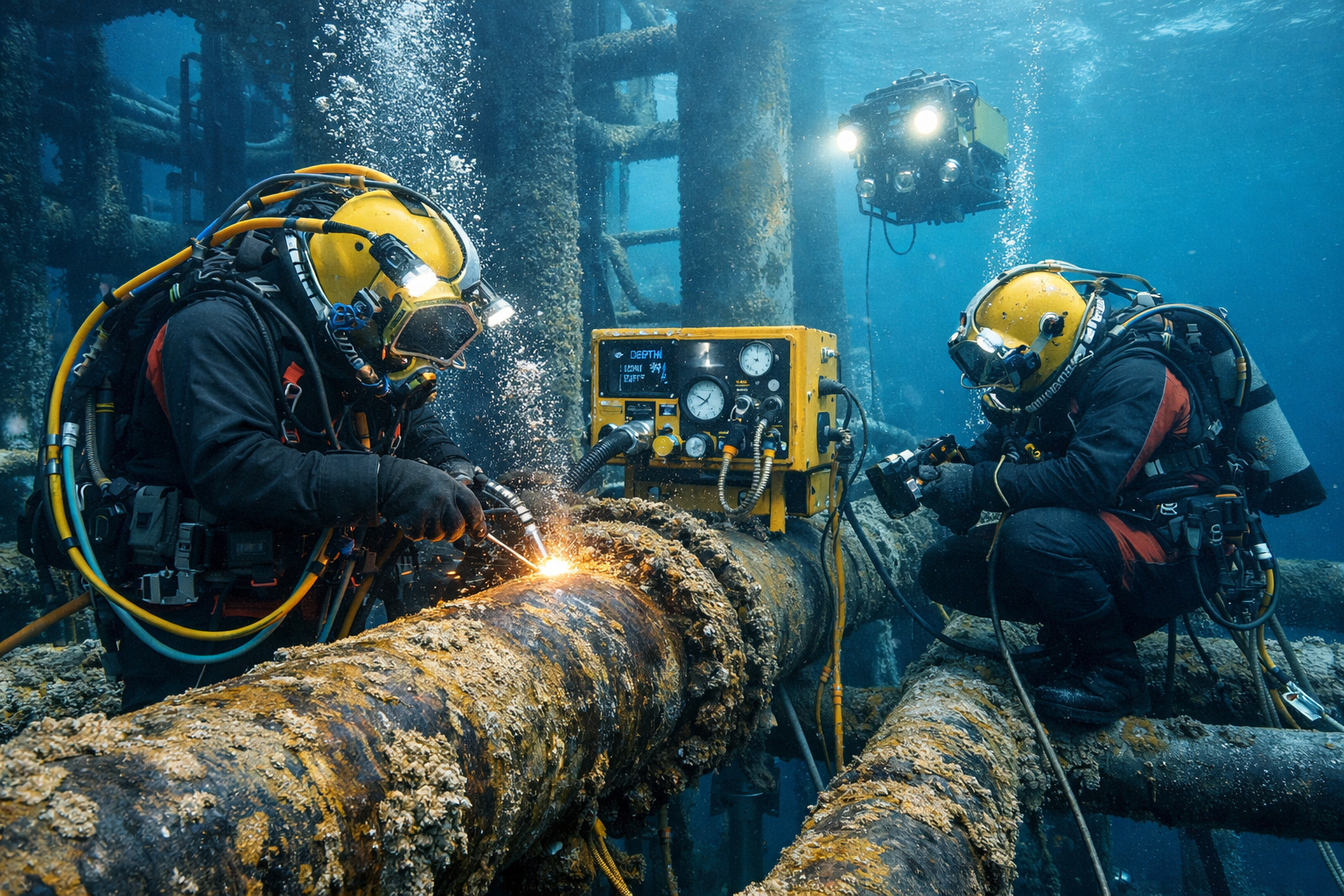
A 24,200-ton oil platform is removed from the North Sea in just 10 seconds and taken to be scrapped on land, in an operation where more than 97% of the Brent Delta structure was reused or recycled.

-
Ocyan takes AI and data to the FPSO Brazil Congress 2026 to showcase how digital technologies can enhance safety, integrity, and performance in next-generation FPSOs.

-
Sodexo debuts unique maritime hospitality on Seagems ship to transform the well-being, food, and comfort of offshore professionals.

-
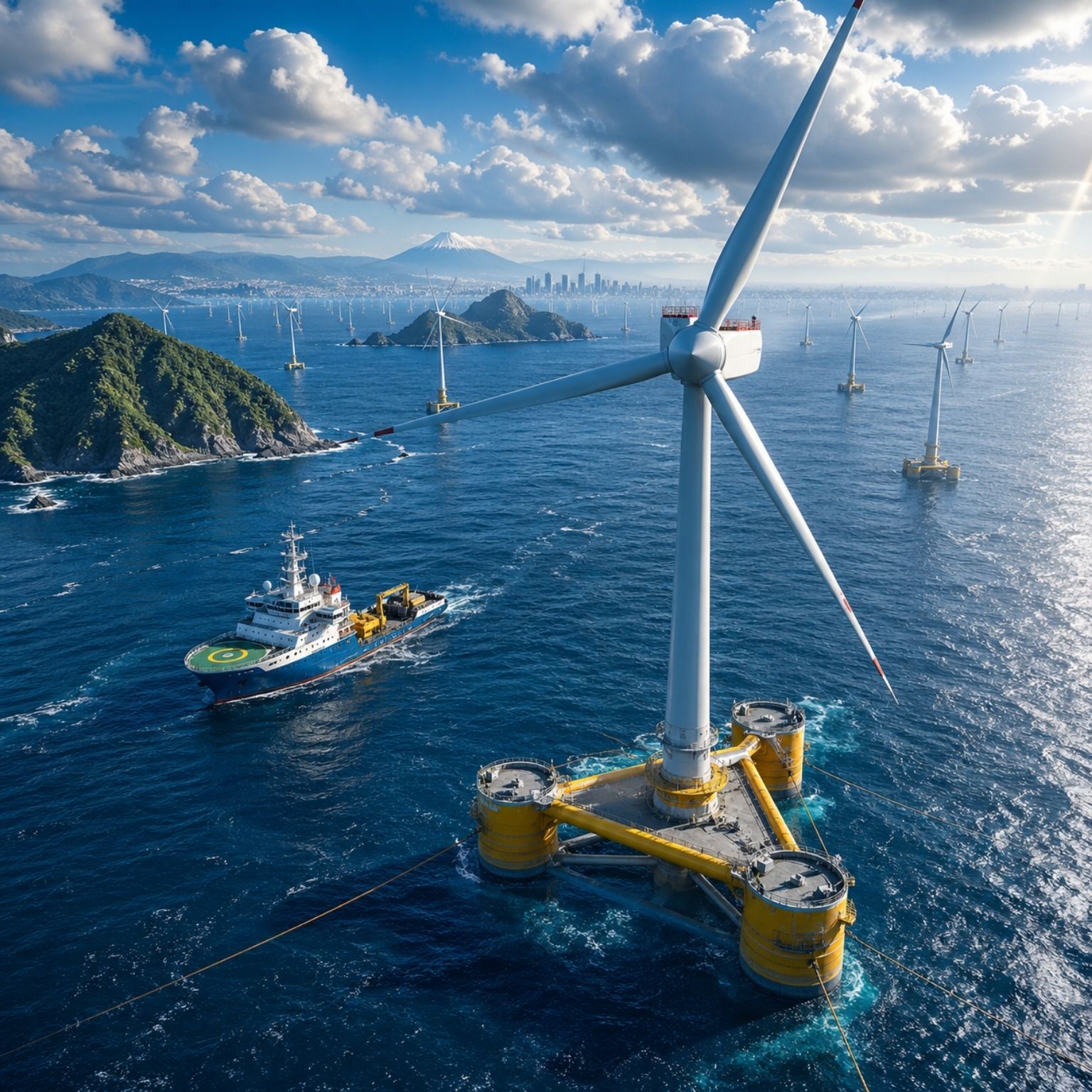
Japan wants to install the world’s largest floating wind farm, with a capacity of 1 GW near the Izu Islands, to supply Tokyo by 2035 and create a plant in the ocean nearly 10 times larger than the current largest floating operation.


The vessel appears as a key piece because the project does not rely solely on capturing carbon. For the chain to work, it is necessary to collect the CO₂, liquefy, transport, receive at a terminal, take it to the offshore field, and inject it safely.
This model places maritime transport at the center of the industrial energy transition. Without specialized ships, terminals, and injection systems, carbon capture remains a promise and does not become a large-scale operation.
Project Greensand states that the Carbon Destroyer 1 arrived in Esbjerg on March 29, 2026 and was advancing towards operations in April. The Danish port city serves as an important point for the CO₂ transit infrastructure.
Greensand targets offshore operation by mid-2026
Project Greensand made the final investment decision for the commercial phase Greensand Future in December 2024. From this decision, the project paved the way for expected investments of more than US$ 150 million throughout the CCS chain.
The forecast is that storage operations will begin in mid-2026. If this schedule is met, Greensand is expected to become the first fully operational offshore CO₂ storage site in the European Union for climate mitigation purposes.
The initial goal is to store up to 400 thousand tons of CO₂ per year. In a later phase, the platform aims to grow to 4 million to 8 million tons per year, as the available volumes for storage increase.
The most relevant point is that the project tries to prove industrial scale. It is not just an isolated test, but a chain designed to grow as Danish and European emitters decide to capture and send CO₂ for storage.
CO₂ will be stored under the Danish North Sea
The storage will be carried out underground in the Danish part of the North Sea. The proposal is to receive captured CO₂, transport this material, and store it safely and permanently in offshore geological formations.
Greensand had already demonstrated the feasibility of offshore storage in a pilot project completed in 2023. At that milestone, it was demonstrated that CO₂ could be transported across borders and stored underground in the North Sea.
This previous stage was important to provide technical confidence for commercial advancement. Before scaling a CCS chain, it is necessary to show that capture, transport, monitoring, and storage work in an integrated manner.
The project source highlights that Greensand underwent safety checks and certifications, including independent endorsements and certification related to the storage site, necessary steps to advance towards commercial operation.
CO₂ terminal in Esbjerg becomes the project’s entry point
The infrastructure in Esbjerg is a decisive part of Greensand Future. The CO₂ transit terminal at the port was initiated in May 2025 and appears in project updates as one of the fronts taking shape in 2026.
This terminal functions as a connection point between onshore capture and offshore storage. It is where the logistics chain is organized before transport to the North Sea.
The development of the terminal also shows that the project does not rely solely on the ship. It requires tanks, receiving systems, operational safety, port integration, and coordination with the offshore injection structure.
The CCS chain is complex precisely because it unites industry, port, ship, geological reservoir, and monitoring. Each link needs to function so that the captured CO₂ does not remain without a destination.
Project tries to respond to the European Union’s climate goals
The European Union targets a storage capacity of 250 million tons of CO₂ per year by 2040. Greensand appears in this context as an attempt to open real infrastructure for carbon capture to scale up on the continent.
Denmark also considers CCS an important technology to achieve its climate neutrality goals by 2045. Therefore, the project gains weight both in the industrial agenda and in the country’s climate policy.
Currently, global capture is still far from the necessary scale. The source itself mentions global capture around 45 million tons per year, based on the IEA, reinforcing that expansion will depend on joint action by governments, investors, and industry.
The promise of Greensand is to show that major emitters can turn capture plans into investment decisions. If the chain works, other projects may use a similar model in onshore and offshore operations.
Future agreements may expand Denmark’s role
The Project Greensand also appears as a possible destination for CO₂ captured outside Denmark. An agreement cited by the initiative involves Öresundskraft, from Sweden, with investigation to store up to 210 thousand tons of CO₂ per year in Danish territory starting in 2028.
This type of movement reinforces the idea that the North Sea could become a strategic area for European storage. Countries with less geological capacity or less offshore infrastructure may seek solutions in regions with advanced projects.
Denmark, in this scenario, tries to position itself as a storage point for emissions that are difficult to eliminate. The goal is to receive biogenic and fossil CO₂ as capture volumes increase.
Carbon storage does not replace the direct reduction of emissions, but it can serve as a tool for sectors where cutting CO₂ is more difficult. It is precisely in this space that projects like Greensand try to gain relevance.
Ship shows how the energy transition also depends on heavy logistics
The Carbon Destroyer 1 helps to show that the energy transition does not happen only with turbines, solar panels, or electric vehicles. In some cases, it depends on heavy infrastructure, specialized ships, port terminals, and underground reservoirs.
The European ship that will transport CO₂ to the Greensand Future symbolizes a less visible but essential stage: moving large volumes of captured carbon to a permanent storage location.
The operation planned for 2026 will be closely watched because it may indicate whether Europe can transform carbon capture into a repeatable industrial chain. The challenge lies in proving safety, scale, cost, and trust for emitters.
In the end, Project Greensand aims to inaugurate a new phase of CCS in the European Union, with the ship Carbon Destroyer 1 carrying CO₂ for storage under the North Sea.
Do you believe that capturing and storing carbon can help reduce industrial emissions, or should the priority be solely cutting fossil fuels at the source? Share your opinion.