






 Portuguese
  Spanish
 2 min of reading
  46 comments





Know The Ambitious Project Of The Railway Aims To Connect Three States And Direct The Regional Economy Of The Northeast
The Transnordestina, considered the largest railway project under construction in Brazil, aims to connect the states of Pernambuco, Piauí, and Ceará with a 1,753 km railway in the northeast. The project, launched in 2006, seeks to transform transportation logistics and strengthen the regional economy, especially in the agricultural and mineral sectors. The expected completion date, which has already experienced several delays, is set for 2029.
History Of Challenges And Delays
Since its inception, the Transnordestina has faced numerous obstacles resulting in halted work and significant budget increases. Originally estimated at R$ 4.5 billion, the northeastern project has already exceeded R$ 15.7 billion, with a completion forecast for 2029. Currently, about 63% of the project is finished.

Strategic Importance For Foreign Trade
By connecting northeastern regions to the ports of Suape (PE) and Pecém (CE), the railway will allow a significant expansion in cargo movement capacity. It is expected that, with the completion of the Transnordestina, the volume of exported goods, such as grains, sugar, and minerals, could even double, enhancing Brazilian competitiveness in the international market.
-
Railway returns to prominence in Brazil after STF approval: a R$ 25.2 billion project promises to save R$ 9 billion in freight, transport 50 million tons per year, and transform Sinop into a logistics powerhouse for agribusiness.

-
Retired trains leave European tracks and become tons of steel, aluminum, and copper in dismantling yards where recycling exceeds 90%, but batteries, composites, and electronics create a new frontier of railway waste.

-
The strategic railway of Santa Catarina will receive R$ 608 million, will undergo historic modernization, and could transform logistics between Mafra and the Port of São Francisco do Sul.
-
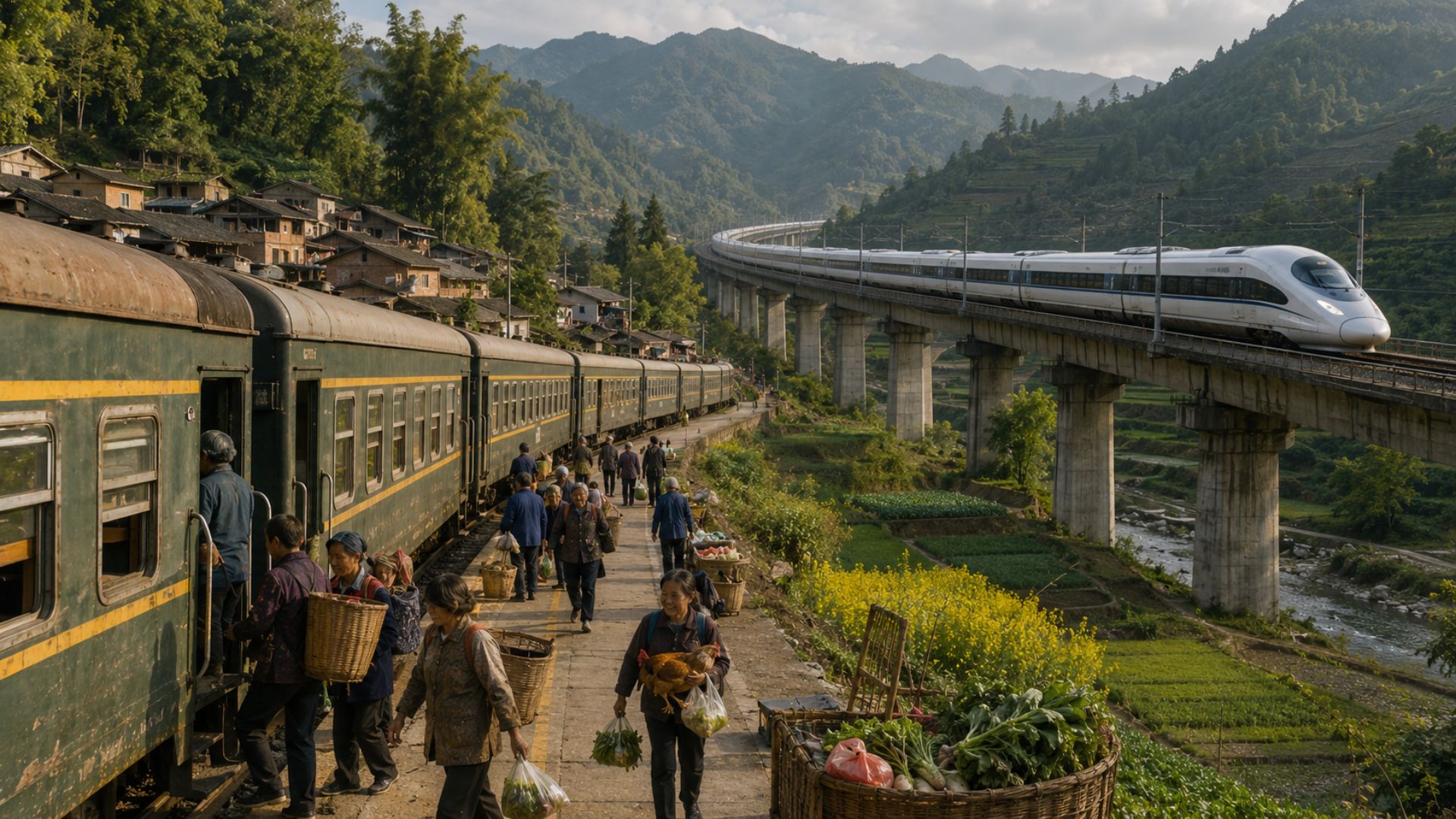
While showcasing bullet trains traveling at over 300 km/h, China maintains about 81 slow train lines that travel at 40 km/h, charge less than R$ 2 for a ticket, and cross remote villages carrying residents, students, and even chickens and vegetables to the market.


The Construction And Technology Of The Railway
The construction of the Transnordestina railway was divided into three phases, with cutting-edge engineering techniques applied, such as the use of automated machines for track positioning and aluminothermic welding to ensure the integrity of the joints. The northeastern project faces geographical and climatic challenges, but technology and the strategic division of the project are essential to overcome obstacles.


The Transnordestina is frequently compared to other major railway projects, such as the Trans-Siberian in Russia and the Mombasa-Nairobi Railway Corridor in Africa. These comparisons highlight the project’s importance not only for Brazil but also as an example of integration and regional development.






Eu espero ansioso para ter que viajar novamente. Era muito bom de Fortaleza à Senador Pompeu.
Espetacular! Viva o Nordeste.
O futuro é logo alí