






 Portuguese
  Spanish


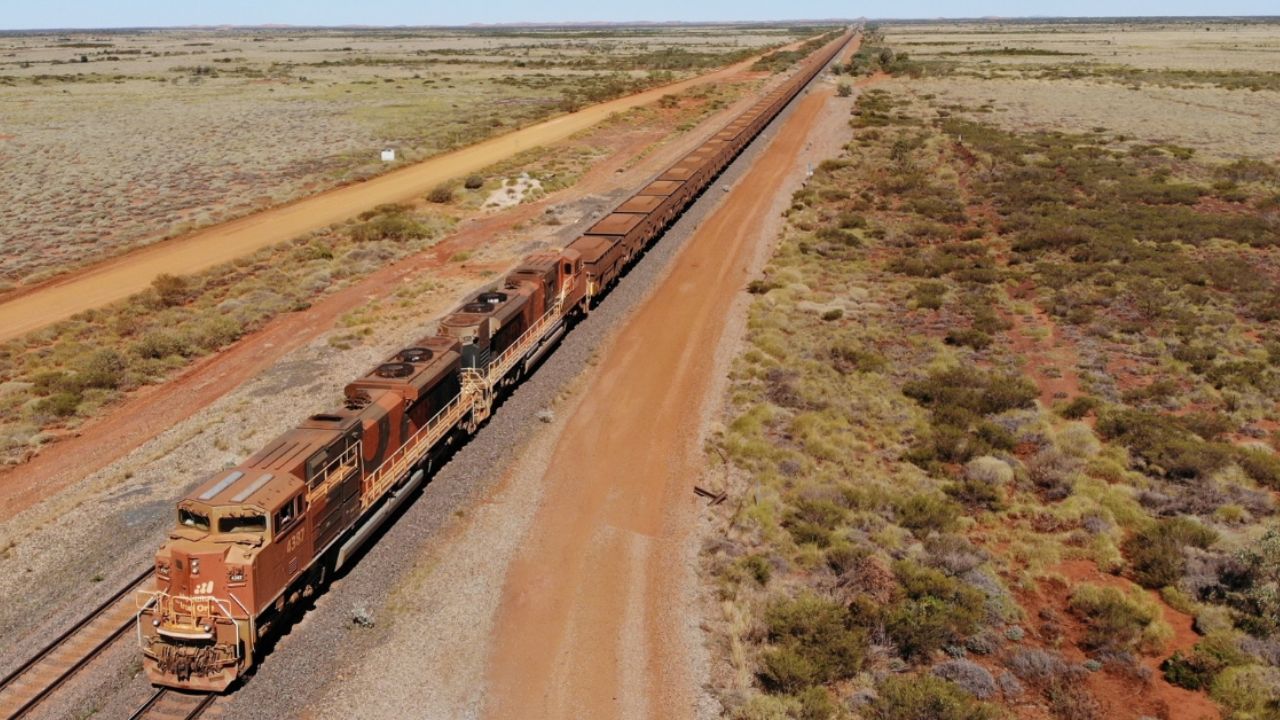


Get To Know The Longest Freight Train In The World: 7 Km Of Steel, 682 Cars, And A Record That Remains Unbeatable For More Than 20 Years In Australia.
A colossus on iron tracks: on June 21, 2001, the Australian mining company BHP Iron Ore commenced operations of what would be recognized as the longest freight train in the world.
The train, consisting of 682 cars and more than 7 kilometers in length, departed from the Newman mine and traveled to the Port Hedland port in Western Australia.
This achievement represents an engineering milestone and persists as a world record.
-
Mother from Brazil’s Maranhão Creates Lactose-Free Cookie for Daughter with Cerebral Palsy, Now Producing 10 Tons Annually and Exporting to Mexico

-
Brazilian Student Turns Electric Shower Repair into Thriving Industry with 3,600 Jobs and Over $1 Billion in Revenue, Aiming to Become the “Next WEG”

-
German Ship Concludes 40-Year Maritime Career with Final Mission in Brazil, Departing Recife with Floating Labs to Study Atlantic Currents
-
Artisanal Well Transforms 4 Hectares in Brazil’s Semi-Arid Region into Productive Farmland with Drip Irrigation


Longest Train In The World: A Steel And Logistics Giant
The train measured an impressive 7.3 kilometers in length and weighed around 99,732 tons.
It required eight locomotives distributed along the entire train — an innovation referred to as “distributed power” (DP) — to ensure the set operated efficiently.
BHP’s objective was not just to break records, but to test the iron ore transport capabilities between Newman and Yandi to Port Hedland using advanced traction technology.
Thus, the longest train in the world became a reference for the mining and logistics sector.
Technology That Enabled The Longest Freight Train In The World
The technical system used allowed a single operator to control all the locomotives simultaneously — something extraordinary for the time.
The train traveled 275 km with the massive assembly, demonstrating that large loads can be transported safely and efficiently.
The engineering involved challenges such as maintaining stability over the 7 km, coordinating braking and acceleration among dispersed units, and minimizing mechanical stresses on the couplings of the cars.
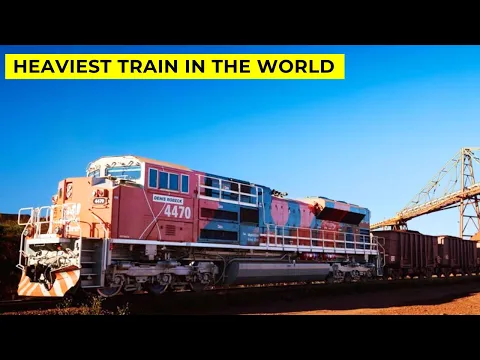

While many records are surpassed over time, the longest freight train in the world remains unbeatable — even after more than 20 years.
It symbolizes the limits that railway engineering has reached and continues to be a case study for transporting heavy loads in industrial environments.
Moreover, the scale of this transport highlights the logistical complexity of ores, the importance of efficient rail roadway systems, and the ongoing need for innovation to reduce costs and environmental impacts.
Impacts And Legacy Of The Longest Freight Train In The World
The grandeur of this train has influenced the global railway sector on various levels:
It validated the distributed traction (DP) technology, which is now used in many heavy transport operations.
It raised expectations about what is possible in industrial rail transport, helping to redefine efficiency standards.
It served as a basis for improvements in safety, monitoring, and control of large compositions.
Even dismantled, the longest freight train in the world became a symbol of innovation.
It proves that seemingly insurmountable limits can be overcome and that cargo logistics knows no barriers when well-planned and executed.
Beyond the statistics, the longest freight train in the world shows that:
- Infrastructure and technology go hand in hand: without the right system, 7 kilometers of cars would be unfeasible.
- Investment in control, monitoring, and automation is essential for large-scale operations.
- The technical legacy extends beyond the operation itself: ideas tested on this train continue to influence modern railway projects.
Ultimately, this record reinforces that even in traditionally mature sectors like railways, there is still room for disruptive innovation.
The longest train in the world is more than just a number: it is an invitation to imagine how far transport engineering can go.


Fantástico!
A tecnologia aplicada de forma inteligente.
Parabéns ao setor ferroviário.