






 Portuguese
  Spanish


Fervo Energy has achieved something the geothermal industry has been attempting for decades without success: it took the horizontal drilling perfected by the oil and gas sector over the last twenty years — the same technique that turned the US into the world’s largest oil producer — and applied it to create geothermal systems in hot rock that lacks natural underground water, meaning you can install geothermal almost anywhere on the planet where the Earth’s crust is hot enough.
The problem Fervo solved
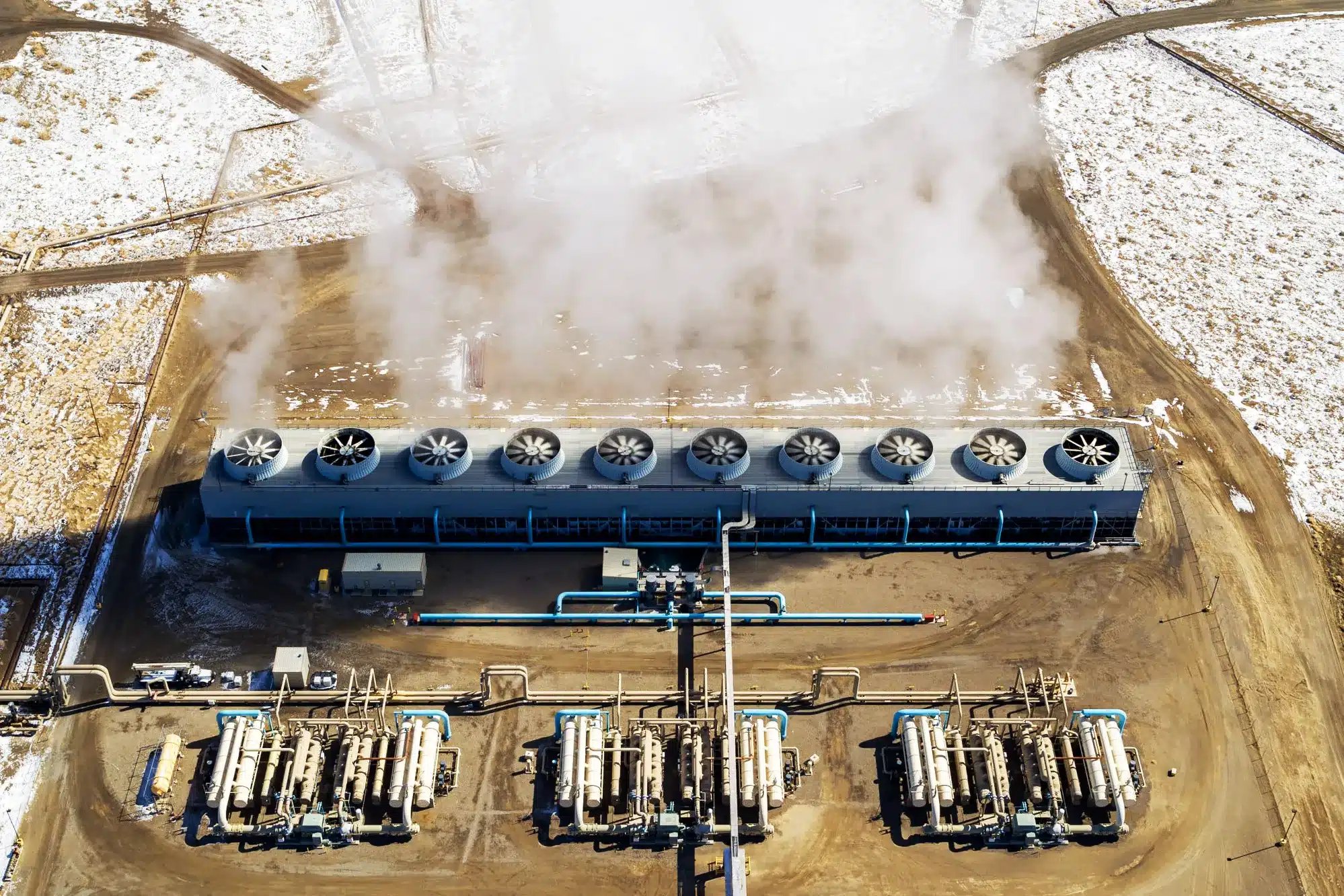
Conventional geothermal needs three things at the same time: hot rock, underground water, and permeability — natural fractures that allow water to circulate and carry heat to the surface. These three conditions together exist in few places in the world: Iceland, New Zealand, parts of Kenya, Indonesia, the Philippines, and some regions of the US and Japan.
Enhanced geothermal systems — EGS — attempt to solve this by creating artificial permeability: you drill into hot rock, inject water under pressure to create microfractures, and use this artificial circulation system to extract heat. The concept has existed since the 1970s — the problem is it never worked on a commercial scale. The vertical wells used by the sector created unpredictable fractures and very inefficient systems.
Fervo came up with a radical idea: use horizontal wells. Instead of a vertical well, two parallel horizontal wells at 3,000 meters deep, connected by induced fractures — exactly how fracking works in oil, but without using chemicals, without extracting hydrocarbons, and without methane emissions.
-
Brazilian Teen’s Jute Hydro-Sponge Removes 80% of Tire Pollutant Killing Salmon, Wins $75,000 at U.S. Science Fair

-
New Zealand Drills Geothermal Well with Steam Exceeding 400 Degrees, Potentially Revolutionizing Clean Energy

-
Taiwan Invests $2.3 Billion to Produce 66 Brave Eagle Jets Domestically, Showcasing Technological Autonomy Amid Chinese Pressure
-
Microsoft Reveals Windows Setting to Safely Remove USB Drives and Prevent Data Loss


What happened in Utah that changed everything
At Utah FORGE — an EGS research lab funded by the US Department of Energy — and at Project Red in Nevada, Fervo demonstrated that its approach works. The horizontal wells created much more efficient circulation systems than any vertical EGS previously tested, with adequate water flow for continuous electrical production.
In Nevada, Fervo delivered energy to Google’s power grid — which bought all the generation from a pilot project as part of its 24/7 clean energy commitments. It was the first time an EGS entered commercial production in the United States. In Utah, the latest results show even greater efficiency, with temperatures above 200 degrees Celsius in horizontal wells at 3,300 meters deep.
Scalability is the most important element. American oil and gas shale — which produced the fracking revolution — works in specific sedimentary basins. Fervo’s horizontal EGS works in hot crystalline rock — granite, gneiss, basalt — that exists abundantly on all continents.
Why this matters for Brazil
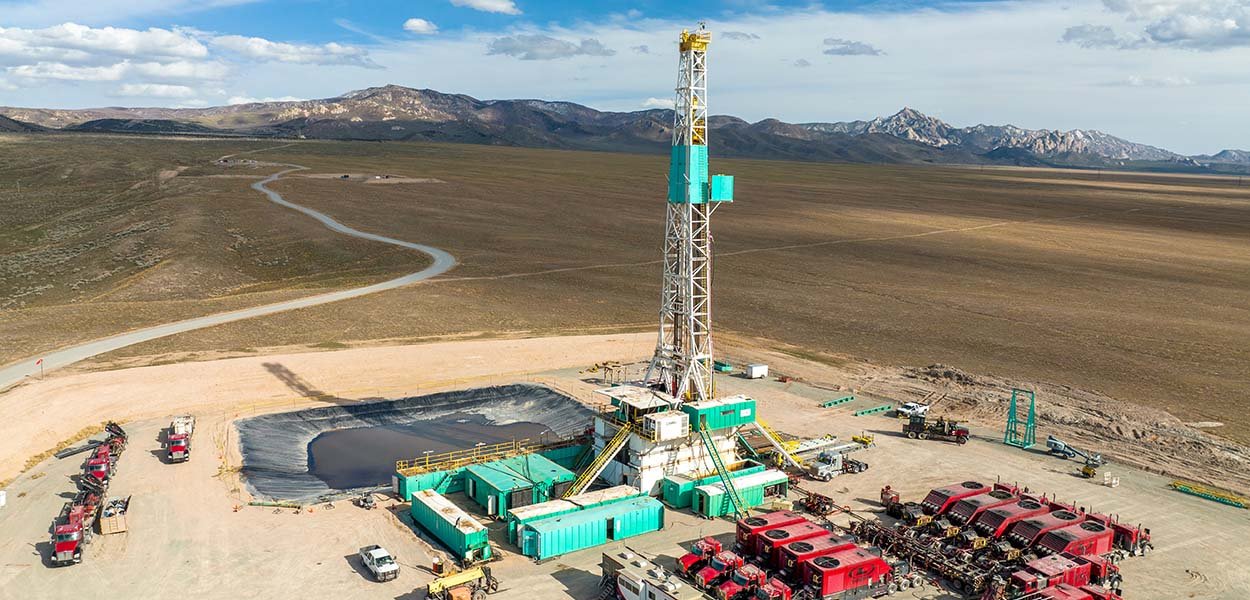
Conventional geothermal production in Brazil is considered unfeasible by most geologists. We don’t have active volcanoes, the average geothermal gradient is low, and conditions like those in Iceland or New Zealand don’t exist here. The horizontal EGS changes this equation.
Regions in Brazil with a higher geothermal gradient — part of the Northeast, south of the Paraná basin, regions of Precambrian rifts — could become candidates for EGS systems if drilling costs continue to fall. Fervo has already reduced the cost per megawatt of EGS by about 60% in the last four years, using drilling automation and faster wells.
The Brazilian oil industry has decades of expertise in offshore drilling at extreme depths. Pre-salt, salt layer, high-pressure formations — Petrobras and Brazilian contractors know how to drill in difficult conditions. Adapting this expertise to horizontal EGS on land is a smaller technical step than it seems.
When geothermal becomes a commodity
Fervo projects that horizontal EGS could compete with the cost of solar or wind power generation around 2030, with projects of 50-100 megawatts operating continuously — without the variability that makes solar and wind dependent on storage. Geothermal is baseload: it works 24 hours a day, 365 days a year, regardless of the weather.
This solves the most serious problem of intermittent renewables: how to ensure the lights don’t go out when the sun sets or the wind stops. Every megawatt of geothermal is a megawatt that doesn’t need a battery or backup thermal power.
I confess that the news from Utah gave me a feeling similar to American shale in 2008 — when everyone was still saying that fracking wouldn’t work on a scale and five years later the US was exporting oil.
Read also: the machine that promises to dig where steel melts | the robots that descend 4 kilometers where no human can withstand the heat.
Do you think horizontal EGS will change the global energy matrix in the next twenty years, or are there still any technical or economic barriers that will hold back this technology? Comment below.


