Portuguese
  Spanish


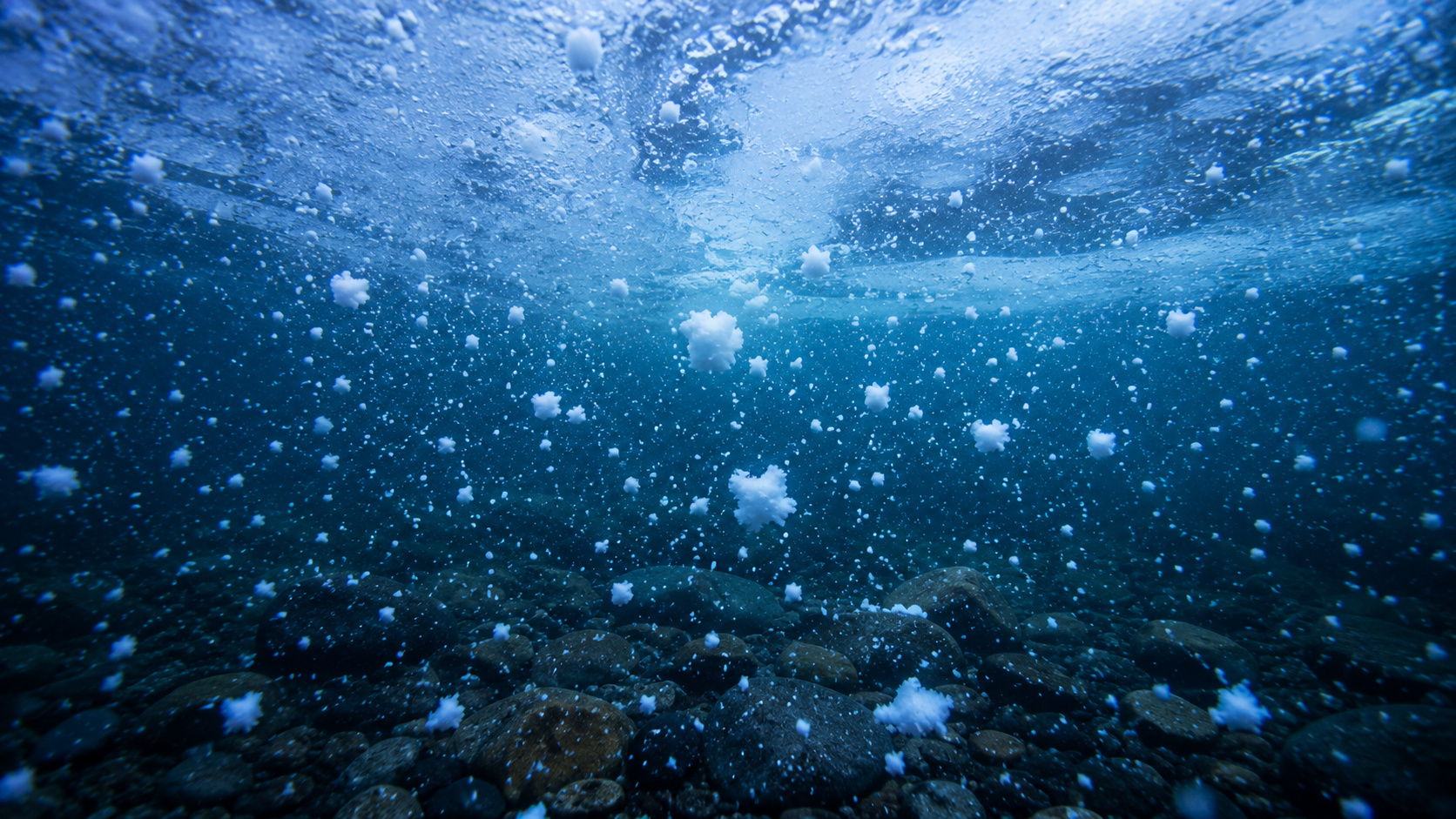

Scientists study “marine snow,” an invisible rain of organic matter that feeds the deep ocean and captures carbon.
Every day, a gigantic and almost invisible phenomenon crosses Earth’s oceans: marine snow, a continuous rain of organic particles that descends from surface waters to deep regions. According to NOAA, on a page updated on November 5, 2020, this material is formed by biological debris that slowly sinks in the water column, while NOAA Ocean Exploration detailed, on October 21, 2013, that it can include phytoplankton, microbes, marine organism feces, decomposing dead animals, sediments, and organic matter transported to the ocean.
Although it appears to be just biological dust suspended in the water, marine snow sustains an essential part of life in the deep ocean. In zones where sunlight does not reach, this flow of organic matter functions as one of the main food sources for organisms living thousands of meters deep, maintaining entire ecosystems far from the surface. The phenomenon is so important that institutions like the Smithsonian Ocean describe marine snow as a true staple food of the deep sea.
Scientists call the continuous rain of organic matter that sinks in the oceans “marine snow”
The name “marine snow” arose because the phenomenon resembles flakes slowly falling through dark water. However, instead of ice, the oceans receive microscopic particles produced by marine life itself.
-
China to Drill 15 Kilometers into the Earth, Set to Break Russia’s Record for Deepest Man-Made Hole

-
Researchers Use Algae to Enhance 3D-Printed Walls, Boosting Strength by 25% and Speeding Construction by 33%

-
Drill Uncovers Freshwater Rivers Hidden Beneath the Ocean Floor
-
3,000-Ton, 81-Meter Attack Submarine Begins Sea Trials, Equipped with Heavy Torpedoes and Anti-Ship Missiles


These particles are composed mainly of remains of phytoplankton, zooplankton, bacteria, fragments of dead organisms, and biological waste continuously produced in the illuminated surface regions of the ocean. As they clump together, they begin to slowly sink towards the depths.


Even invisible to most people, this flow never stops. It occurs continuously in practically all oceans on the planet.
Invisible rain sustains creatures living in regions without sunlight at the bottom of the sea
Much of the deep ocean life depends directly on marine snow to survive. In abyssal regions where sunlight does not penetrate, there is no photosynthesis capable of producing food locally.

Therefore, deep-sea organisms depend on the organic matter that slowly falls from the surface. Small crustaceans, worms, starfish, sea cucumbers, and countless microscopic creatures continuously feed on this material.
In practice, marine snow functions as a gigantic biological supply chain connecting the illuminated surface to the deepest environments on Earth.
Millions of tons of carbon are transported daily to the ocean floor
Beyond its ecological importance, marine snow also plays a central role in the global climate system. When marine organisms absorb carbon from the atmosphere through photosynthesis, part of that carbon becomes incorporated into the organic particles that sink in the ocean.

This mechanism is known as the “biological carbon pump”. It allows enormous quantities of carbon to be temporarily removed from the atmosphere and stored in the ocean depths.
According to researchers, part of this carbon can remain isolated from the atmospheric air for hundreds or thousands of years.
Microscopic phytoplankton serves as the base of the ocean’s gigantic biological machine
The process begins primarily with phytoplankton, microscopic organisms that live on the ocean’s surface and perform photosynthesis using sunlight.
These organisms absorb atmospheric carbon dioxide and produce organic matter that sustains virtually the entire marine food chain. When they die or are consumed by other organisms, part of the waste becomes incorporated into marine snow.
This transforms invisible microscopic organisms into fundamental components of the planetary climate balance.
Deep oceans depend on marine snow as the primary source of biological energy
In deep regions, food is extremely scarce. Unlike surface waters, the ocean floor does not receive direct energy from the Sun.

Therefore, marine snow functions almost like a permanent “rain of nutrients.” The greater the flow of organic matter from the surface, the greater the biological activity tends to be in the depths.
In some abyssal environments, small changes in this flow can already drastically alter entire populations of marine organisms.
Particles can take weeks or months to reach the ocean floor
The speed of marine snow varies according to the size, density, and composition of the particles. Some descend quickly, while others remain suspended for long periods before reaching deep regions.
During their descent, many particles are consumed by intermediate organisms or decomposed by marine bacteria. This means that only part of the material originally produced on the surface actually reaches the ocean floor. Even so, the total volume remains gigantic due to the global scale of the phenomenon.
For a long time, studying this phenomenon was extremely difficult due to the depth and delicate nature of the particles.
Today, researchers use robotic submersibles, sediment traps, special cameras, and oceanographic sensors capable of monitoring the flow of organic matter in different regions of the planet.
These technologies help scientists understand how climate change, ocean warming, and acidification can affect the biological carbon pump.
Climate change can alter the functioning of this “invisible machine” of the oceans
Researchers fear that global warming will profoundly modify the behavior of marine snow. Changes in temperature, ocean circulation, and phytoplankton productivity could reduce the efficiency of carbon transport to the depths.
If less carbon is stored in the deep oceans, larger quantities will remain in the atmosphere, further intensifying global warming.
This transforms marine snow into one of the most important — and least known — gears of the Earth’s climate system.
Some abyssal creatures practically live by surrounding falling particles
In certain deep regions, organisms have developed specific strategies to capture marine snow particles before they reach the bottom.
Many filter-feeding animals remain suspended in the water, waiting for the constant flow of organic matter. Others scour ocean sediments in search of material deposited slowly over time. This shows how entire ecosystems have evolved directly around this continuous “biological rain.”
Phenomenon connects illuminated surface and deeper regions of Earth
The oceans are often divided between illuminated surface waters and completely dark deep regions. Marine snow acts precisely as a link between these two radically different worlds.

Everything that happens on the surface directly influences the flow of organic matter to the depths. This includes plankton productivity, climate change, water temperature, and ocean circulation. In practice, the seabed continuously depends on what happens thousands of meters above.
Scientists consider marine snow one of the planet’s most important gears
Although invisible to most of the population, marine snow helps sustain deep food chains, regulates part of atmospheric carbon, and directly influences ocean health.
Without this mechanism, the planet would likely have even higher concentrations of carbon dioxide in the atmosphere and abyssal ecosystems that are much less biologically active.
For this reason, oceanographers consider the phenomenon one of Earth’s greatest natural biological transport machines.
The oceans’ “invisible rain” shows that even microscopic particles help control the global climate
Perhaps the most impressive aspect is precisely the silent scale of this process. While satellites monitor hurricanes, fires, and glaciers, trillions of microscopic particles continue to fall daily through the oceans without most people even noticing.
This invisible marine snow connects the atmosphere, microscopic life, abyssal creatures, and global climate into a single gigantic system that has been continuously functioning for millions of years.
Ultimately, the deep ocean reveals that even the smallest biological fragments can play fundamental roles in the climatic and ecological balance of the entire planet.