





 Portuguese
  English
  Spanish
  3 min of reading
  0 comments


The Trump Administration Reopens the Arctic National Wildlife Refuge to Oil and Gas Exploration, Reversing Biden Administration Restrictions. The Move Sparks Controversy Among Environmentalists and Economic Development Advocates in Alaska.
In a decision that reignites the environmental debate in the United States, former President Donald Trump announced the reopening of one of the country’s most untouched areas — the Arctic National Wildlife Refuge (ANWR) — for the drilling of oil and natural gas. The measure, announced in an official statement from the Department of the Interior, represents one of the largest environmental rollbacks since the beginning of his administration.
The decision authorizes the leasing of the entire Alaska Coastal Plain, which encompasses approximately 1.56 million acres (0.6 million hectares), reversing the policies of the Joe Biden administration, which had limited exploration in the region. The announcement also includes the restoration of canceled leases and the expansion of energy infrastructure in the state.
Trump Seeks to Strengthen Energy Independence and Job Creation
According to Interior Secretary Doug Burgum, the measure is part of a national strategy to strengthen the economy and reduce external dependence on fossil fuels.
-
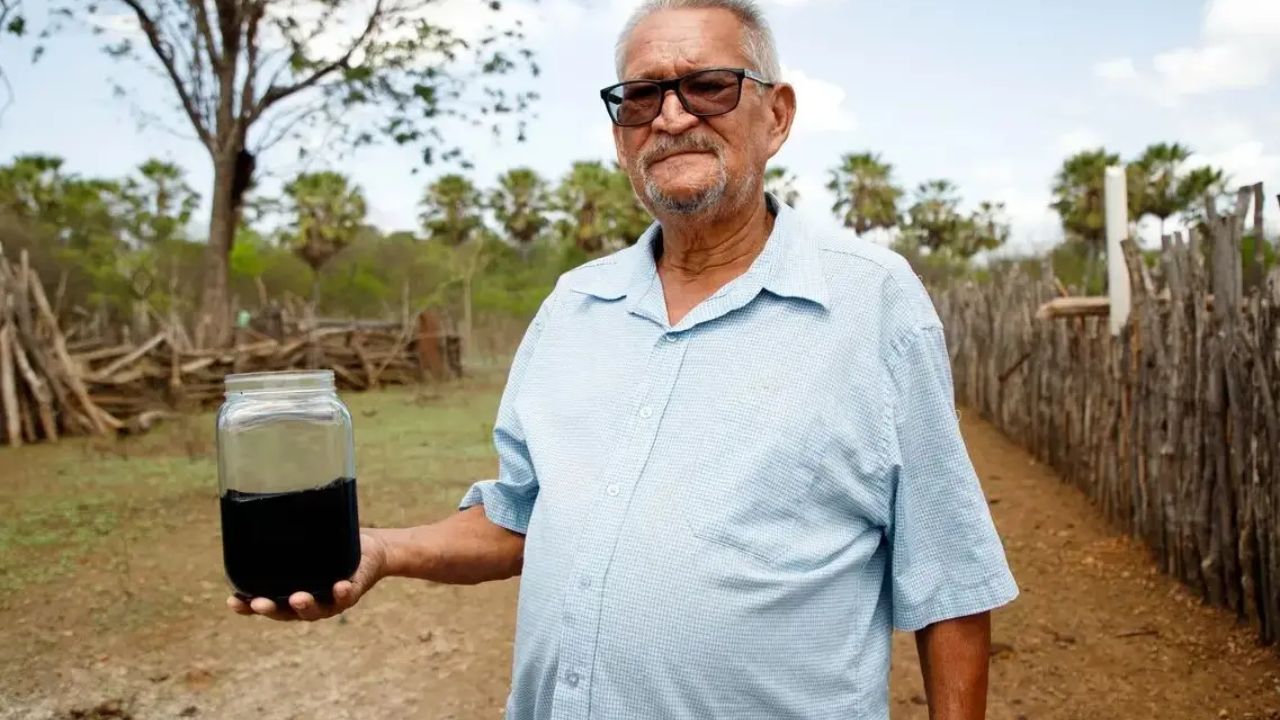
Farmer drills well in Ceará in search of water, accidentally finds crude oil and sees million-dollar discovery hindered by a rule that completely changes the future of the site.

-
Family finds oil on a 49-hectare site in Ceará, but exploration has no timeline or guarantee of happening

-
When drilling an artesian well, a farmer wanted water but found oil: ANP confirms that the dark liquid found by a farmer on a site in Ceará is crude oil.

-
European stocks rise with oil drop after Trump’s remarks on Iran as investors monitor global tension



“From day one, President Trump has directed us to unleash the energy and resource potential of Alaska while honoring commitments to the state and local communities,” he stated.
Burgum also emphasized that reopening the Coastal Plain is expected to boost U.S. energy independence, create jobs, and foster regional development. “By reopening the Coastal Plain and advancing essential infrastructure, we are strengthening energy independence, creating jobs, and supporting the communities of Alaska while driving economic growth throughout the state,” he added.
Alaska Celebrates Decision and Highlights Fulfilled Promises
The decision was celebrated by local officials, especially by Alaska Governor Mike Dunleavy, who praised the Trump administration’s commitment to the state’s economic development. “Today’s announcements are historic for Alaska. President Trump and his administration are fulfilling the promises made to Alaska,” he stated.
The reopening also reverses the cancellation of seven oil and gas leases granted in 2021 to the Alaska Industrial Development and Export Authority, one of the few entities that participated in the auction held during the last days of the Trump administration. These concessions had been suspended by Biden in 2023, but a recent court ruling determined that the government did not have the authority to annul them.
Environmentalists Criticize and Warn of Irreversible Damage
On the other hand, environmental organizations condemned the measure, arguing that opening the area represents a direct threat to the ecological balance of the Arctic. The Arctic National Wildlife Refuge is home to species such as polar bears, caribou, porcupines, and migratory birds, as well as ecosystems that are extremely sensitive to climate change.
“Opening the entire coastal plain of the Arctic Refuge to drilling would destroy one of the most ecologically significant landscapes on Earth,” said Kristen Miller, Executive Director of the Alaska Wilderness League.
Critics also highlight that the project contradicts international environmental preservation agreements and could compromise natural habitats for decades. Nevertheless, Trump and his allies argue that the initiative respects environmental safety standards and that the economic benefits outweigh the risks.
Energy Potential and Political Impasse
The wild landscape of 19 million acres of the ANWR has no roads or public structures, but studies indicate that its coastal area may contain up to 11.8 billion barrels of recoverable oil. This potential has been a point of contention for decades among local legislators, tribal corporations, and conservation groups.
While Alaska leaders and local communities advocate drilling as a source of jobs and tax revenues, environmentalists insist on the need to preserve the region. The conflict reflects the historical tension between economic development and environmental protection in the country.
Despite Trump’s promise to boost the oil and gas sector, experts note that major energy companies have shown little interest in investing in the region, due to high operational costs and increasing global pressure for cleaner energy sources.





Be the first to react!