Portuguese
  Spanish




American President Quotes Brazil, Defends Trade Barrier and Claims His Policy Secured the Rebirth of Livestock in the United States
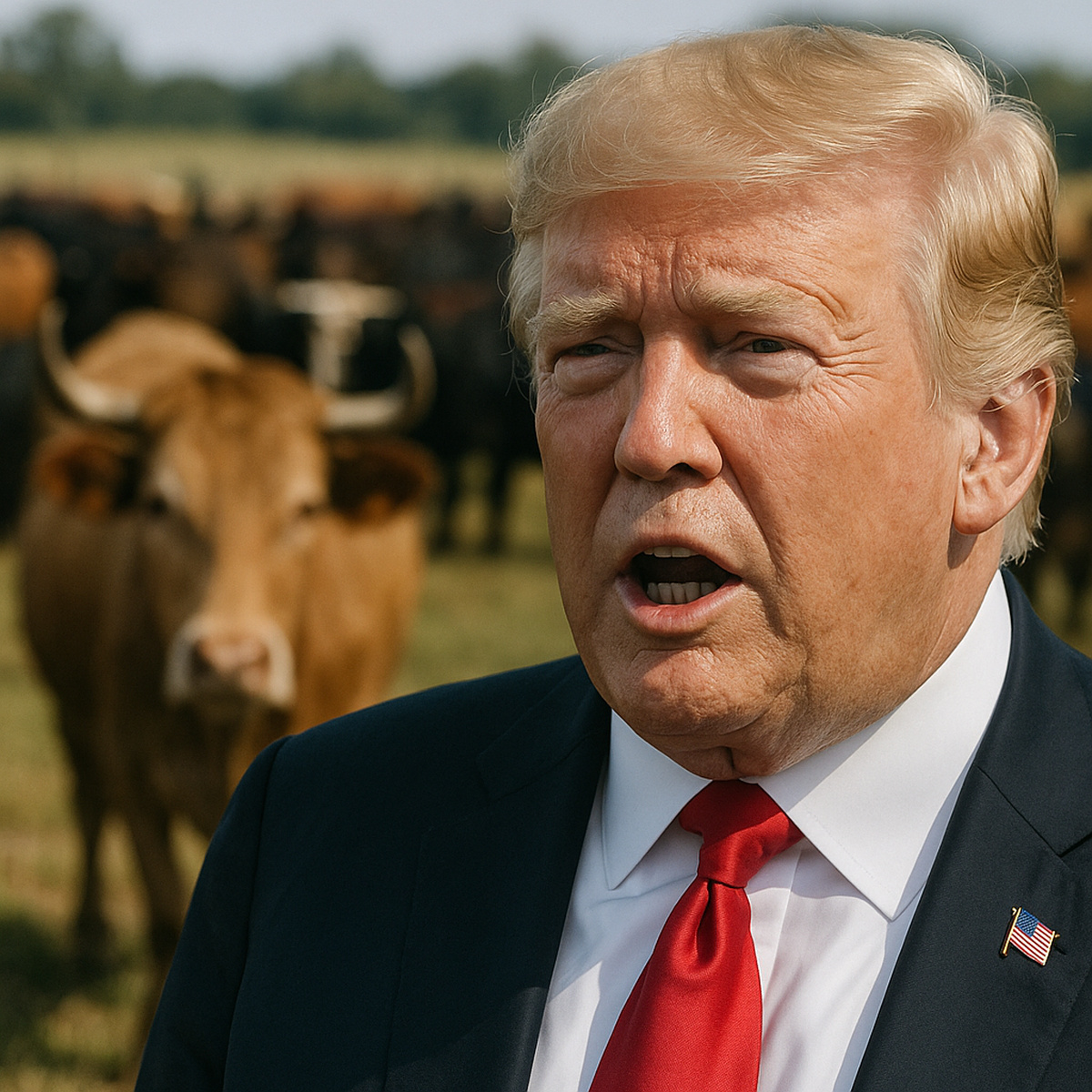
The President of the United States, Donald Trump, sparked new international tension by announcing, on October 22, 2025, a 50% tariff on cattle imported from Brazil. According to him, the measure “saved” American ranchers and ensured the recovery of the cattle sector after decades of difficulties.
Trump wrote on his social media that “the ranchers, whom I love, do not understand that the only reason they are doing well is that I imposed tariffs on cattle coming into the U.S., including a 50% tariff on Brazil”, as reported by Reuters and ABC News. The Republican emphasized that, without this decision, the sector “would be repeating the mistakes of the past 20 years — something terrible.”
The president also demanded lower beef prices in the U.S., arguing that the consumer needs to be protected. According to the U.S. Department of Agriculture (USDA), beef prices hit historical records in 2025, driven by the lack of cattle and high production costs.
-
U.S. Dismisses Brazilian Foreign Ministry’s Military Risk Warning as “Absurd,” Cites Brazilian Criminal Gangs Operating in the U.S. Since May 2026

-
Ukraine War Impacts Brazilian Fuel Supply: Russian Diesel Imports Drop 65% in June, Brazil Turns to US and India Amid Market Concerns

-
Chinese Nuclear Submarine Launches Simulated Warhead Missile in Pacific, Heightening Regional Tensions Amid Naval Drills with Russia Near Qingdao; New Zealand and Papua New Guinea Warn of Persistent Chinese Military Presence
-
Ayatollah Ali Khamenei’s Funeral Draws 15 to 20 Million in Tehran, Calls for Revenge Against Trump After Joint Israel-U.S. Attack



50% Tariff on Brazil Rekindles Trade Disputes
The tariff announced by Trump rekindled the debate over American protectionism and the global impact on the meat market. According to a report from the USDA, the cattle stocks fell to 86.7 million heads on January 1, 2025, the lowest level in almost 75 years.
The shortage was caused by years of intense drought and rising feed costs, factors that reduced herds and pressured supply. Despite the gains made by producers with the price increase, Trump warned that “market balance needs to consider the American consumer’s wallet”.
To ease internal costs, the president considered increasing beef imports from Argentina, according to Bloomberg. However, economists state that this measure will not be sufficient to bring down prices, although it may prevent the expansion of new herds in the U.S..
Cattle Shortage and Emergency Measures
According to the USDA NASS, on January 31, 2025, the American herd reached the lowest level since 1951, reflecting the loss of pastures and rising input costs. Moreover, the suspension of cattle imports from Mexico in May 2025, following the detection of New World screwworm, worsened the shortage.
Analyst Mark Schultz from Northstar Commodity stated that “tariffs create a temporary political shield but heighten trade tensions and pressure consumers”. According to him, the government will need to balance protectionism and price stability to avoid new market shocks.
Economic Effects and Political Disputes
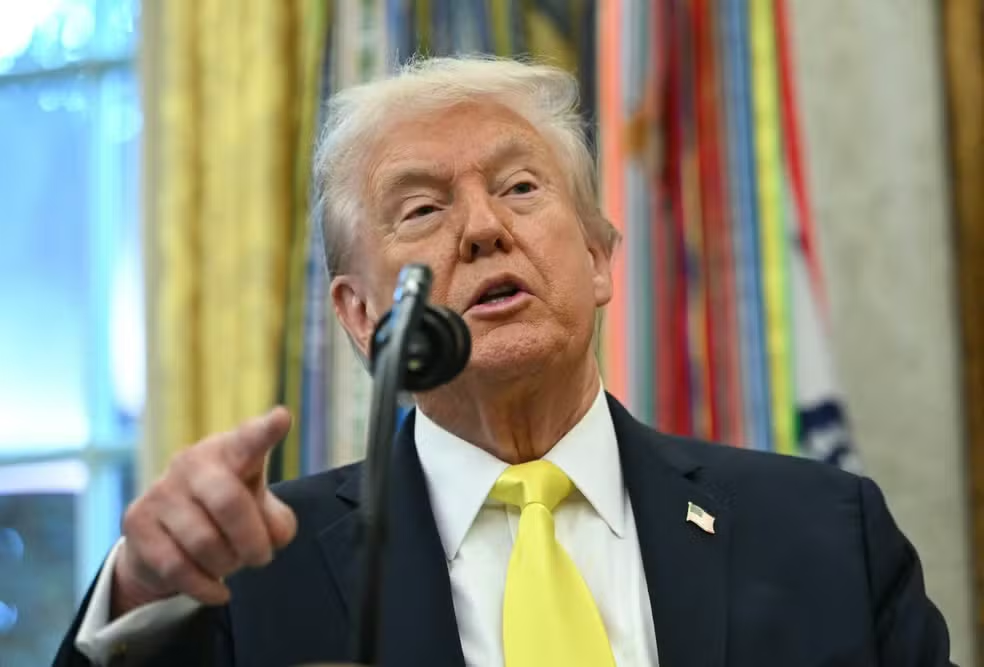
Trump’s decision had a direct impact on Brazilian agribusiness, which is one of the largest beef exporters in the world. Even with alternative markets, the United States remains strategic for the national product. Economist Fernando Sampaio assesses that “the new tariff barrier rekindles the competition for space in the global beef protein market”.
In the United States, the measure strengthens Trump’s image as a defender of the rural economy, but also pressures American families who are facing the most expensive beef in the last decade, according to CNN Business. This contradiction reinforces the political challenge of reconciling support for producers with the cost of living for consumers.
The Role of Brazil and the Future of Tariffs
Brazil, directly cited by Trump, assesses the impacts of the measure on its exports and may invoke World Trade Organization (WTO) mechanisms. For Lilian Prado, specialist at Getulio Vargas Foundation, “the American tariff policy may trigger a chain reaction in Mercosur and reconfigure global agricultural agreements”.
Diplomatic talks between Brasília and Washington are expected to take place later in 2025, focusing on a possible review of the tariffs. However, there are no signs of an immediate retreat. Meanwhile, the global beef market remains on alert, monitoring the effects of the tariff on prices, production, and consumption.
With the 50% tariff on Brazilian cattle, Trump reinforces his strategy to protect domestic producers and please his rural political base, even if this increases the pressure on the consumer’s wallet.
In light of this scenario, the question remains: to what extent can the tariff sustain the balance between farmers’ profits and the price of beef on the tables of Americans?