Portuguese
  Spanish


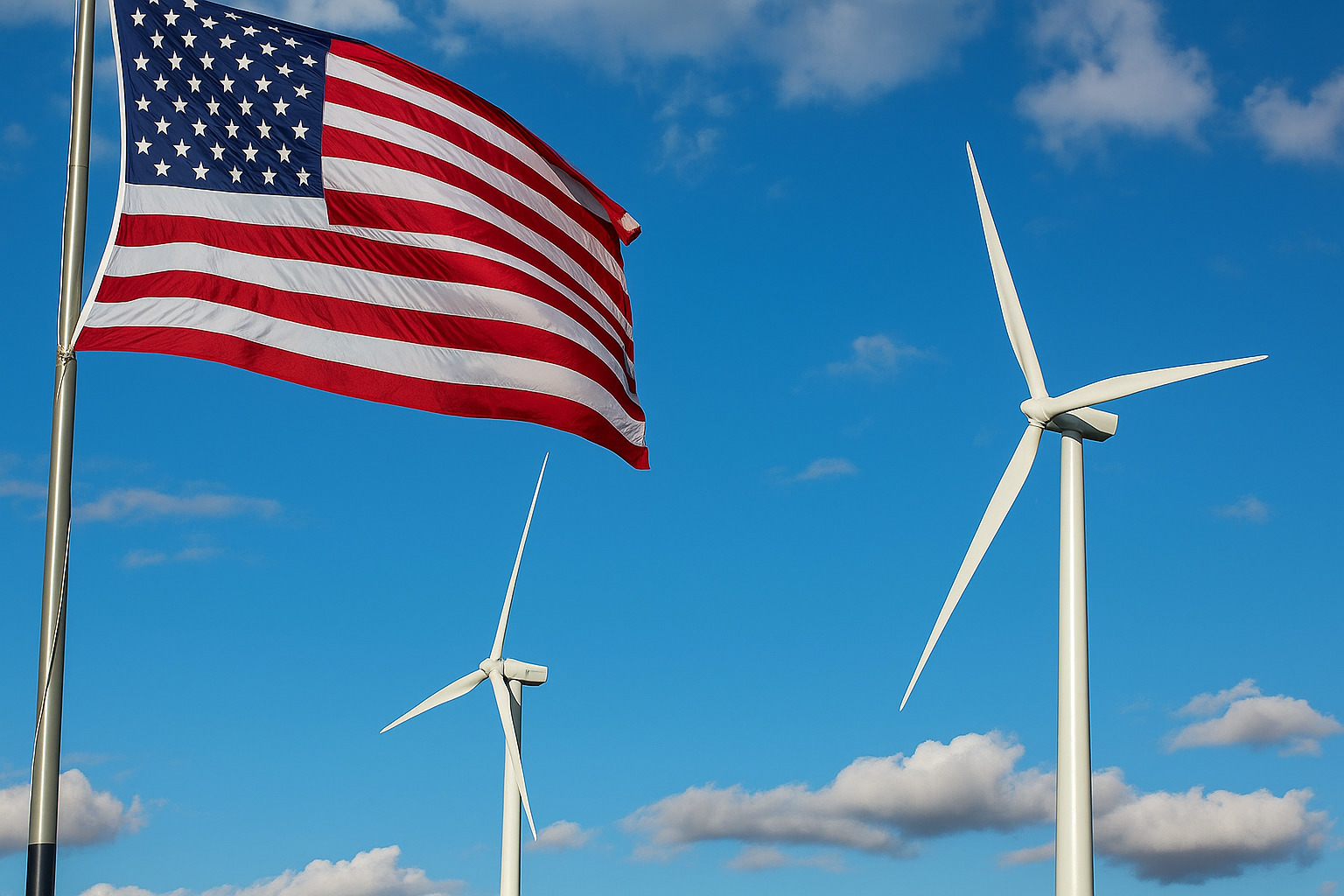

White House Mobilizes Unusual Agencies to Review Clean Energy Projects and Puts Billion-Dollar Investments in the Sector at Risk
White House Launches Offensive Against Wind Energy
President Donald Trump ordered various U.S. government agencies to develop plans to block offshore wind projects. The order, confirmed by White House aides, represents a direct attack on one of the most promising sectors of renewable energy.
The decision came after Trump’s own criticisms, describing wind farms as “ugly, expensive, and inefficient.” The move raises concerns within the sector and has repercussions not only in the United States but also in the global economy, which is monitoring the impacts on investments in energy transition.
Thus, the objective is to review potential risks to national security and public health. The measure follows the sudden halt of the Revolution Wind, a $4 billion wind farm off the coast of Rhode Island that was already 80% complete.
-
USP researcher creates thesis to attract international funds for the country’s electric energy sector

-
Trafigura receives authorization from ANEEL to trade electricity in Brazil and expands its operations in the largest energy market in Latin America.
-
Mobile solar panels promised to share space with corn crops, but the 20% to 25% shade reduced production by an average of 7.7% and opened a new dispute between energy and food.
-
Brazil filled the Northeast with wind turbines but now faces the side effect of 705 giant blades reaching the end of their lifespan by 2032 just in Rio Grande do Norte, while the world projects 43 million tons of waste by 2050.


Who Leads the Initiative
According to government sources, the action is coordinated by Susie Wiles, White House Chief of Staff, and Stephen Miller, senior advisor. Therefore, the mobilization even involved agencies that rarely participate in energy debates.
The Department of Health and Human Services, for example, is studying potential effects of electromagnetic fields emitted by the turbines. The Department of Defense is assessing whether wind farms could pose risks to national security, an argument used to justify the halt of ongoing projects.
Coalition of Secretaries Against Wind Farms
Health Secretary Robert F. Kennedy Jr. stated that he is working alongside Doug Burgum (Interior), Howard Lutnick (Commerce), Chris Wright (Energy), and Pete Hegseth (Defense). They formed a “departmental coalition” to evaluate risks from offshore installations.
Additionally, Sean Duffy, Secretary of Transportation, announced the cancellation of $679 million in federal funding aimed at terminals and port improvements that would support the wind industry. This measure jeopardizes the expansion of renewable energies in the U.S. maritime sector.
Suspension of Revolution Wind
In January, Trump had signed an executive order requiring a review of all wind source projects on federal lands and waters. Shortly thereafter, the White House suspended the construction of Revolution Wind, a $4 billion wind farm off the coast of Rhode Island that was already 80% complete.
At the time, the government mentioned alleged threats to national security without providing technical details. In an interview with CNN, Doug Burgum highlighted concerns related to radar usage and potential risks with underwater drones.
However, experts remind that, by law, any offshore project must undergo a rigorous review by the Department of Defense, which raises criticisms of the government’s justification.
Political and Economic Reactions
The decision provoked a strong reaction. Democratic governors from Connecticut, Massachusetts, New Jersey, New York, and Rhode Island sent a letter to the White House warning that revoking permits could destabilize the clean energy sector.
For them, blocking wind farms jeopardizes job creation and investments that drive the global economy, in addition to delaying the advancement of renewable energies on a global scale.
Impact of Decisions on the Future of Renewable Energies
Experts point out that Trump’s offensive against wind sources in the U.S. could slow the growth of a sector that has been consolidating as strategic. Projects like Revolution Wind were viewed as pillars of energy transition and key components in the quest to reduce emissions.
In the international scenario, the move reinforces tensions about the role of the U.S. in combating climate change. If the world’s largest economy reduces investments in clean energy, there is a risk of global setbacks.
On the other hand, European and Asian countries are expected to expand their leadership in offshore wind generation, opening up opportunities for changes in economic balance.