






 Portuguese
  Spanish


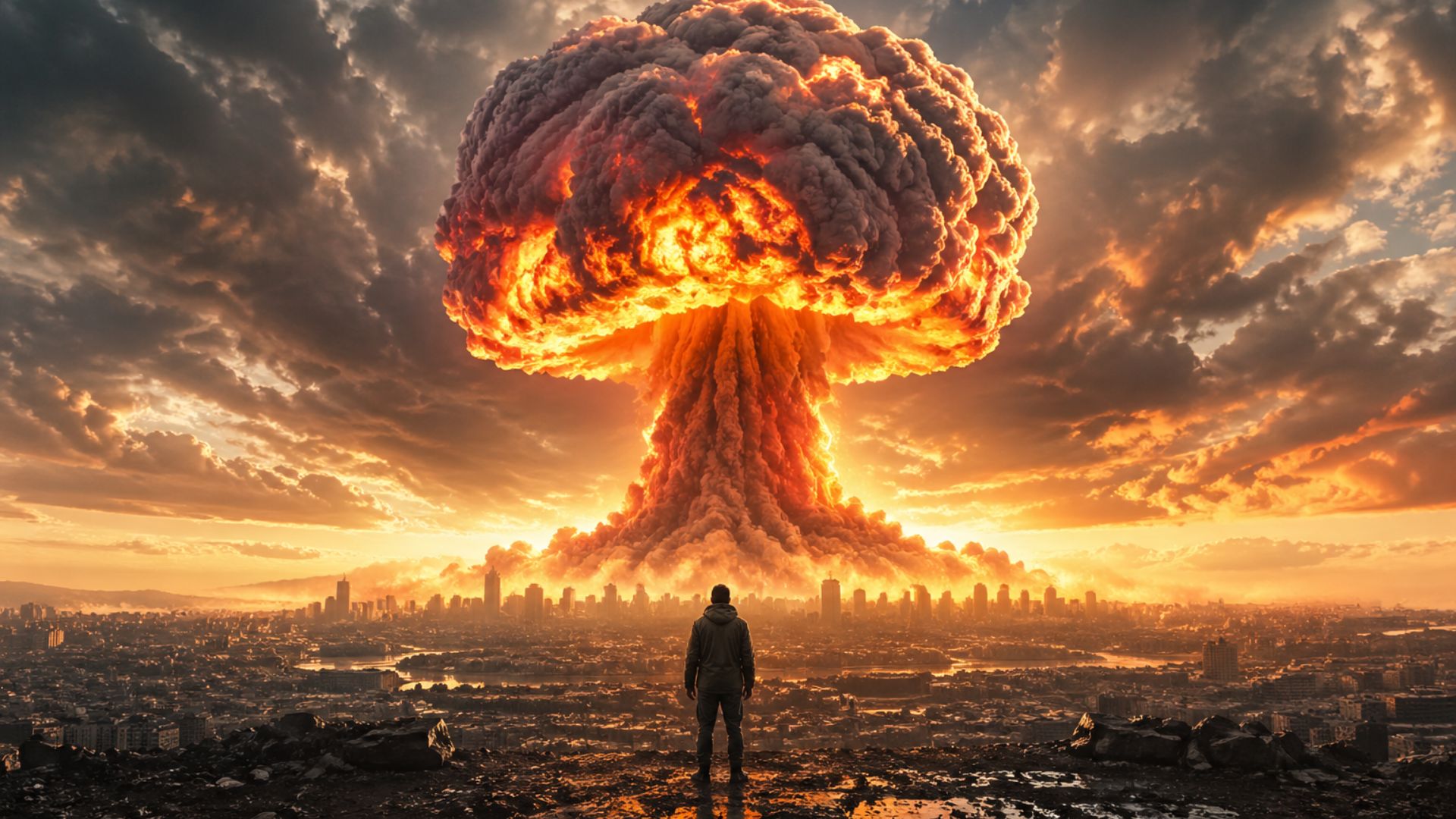


Scientific alert rekindles global nuclear fear, points to deterioration of treaties, increased tensions between powers, and advancement of artificial intelligence as factors of growing risk for humanity in the coming decades.
American physicist David Gross, winner of the 2004 Nobel Prize in Physics, stated that humanity may not survive the next 50 years if current risks involving nuclear war, arms race, fragility of international treaties, and the accelerated advancement of automated military technologies persist.
Addressing the topic, Gross mentioned that an annual estimate of a 2% chance of nuclear war would imply an approximate expectation of 35 years until an event of this magnitude occurs, considering probabilistic models similar to those used in other scientific areas.
Despite this, the scientist himself noted that the calculation should not be interpreted as a precise prediction, but as a relevant indicator of the deterioration of the global scenario, especially given the combination of political instability, regional conflicts, and the absence of new international agreements.
-
Brazilian Student Invents Low-Cost Rainwater Harvesting System Using Recycled Materials, Showcased at World’s Largest Science Fair

-
Italy Considers Next-Gen Nuclear Reactors for Warships, Aiming to Boost Naval Autonomy and Join Elite Maritime Powers

-
Extreme Heat in Antarctica Sets Record 15.4°C at Esperanza Base in June, Raising Concerns Among Scientists with Temperatures 20°C Above Normal, Rain Instead of Snow, and Unusual Melting Transforming the White Continent’s Landscape
-
UFG’s Innovative Use of Air Conditioner Drip Saves 400 Liters of Water Daily in Brazilian Public Building


“I don’t think it’s a rigorous estimate,” Gross said, comparing the current moment with the post-Cold War period, when assessments indicated an annual risk of around 1%, considered lower than the contemporary geopolitical environment.
In the physicist’s view, the last three decades have been marked by transformations that have amplified tensions between powers and reduced control mechanisms, contributing to a more unpredictable and potentially more dangerous environment than that observed at the end of the last century.
Internationally recognized, Gross received the Nobel for fundamental contributions to the understanding of the strong nuclear force, one of the pillars of the Standard Model of particle physics, which reinforces the weight of his statements in scientific and political debate.
Risk of nuclear war returns to the center of global debate


Amidst this scenario, international attention to nuclear risk is growing, having returned to a prominent position in strategic discussions after a period of relative reduction in tensions between major powers during the decades following the end of the Cold War.
In this context, the Doomsday Clock was set, in January 2026, to 85 seconds to midnight, reaching the closest point ever recorded since its creation in 1947, as a symbolic indicator of global threats.
Unlike a literal prediction, the clock functions as a parameter that expresses humanity’s degree of vulnerability to risks produced by human actions, including nuclear weapons, climate change, biotechnology, and artificial intelligence-based systems.
According to the responsible entity, the recent worsening reflects the more assertive stance of major powers, increased strategic competition, and the growing difficulty of international coordination on issues considered critical for global security.
End of nuclear treaties increases uncertainty among powers
Among the factors highlighted by experts, the loss of nuclear control agreements appears as a central element for the elevation of perceived risk in the contemporary international scenario, especially due to the absence of new containment mechanisms.
In this sense, the New START treaty ceased to be in effect on February 5, 2026, ending the last relevant bilateral agreement between the United States and Russia aimed at limiting strategic nuclear arsenals and maintaining predictability between the two powers.
While in force, the treaty established objective limits for warheads and delivery systems, in addition to allowing some level of transparency, factors considered essential to reduce uncertainties and prevent unintentional escalations.
With the end of this type of instrument, the possibility of a new arms race increases, a scenario that worries analysts by increasing the quantity of available weapons and reducing mechanisms of mutual trust between countries with great military capacity.
Furthermore, Gross drew attention to the current complexity of the international system, in which multiple countries possess nuclear weapons, making negotiations more difficult and fragmented compared to the bipolar context that marked the Cold War.
Artificial intelligence amplifies military strategic risks
Another relevant point raised by the physicist involves the growing role of technology in military decisions, especially with the incorporation of automated systems into sensitive and potentially decisive strategic structures.
According to this assessment, the use of artificial intelligence in commands, monitoring, and responses can introduce new types of risk, especially when decisions come to depend on algorithms subject to failures, misinterpretations, or technical limitations.
Experts also warn that the speed of development of these tools often surpasses the capacity for international regulation, which increases uncertainty about how these technologies might be used in conflict scenarios.
In this environment, concern grows over possible miscalculations, communication failures, or automated responses that could rapidly escalate crises, even in the absence of direct confrontation intent between the parties involved.
Diplomacy and deterrence still limit direct conflicts
Despite rising tensions, the logic of nuclear deterrence remains a relevant element in containing direct confrontations between powers possessing arsenals capable of causing large-scale destruction.
Thus, countries tend to avoid direct clashes, opting for indirect strategies that include support for allies, economic sanctions, regional disputes, and other forms of pressure that do not involve immediate nuclear confrontation.
Even so, analysts point out that the growing fragility of multilateralism reduces negotiation spaces and hinders the building of consensus, which can increase the risk of strategic errors in times of crisis.
Without solid mechanisms for dialogue and control, predictability decreases, and the international environment becomes more susceptible to unilateral decisions with the potential to generate broad and difficult-to-contain consequences.
Addressing this scenario, Gross advocated for the resumption of dialogue channels between countries as a way to reduce risks, emphasizing that international cooperation remains one of the main instruments available to avoid dangerous escalations.
The warning presented thus reflects an interpretation based on probabilities and an analysis of the current context, characterized by the combination of available armaments, rapid technological advancements, and the weakening of international structures aimed at global security.


