Portuguese
  Spanish


Reports from drivers using BYD models in ride-sharing apps show monthly savings of over R$ 2,500 compared to gasoline cars, while the cost per kilometer with electric energy changes the equation for those who travel around 5,000 km per month
The debate about Uber with BYD is no longer just a curiosity about electric cars and has started to appear on the spreadsheets of drivers who depend on their vehicle for work. In a ride-sharing app routine, the car is not just transportation. It is an income tool, a workplace, and the main operational cost.
A driver who documented his routine in São Paulo showed how this difference appears in practice. In the previous closing, he had driven 4,900 kilometers, combining work and personal use. The energy bill was R$ 460. In his comparison, an automatic gasoline car, operating under the same conditions, would have consumed about R$ 3,185 in fuel, considering an average of 10 km per liter and gasoline at R$ 6.50. The calculated savings were close to R$ 2,700 for the month.
The calculation is noteworthy because it takes into account a heavy ride-sharing app routine. The driver emphasizes that the car remains on even while waiting for rides, with air conditioning running, urban traffic, constant stops, and long commutes. In other words, it’s not just about comparing the price of electricity with gasoline, but about observing the real cost of daily work use.
-
Sales of Brazil’s Cheapest Electric Car Halted Before First Deliveries: E-Motors Suspends Emova Easy Due to Import Tax Increase and Rising Freight Costs

-
Nissan Discontinues Qashqai SUV Amid Cost-Cutting, Chinese Competition, and Product Line Review

-
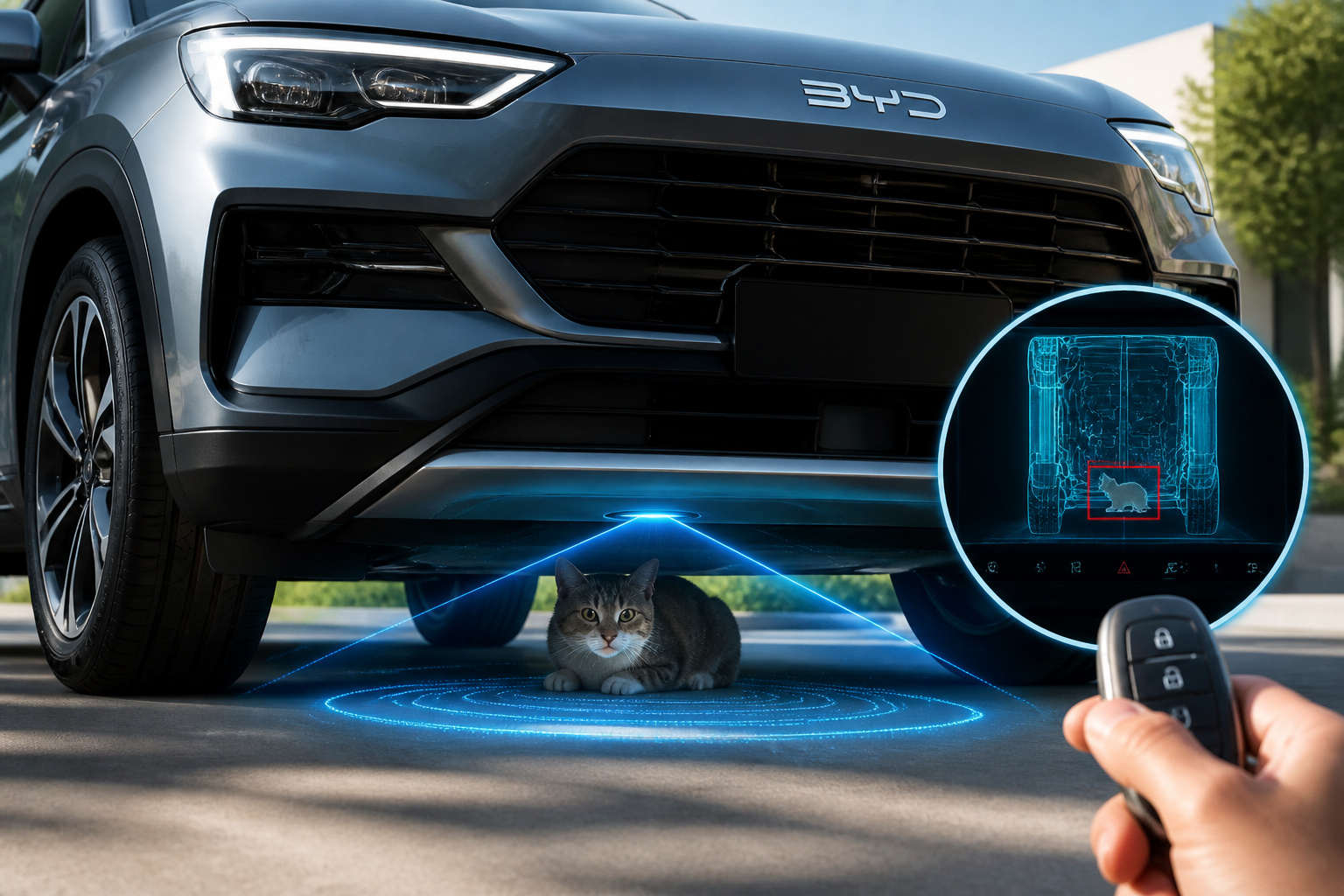
BYD Patents Revolutionary System Using Computer Vision to Detect Animals Under Cars Before Starting, Preventing Tragedies

-
Study Reveals Why Cars Are More Expensive to Produce and Buy in Brazil Compared to Mexico, Highlighting Taxes, Logistics, and Industrial Costs as Key Factors.


Report from São Paulo shows electric car routine on the streets
In early April, the driver reset the trip meters to monitor the car’s performance throughout the month. The journey began early, around 7 AM, with rides through regions such as Itaim Bibi, Marginal Pinheiros, the central area, and the far east of São Paulo.
During the day, he alternated between rides for Uber and 99, refused some trips, sought counter-flow routes, and avoided congested sections. The report shows a common routine for those working in large cities: evaluating destination, time, traffic, and return before accepting each ride.
By the end of that day, the driver had traveled 126 kilometers and earned R$ 275 gross by 2:24 PM. Of this amount, R$ 258 came from 99 and R$ 17 from Uber. Even without hitting the desired daily target, the case shows how an electric car can reduce the burden of operational costs on good, average, or slow days.
The central point is the cost per kilometer. The driver mentions a range between R$ 0.09 and R$ 0.11 per kilometer driven with electric energy, without considering the use of solar panels. With 4,900 kilometers in a month, this average is close to the amount paid on the electricity bill.
Dolphin Mini enters the equation for those who drive 5,000 km
Another report reinforces the interest in Uber with BYD. A driver stated that he used to spend R$ 3,000 per month on gasoline working part-time as an Uber driver. With a BYD Dolphin Mini, the declared expense dropped to R$ 500 on the energy bill for driving 5,000 kilometers monthly.
The monthly difference he indicated is R$ 2,500. In four years, these savings would reach R$ 120,000, a value he compares to the price of a Dolphin Mini. The logic presented is simple: the money previously spent on fuel becomes available for income, savings, or future vehicle replacement.
The driver also projects a long-term strategy. He states that he could add R$ 1,000 per month to his own income and save R$ 1,500. Maintaining this pace, in 6 years and 8 months, he would have accumulated enough to buy a brand-new car, not counting potential savings on maintenance, IPVA (vehicle property tax) in Rio Grande do Sul, and the future sale of the used vehicle.
High usage favors those who can charge at home
The advantage of an electric car is more pronounced for those who drive a lot. For low mileage, the monthly difference might take longer to offset the purchase price. However, for those who drive 4,900 or 5,000 kilometers per month, the impact on the budget is immediate.
The scenario becomes even more favorable when the driver can charge at home. This reduces reliance on public charging stations, simplifies the routine, and allows charging to become part of daily planning. For those who leave early and return the same day, charging overnight can make usage more predictable.
Even so, the decision is not limited to the cost of energy. Insurance, tires, maintenance, electrical installation, depreciation, and the initial vehicle price are still part of the calculation. Range also needs to be compatible with the work day, especially in large cities with long commutes.
Uber with BYD becomes a financial survival calculation
The rise of Uber with BYD in Brazil shows a practical shift in the mindset of some drivers. The electric car appears not just as new technology, but as an attempt to protect income in a job pressured by fuel costs, maintenance, and long hours.
In the cited examples, the monthly savings exceed R$ 2,500. This amount can represent budget relief, savings to buy a new car, or a real increase in net income. For those who work with apps, this difference changes the weight of each ride.
The decision still depends on each driver’s reality, the city, the charging infrastructure, and the price paid for the vehicle. But reports indicate that, for those who drive thousands of kilometers per month, the BYD is no longer just a different choice. It has become a calculation that many drivers started to make before continuing to spend a good part of their income at the gas station.