






 Portuguese
  Spanish


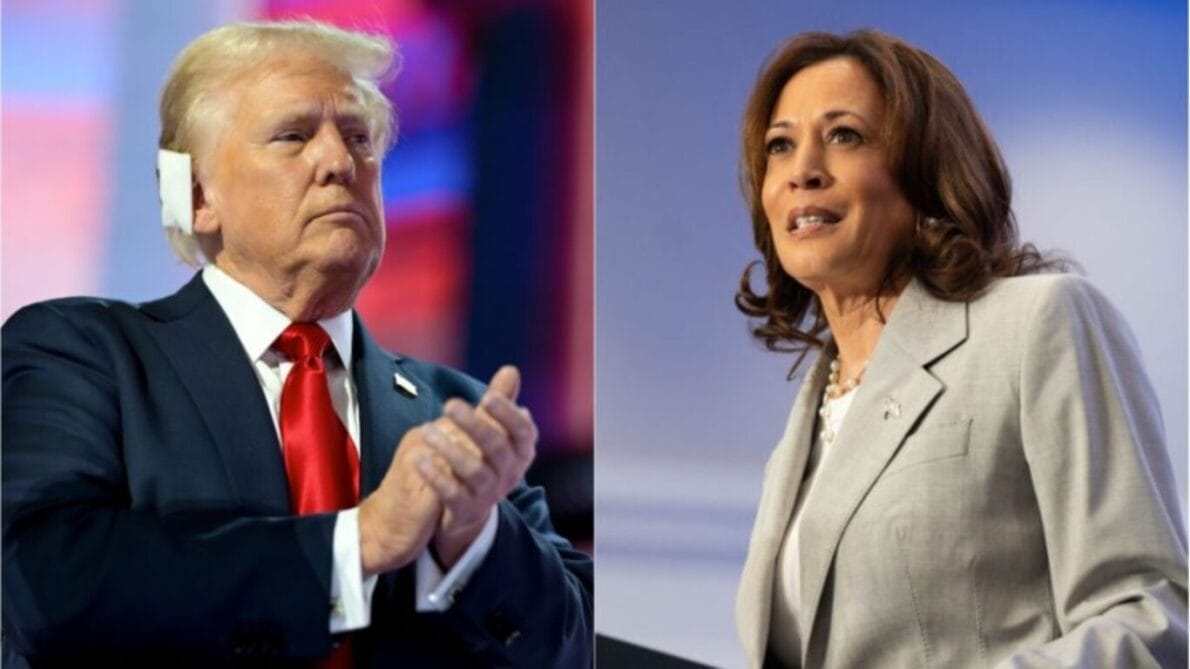

With the Appreciation of the Dollar and Economic Uncertainties, the Election in the US May Have a Great Impact on Brazil. Is Donald Trump or Kamala Harris the Best Choice for Our Economy? Let’s Explore How the Policies of Each Could Influence the Real!
According to Veja, the dollar has been soaring, complicating life for the real. The upcoming elections in the United States promise to further shake our already weakened Brazilian currency. Considering the projected evolution of the dollar against the real in the coming months, who should we be rooting for: Donald Trump, of the Republican Party, or Kamala Harris, of the Democrats? The answer is not simple and involves various economic and political factors.
The Impact of a Strong Dollar
Since the beginning of Donald Trump’s administration in 2017, the dollar has exhibited volatile performance against the real. Data from the Central Bank shows that the dollar rose from R$ 3.26 in January 2017 to R$ 5.19 in December 2020, a 59% increase. With Joe Biden in the presidency, the scenario has not been very different, and the quotings have already surpassed R$ 5.70.
Economists attribute this dollar appreciation to several factors. Statements from President Lula criticizing the Central Bank and signaling the desire to interfere in interest rates are one of the causes. In addition, the expectation of a possible victory for Trump, who could adopt more protectionist trade policies, harming emerging economies like Brazil’s, also weighs in this equation. The Federal Reserve (the American central bank) recently indicated the possibility of cutting interest rates, which also influences the foreign exchange market.
-
Corn ethanol attracts R$ 23 billion in 21 new plants and prepares for a nearly 50% jump in Brazilian production by 2027, even with high interest rates.

-
A newly opened terminal in the middle of the Amazon has begun transporting soy and corn through Amapá, eyeing the queue of ships that is congesting the ports in the South.
-
Tesla injected an additional $250 million into the German factory, doubled the battery cell target, and opened its own production line for startups.
-
A 180-meter ship with a deck the size of a football field was christened to carry 25,000 tons of giant energy modules around the world.


Trump and Harris Policies: What to Expect?
Donald Trump, during his term, expressed a desire for a weaker dollar to favor American exports. However, since the dollar is freely floating, this is more of a wish than an implementable policy. Periods of a weak dollar tend to be better for Brazil, as they make our products more competitive in the international market. However, Trump is also known for his protectionist tariffs, which although primarily aimed at China, can have repercussions for Brazil.
On the other hand, Kamala Harris, although she has not directly expressed her opinions on the dollar, represents a party that tends to adopt policies more focused on international cooperation and multilateralism. This could mean a more stable and predictable economic environment, which is positive for Brazil. “No one knows what Kamala thinks about the dollar,” says a renowned economist, but many believe her policies would be less turbulent compared to Trump’s.
The Reflection on the Brazilian Economy
The appreciation of the dollar has direct implications for the Brazilian economy. A strong dollar increases import costs, putting pressure on inflation and negatively affecting the purchasing power of Brazilians. Additionally, foreign exchange instability can deter foreign investors, who prefer more predictable economic environments. The pressure on the real also influences the Central Bank’s decisions regarding interest rates. The need to control inflation may lead to an increase in interest rates, which could slow economic growth.
Who is Better for Brazil?
Amid these uncertainties, who would be better for Brazil: Trump or Kamala? Some economists argue that Kamala Harris, with her more balanced and less protectionist policies, would be the ideal choice. “Kamala, of course!” replies one of the architects of the Real Plan. “Forget about the economy. Values are what matter,” he concludes. On the other hand, other economists point out that Trump’s policies, focused on a weaker dollar, could be beneficial for Brazilian exports, despite the risks associated with his protectionist tariffs.
In the end, the answer depends on which aspect of American economic policy will weigh more heavily on the Brazilian economy. What is certain is that the elections in the US will have a significant impact on our currency and economy in the coming years. Therefore, it is crucial to keep an eye on developments and prepare for the possible scenarios that will arise from the election results.
A Global Impact Election
The American election is a global event that affects not only the United States, but also countries like Brazil. Whether Trump or Kamala Harris wins, the adopted policies will have important implications for the Brazilian economy. The dollar’s appreciation, inflation, interest rates, and economic stability are just a few of the factors at play. Therefore, the best strategy is to closely monitor the elections and prepare for the potential impacts on our economy.


Dois psicopatas, tortos, imorais…bom para quem os dirige. Decadência, horror.