






 Portuguese
  Spanish
  5 min of reading
  0 comments


United States Reduce Investments in Brazil Amid Trade War, Freezing Billions in Investments. Experts Warn of Risks to External Accounts and Economic Slowdown if Dollar Flow is Compromised.
The United States, the main source of foreign investment in Brazil, is expected to reduce the inflow of new resources due to the intensification of the trade war between the two countries.
This measure could compromise the flow of dollars and directly affect the balance of Brazil’s external accounts.
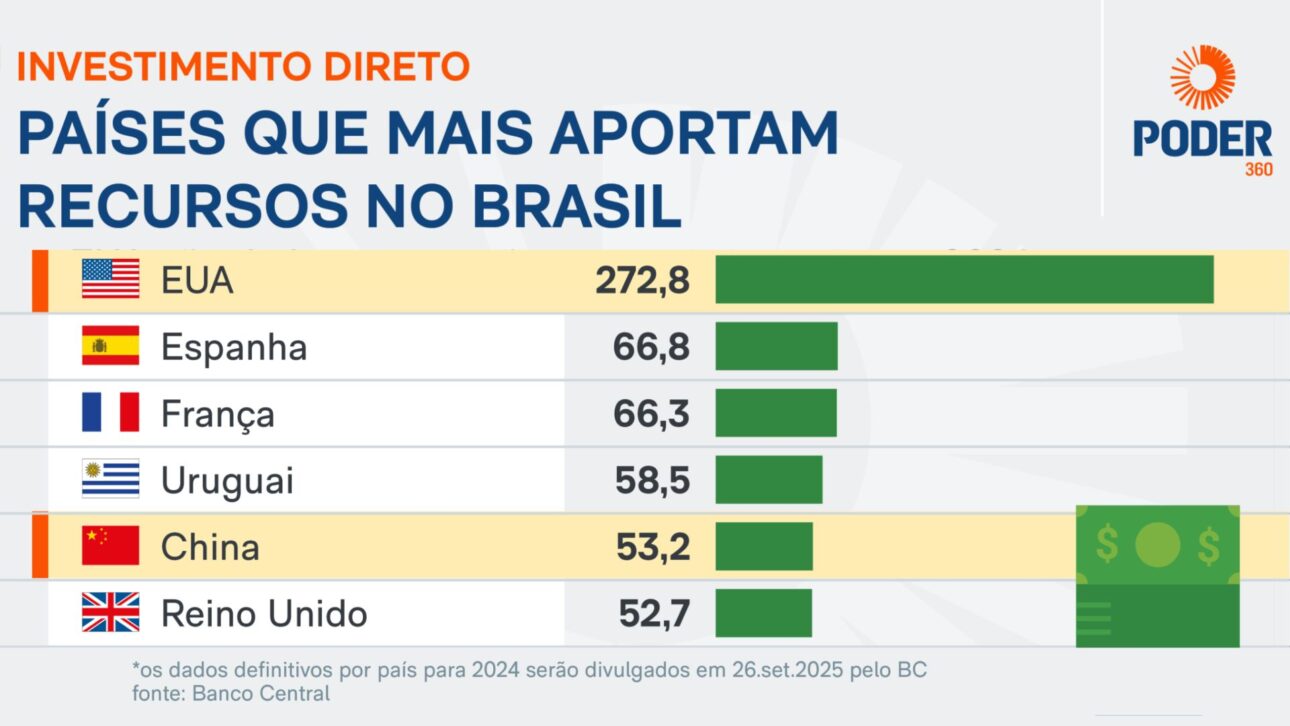
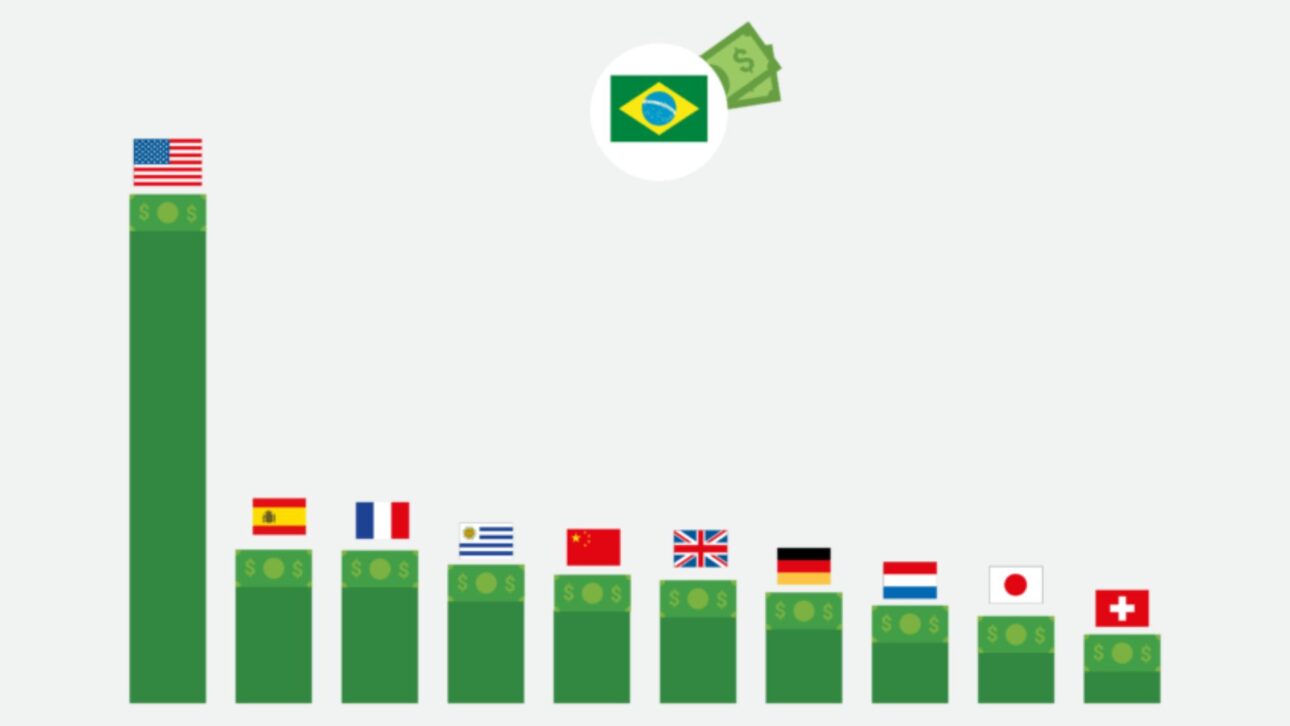
According to data from the Central Bank, the US invested US$ 272.8 billion in 2023, a figure four times higher than that of Spain, which ranks second with US$ 66.8 billion. The survey for 2024 will be released on September 26.
-
Brazilian Joins Homeownership Consortium, Faces Decade of Dual Payments Totaling $141,000, Surpassing Traditional Mortgage

-
Land Rover to Halt Production in July, Putting 371 Jobs at Risk, as Chinese Automaker Negotiates to Convert Factory to 100,000 Vehicles Annually by 2027

-
Mexican Pest Threatens U.S. Cattle Herds at Historic Lows, Potentially Boosting Brazilian Beef Exports as Burger Prices Soar

-
Brazilian Freight Bill Progresses in Congress with $5,000 Minimum Wage, 70% Advance Payment, and Fines Up to $1 Million, as Agriculture and Industry Warn of Rising Costs and Legal Uncertainty


Immediate Impact on Capital Flow
According to Welber Barral, former Secretary of Foreign Trade at the Ministry of Development, Industry, Trade, and Services (Mdic), the reduction will be felt immediately in the capital flow.
He explained to Poder360 this Saturday (16) that the stock of investments is unlikely to decrease in the short term, but American companies will suspend new investments.
“The American company located in Brazil will not expand investment while there is this tariff issue. This will affect future investment,” he stated.
According to Barral, companies should adopt a cautious stance until “some negotiation” occurs that reduces uncertainties.
He adds that if President Donald Trump, responsible for the 50% tariffs on Brazilian products, leaves office, the reversal could be swift.
“Probably the United States could lose the title of largest annual investor, but will continue to be the largest in terms of investment stock for a long time,” he assessed.
Supply Chains Affected by Trade War
José Ronaldo de Souza, chief economist at Leme Consultores, emphasizes that the trade war creates obstacles for the integrated supply chains between the two countries.
“We have an integrated supply chain connection between the two countries. Part is produced here, part there. The conflict creates this difficulty in exporting what is produced in Brazil,” he said.
He notes that the increase in political and economic risk also reduces the confidence of international investors.
“The increase in risk generates less investment in any area,” he emphasized.
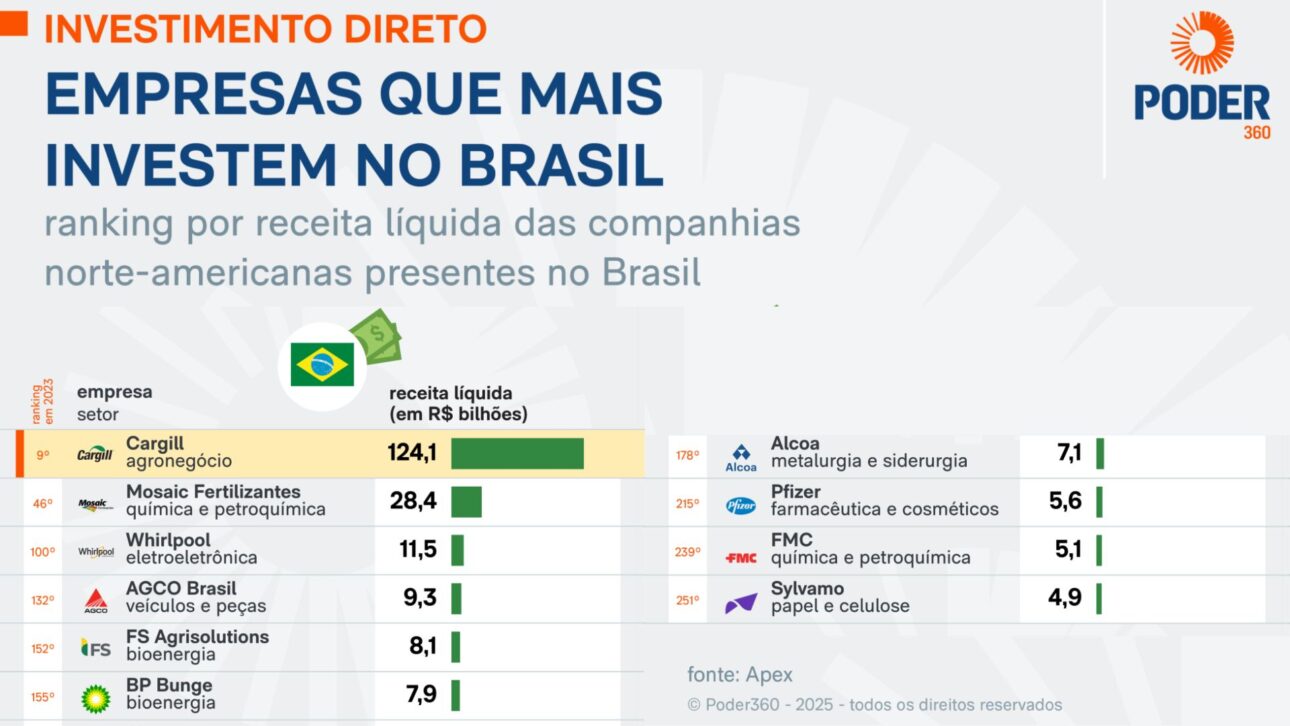
This situation is particularly severe in sectors such as technology, energy, agribusiness, and automotive industry, where American companies maintain a strong presence in Brazil.
Many of these companies depend on the integration between factories located in both countries, making the environment of uncertainty even more detrimental.
Potential Deterioration in Case of Retaliation
The economics professor at the Federal University of Pernambuco (UFPE), Ecio Costa, warns that the situation could worsen if Brazil decides to retaliate against Washington.
“If Brazil imposed tariffs of 50%, Trump would probably raise the rates to 100%,” he assessed.
In the most critical scenario, the freezing of American investments would compromise the country’s balance of payments.
Currently, Brazil’s current account shows a significant deficit, partially offset by the trade balance and the inflow of foreign capital.
“If companies from the United States, which have historically been the main international investor, are prohibited from investing, Brazil will face serious consequences in the balance of payments, impacting international reserves,” explained Costa.
Brazil’s Dependence on U.S. Capital
The relationship between Brazil and the United States in the field of investments is long-standing.
Americans have been instrumental in establishing automotive manufacturing plants, in the financial sector, in chemical and pharmaceutical industries, and also in technology.
This diversification explains why, even in unstable scenarios, the U.S. remains the top investor in the country.
According to historical data from the Central Bank, U.S. investments represented, on average, about a quarter of all foreign direct investment received by Brazil over the last two decades.
This constant inflow of capital has been decisive in financing external deficits and supporting the growth of strategic sectors of the economy.
Brazil Without a Substitute for the U.S.
Despite China’s growing role in the Brazilian economy, experts dismiss the idea that other countries can assume the position of the United States as the largest foreign investor.
“I do not see China or other major players assuming the position of the U.S. That’s why there is a risk of a sharp economic slowdown [with the reduction of investments],” said the UFPE professor.
China stands out when it comes to trade, especially due to its purchase of agricultural and mineral commodities, but its share in long-term direct investments in Brazil is still much lower than that of the U.S.
European investors, such as Spain, the Netherlands, and the United Kingdom, also rank among the largest capital providers in the country, but with amounts far from U.S. dominance.
Risk of Economic Stagnation
If the retraction of investments is confirmed, Brazil will face greater difficulty in attracting dollars, pressuring the exchange rate and increasing import costs.
This scenario could result in slow growth, a decline in job creation rates, and reduced capacity for the expansion of the national industry.
Experts also warn that international confidence in the country could be undermined if the trade war drags on, distancing potential medium- and long-term investors.
The persistence of this tension raises doubts about Brazil’s ability to maintain the necessary dollar flow to finance its external accounts.
For you, how far is the Brazilian government willing to retaliate or negotiate to preserve the confidence of international investors?





-

-

-

-

7 people reacted to this.