Portuguese
  Spanish


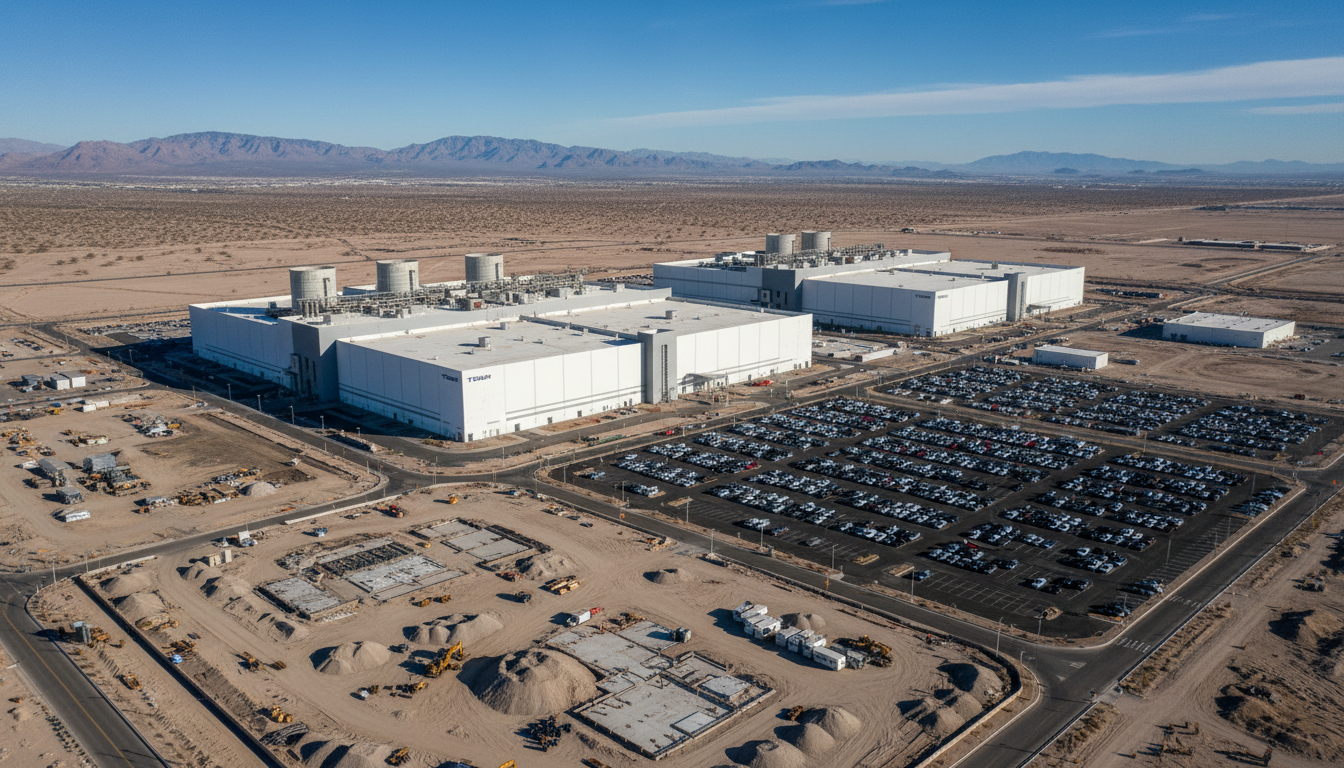


On May 8, TSMC revealed details of the Fab 21 factory in Phoenix, Arizona, which received a $165 billion investment, produces 100,000 wafers per month, and will deliver 100 million chips to Apple by 2026 in the largest greenfield industrial project in U.S. history.
The TSMC Arizona Fab 21 factory is located north of Phoenix, in the desert, with 3.5 million square feet of built area over 1,100 acres.
According to Evertiq, TSMC opened the facilities to the press on May 8.
According to TSMC, Phase 1 began high-volume production in the fourth quarter of 2025.
-
16-Year-Old from Brazil’s Sertão Wins Young Scientist Award for AI Predicting Rainfall with 94.5% Accuracy to Aid Farmers

-
Netherlands Reports First Child Euthanasia Case Since Rule Expansion for Minors

-
Brazilian Innovator Survives Homemade Submarine Dive in Paraty Despite Hatch Leak and False Oxygen Alarm
-
China Develops Custom 140-Ton Electric Mining Truck with 770 kWh Swappable Battery, Deploys 290 Units in Xinjiang’s Largest Zinc Mine



Firstly, the nominal capacity is 90,000 to 100,000 wafers per month in the 4-nanometer process.
Secondly, the company announced that Apple will purchase over 100 million Fab 21 chips by 2026.
On the other hand, the total investment expanded from an initial $12 billion to $165 billion over the past four years.
The TSMC Arizona factory will have six wafer units and two advanced packaging plants
The full plans foresee six wafer factories on the same campus.
According to the official schedule, Fab 2 begins equipment installation in the third quarter of 2026.
According to Reuters, volume production of 3-nanometer (N3) chips begins in 2027 — months ahead of the original plan.
In comparison, Fab 3 will produce the 2-nanometer process starting in 2028.
Subsequently, Fab 4, Fab 5, and Fab 6 factories will become operational between 2030 and 2034.
Therefore, the entire campus is expected to house 12,000 direct employees when fully operational.

The TSMC Arizona factory represents the largest foreign greenfield investment in U.S. history
The U.S. Department of Commerce classified the project as the largest foreign direct investment in a new project ever made in the country.
In comparison, the previous record-holder factory was Honda’s plant in Marysville, Ohio, with $1.3 billion in 1982.
According to the CHIPS and Science Act, TSMC received $6.6 billion in federal subsidies.
According to the White House, TSMC also added $5 billion in tax credits for research.
In other words, the U.S. government contributed $11.6 billion to the total $165 billion bill.
As reported by CNBC, over 12,000 direct jobs were created during the construction phase.
Apple, Nvidia, AMD, and Qualcomm have already confirmed orders from TSMC Arizona
Apple announced in February 2026 the purchase of 100 million A19 chips produced in Arizona.
According to Nvidia, part of the Blackwell B100 line is already manufactured at Fab 21.
According to AMD, the next generation of Ryzen processors will come from the same plant.
Firstly, Qualcomm migrated part of the production of Snapdragon 8 Gen 4 chips to Arizona.
Secondly, Cisco and Marvell also placed orders for 4 nm network chips.
Subsequently, Microsoft announced its intention to buy locally manufactured Cobalt 200 chips.
- Total investment: $165 billion in 6 fabs + 2 plants + R&D
- Fab 1 capacity: 90-100 thousand wafers/month (4 nm)
- Main client: Apple (100 million chips in 2026)
- Area: 3.5 million square feet on 1,100 acres
- Employees: 3,000 today, 12,000 when complete
- Roadmap: 4 nm (2025) → 3 nm (2027) → 2 nm (2028)

While Brazil debates Semiconductor Policy, the U.S. attracts $250 billion in factories
Brazil approved the National Semiconductor Policy in 2024 with R$ 26 billion in incentives.
In comparison, the United States attracted $250 billion in commitments via the CHIPS Act, according to the White House.
According to the Ministry of Development, Brazil only produces chips in the backend (packaging), without wafer manufacturing.
On the other hand, Samsung maintains a factory in Manaus that opened in 2002 and remains without technological upgrades.
According to BNDES, Brazil needs at least $8 billion to start a 28 nm wafer factory.
Similarly, industry executives argue that the lack of local suppliers still makes investment unfeasible.
The demand for artificial intelligence pushed TSMC to accelerate the Arizona schedule
The demand for AI chips grew 240% between 2023 and 2025, according to Gartner.
According to Nvidia, each H100 or Blackwell server consumes chips manufactured by TSMC.
According to Microsoft, OpenAI and Anthropic need 10 million GPUs by 2030.
In other words, the AI bottleneck is in wafer manufacturing capacity, not the algorithm.
Therefore, TSMC advanced the Fab 2 schedule by months to respond to the pressure.
As reported by Tom’s Hardware, ASML EUV equipment is already in transit to Fab 2.

The CPG archive covers the semiconductor race and its impact on the energy sector
CPG recently published about the semiconductor race and Brazil, in the site’s archive.
Subsequently, the site published an analysis on energy consumption in data centers for AI, with data from the IEA.
In other words, the TSMC Arizona factory will consume 200 megawatts of electricity when complete.
On the other hand, Arizona Public Service will need to install solar panels on 1,500 acres to meet the demand.
Next steps: Fab 2 goes into operation in 2027 and AI depends on it
Firstly, TSMC installs EUV equipment in Fab 2 between July and September 2026.
Next, pilot production of 3-nanometer chips begins in early 2027.
Finally, volume production starts in the third quarter of 2027.
However, some warn of the risk of overcapacity if AI slows down.
Nevertheless, TSMC executives argue that the order queue is already full until 2030. Still, Fab 21 becomes the turning point of chip geopolitics between the United States and Taiwan.