Portuguese
  Spanish


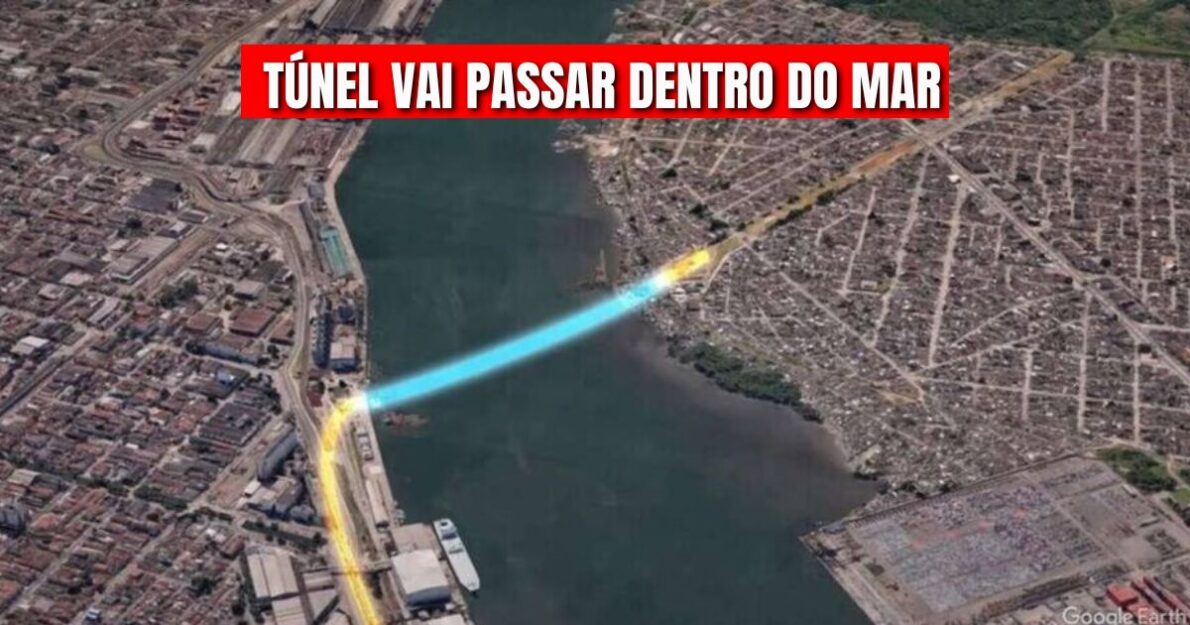

Tunnel Valued at R$ 6 Billion Promises to Create 9,000 Jobs but Faces Resistance Due to Low Expropriation Values Offered to Residents.
A monumental tunnel that promises to revolutionize the connection between Santos and Guarujá is about to take shape, with an estimated cost of nearly R$ 6 billion.
The grand project could generate 9,000 jobs and will be a landmark for Brazil’s infrastructure.
However, as the project gains momentum, the residents of a neighborhood crucial to its execution face a dramatic situation: the threat of receiving only a fraction of the true value of their homes if expropriated. This situation has generated a profound despair among the local population.
-
Half of Brazilians Prefer Lower Taxes with Private Health and Education, While 44% Opt for Higher Taxes for State-Provided Services, Datafolha Survey Reveals

-
Brazil’s Most Expensive Toll Rises to R$ 40.60 on Route from São Paulo to the Coast, Nearly Matching Bus Fare to Santos

-
As Brazil Expands Social Welfare, Survey Reveals 40% Blame Poverty on Laziness, While 58% Cite Lack of Opportunities

-
China Tightens Control on Antimony, Driving Prices from $22,000 to Nearly $40,000 per Ton as U.S. Rushes to Bolster Strategic Reserves



The issue has become a sensitive point among the residents of the Macuco neighborhood in Santos.
The state plans to pay about R$ 2,390.00 per square meter of built area, a value well below the market price, which hovers around R$ 9,000, according to the Regional Council of Real Estate Brokers (Creci-SP).
But why such a glaring difference? And more importantly, will the project manage to move forward without generating more controversy?
The Discrepancy in Expropriation Values
According to the São Paulo Partnerships Company (CPP), the value offered to residents was defined based on the Feasibility Study of the Immersed Tunnel Santos-Guarujá, an assessment that took into account the average price per square meter in the region as well as the impact of the work on the Macuco neighborhood.
According to the study, the value of R$ 2,390.00 per square meter was established based on a composition of land and improvements, according to research conducted by FIPE (Foundation Institute for Economic Research).
However, the actual price of properties in the region is much higher.
According to data from Creci-SP, confirmed by the president of the entity, José Augusto Viana Neto, the price per square meter in Santos can vary from R$ 4,000 to R$ 17,000, with most transactions closing in the R$ 9,000 range.
This mismatch between the amount offered by the government and the market value has fueled a climate of tension at public hearings that have been held to discuss the project.
Outrage and Despair at Public Hearings
At the public hearings recently held in the cities of Santos and Guarujá, the issue of expropriations was the central theme of discussions.
According to Nilson Regalado, a journalist for Diário do Litoral in a report this Tuesday (15), last Wednesday, 21 residents of the Macuco neighborhood attended a hearing at Teatro Guarany in Santos to express their concerns.
The Macuco Community Association (Acom) registered residents to speak, and many expressed their dissatisfaction.
Fabiana Rodrigues Graça Rufo Paiva, one of the affected residents, stated:
“Clearly, the values are inadequate for purchasing another property in Santos, which is a very expensive city. If this amount is maintained, it will likely lead to legal disputes.”
Another participant, the representative of the Public Servants Union of Santos, Flávio Saraiva, added:
“I hope the State Government has the sensitivity to not burden the residents of Macuco with the losses from this tunnel.”
His proposal was for the government to subsidize the affected families, since it will subsidize with R$ 290 million/year the contractor that will operate the tunnel.
Negotiations and Expectations for a Solution
In response to public pressure, the director of the São Paulo Partnerships Company, Raquel França, stated that the government is willing to reassess the values offered to residents.
“We are open to holding another meeting with the Macuco residents and the Santos City Hall to discuss this value,” she declared, in response to widespread dissatisfaction.
According to the State Secretariat for Investment Partnerships, the amount of R$ 2,390.00 is not final and was set by FIPE based on a survey of available land in the region, using data from the Zap Imóveis portal.
The calculation involved applying the Basic Unit Cost of Construction (CUB) on the affected built areas, taking into account additional funds such as moving assistance and compensation for lost profits for commercial properties.
The Works’ Schedule and Challenges
Despite all this controversy, the Santos-Guarujá tunnel continues to advance.
The bidding for the selection of the contractor or consortium responsible for the work is expected to be launched in the first half of 2025.
The signing of the Public-Private Partnership (PPP) contract should occur by October 2025, with a deadline of 12 months for the preparation of the executive project.
Construction is expected to begin in October 2026, with project completion anticipated in 2030.
The tunnel, which will be 870 meters long and submerged in the Estuary of the Port of Santos, will be one of the largest infrastructure projects ever carried out in Brazil, with a total estimated cost of R$ 6 billion, financed by the federal and state governments.
The expectation is that the work will not only connect the cities of Santos and Guarujá but also generate 9,000 jobs, boosting the region’s economy.
Will This Project Bring More Benefits or Problems?
The future of the Santos-Guarujá tunnel remains uncertain, especially due to issues involving expropriations and the values offered by the government.
The residents of the Macuco neighborhood fear that the project, which could revolutionize mobility in the region, will turn into a nightmare for those who will be removed from their homes.
But what do you think? Will the Santos-Guarujá tunnel be a milestone for Brazil or an example of poorly managed issues?