Portuguese
  Spanish




Tourist Receives Absurd Fine of £ 2,4 Thousand (R$ 13,2 Thousand) for Taking Selfie on Top of Roman Aqueduct in Segovia, at 25 Meters High, Mobilizes Emergency Teams and Creates Alert for Visitors!
Imagine being at one of the most iconic monuments in Spain, taking a picture to capture the moment, and suddenly being fined thousands of reais. This is exactly what happened to a tourist who decided to climb to the top of the famous aqueduct in Segovia to take a selfie. Besides putting his life at risk, he violated strict preservation rules of the site and received a heavy fine.
What Happened at the Aqueduct of Segovia?
The incident occurred in the heart of Segovia, a historic city northwest of Madrid. The man, wearing a hat and sunglasses, was spotted 25 meters high, precariously balancing on the edge of the aqueduct. The scene frightened both locals and tourists nearby.
Emergency teams rushed to the scene, unsure if the tourist intended to harm himself or was just trying to capture an unusual moment. After being identified, he was fined between R$ 6,6 thousand and R$ 13,2 thousand for civil disobedience.
-
Brazilian Startup Turns Coffee Grounds into Plant-Based Leather, Cutting Water Use by Over 50 Times for High-Impact Sustainable Fashion

-
Eco Invest Auction Aims to Unlock $10 Billion in Investments, Focusing on Green Fertilizers, Critical Minerals, Batteries, and AI for Clean Industry in Brazil

-
Half of Brazilians Prefer Lower Taxes with Private Health and Education, While 44% Opt for Higher Taxes for State-Provided Services, Datafolha Survey Reveals

-
Brazil’s Most Expensive Toll Rises to R$ 40.60 on Route from São Paulo to the Coast, Nearly Matching Bus Fare to Santos




The Historical Importance of the Aqueduct of Segovia
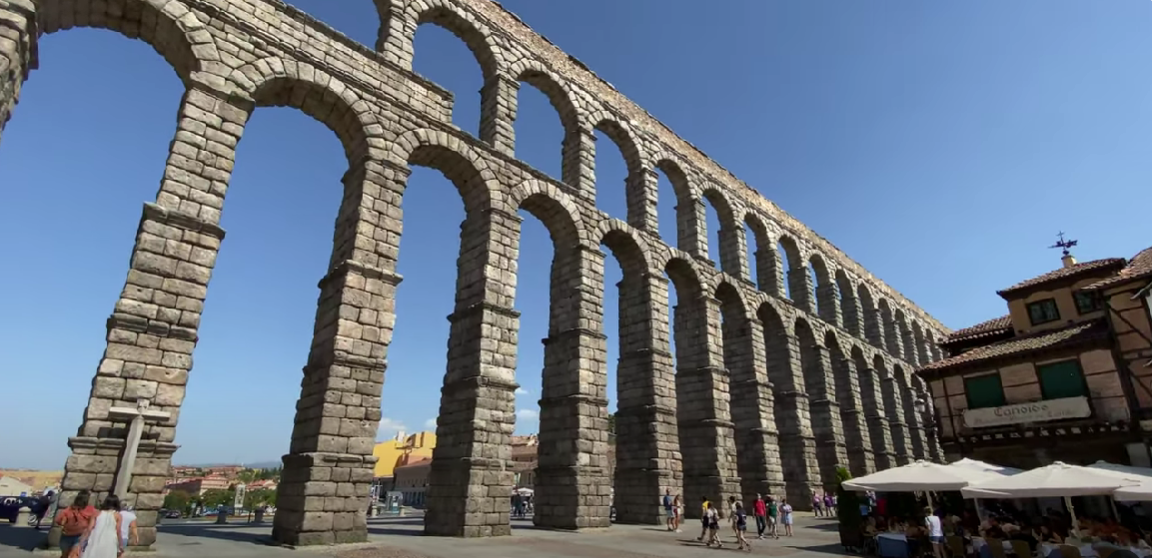
The aqueduct of Segovia is not just a tourist spot; it is a true testament to Roman engineering. Built in the 1st century AD, it provided water from the Río Frío to the city for almost two thousand years, until 1973.
With its two levels of imposing arches, the aqueduct became a symbol of the city and was declared a UNESCO World Heritage Site in 1985. Its impressive length of 14 kilometers makes it one of the best-preserved Roman aqueducts in the world.
The Rules for Tourists and the Fines Applied
Visiting the aqueduct of Segovia requires respect for preservation rules. Climbing on the structure, as the fined tourist did, is a serious offense. There are other rules that must be followed to avoid penalties:
Leaning against the structure can result in high fines
Graffiti or vandalism is punishable by severe sanctions
Bicycles, bags, or any objects may not be placed against the construction
Many tourists do not realize that small actions can compromise the conservation of the site. The impact of continuous human contact can lead to the wear of the structure, putting centuries of history at risk.