






 Portuguese
  Spanish
  4 min of reading
  0 comments


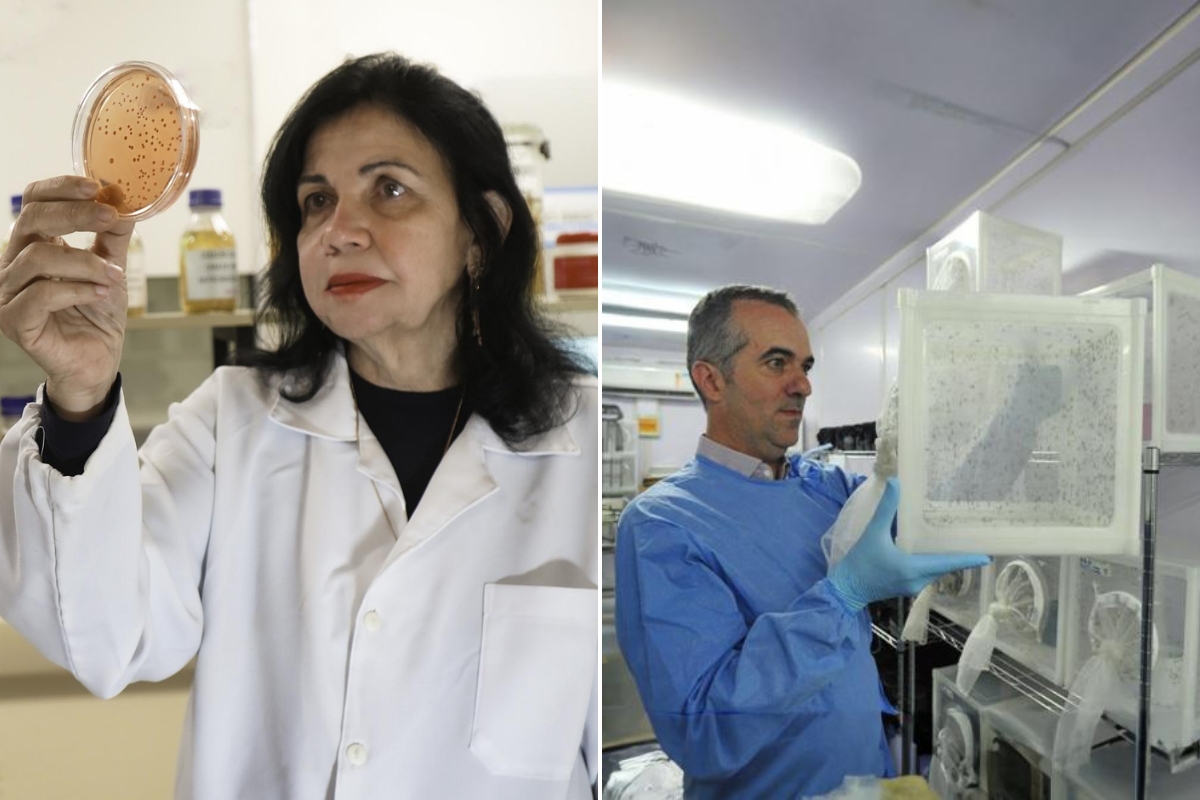
Unprecedented recognition of Brazilian science gains strength with two researchers from the country in global spotlight after advancements that are already affecting public health, agricultural production, and Brazil’s image on the international stage.
Two Brazilian scientists made it to the Time 100 of 2026 and brought the country to the center of a global showcase of applied science. The list was announced on April 15, 2026 and featured agronomist and microbiologist Mariangela Hungria from Embrapa, and geneticist Luciano Moreira from Fiocruz.
The recognition came from two fronts that impact real life. On one side, Hungria‘s technology reduced the dependence on synthetic fertilizers by using soil microorganisms. On the other, Moreira‘s work helped consolidate the Wolbachia method, which makes the mosquito less capable of transmitting dengue, zika, and chikungunya.
The weight of the news grows because both cases moved from the laboratory to a national scale. One impacts food production and costs in the field. The other affects public health in Brazilian cities dealing with outbreaks of arboviruses.
-
Helicopter Drops 180 Tons of Sand and Gravel on Swedish River to Revive Ecosystem Damaged by Decades of Exploitation

-
Brazilian Company Launches Retro Smartphone with 48 MP Camera, T9 Keyboard, and Privacy Features for Social Media-Free Use

-
Self-Taught Chinese Farmer Builds 5-Ton Submarine from Scrap, Launches It in Anhui River
-
Invisible Induction Technology Enables Wireless Power for Blenders, Coffee Makers, and Air Fryers, Reducing Countertop Cables




The 2026 list highlighted Brazilian science with a direct effect in the fields and cities
Mariangela Hungria appeared among the pioneers on the list. Luciano Moreira was included for his role in advancing and expanding the Wolbachia method in Brazil, one of the countries most affected by mosquito-borne diseases.
According to TIME, American magazine on politics, culture, and current affairs, Hungria helped ensure that 85% of Brazilian soybeans are cultivated with microorganisms instead of synthetic fertilizers, while Moreira took the Wolbachia project initiated in Brazil in 2012 to the largest biofactory in the world focused on this technology.
Luciano Moreira expanded the Wolbachia method and brought the technology to 140 million people

The Wolbachia method uses a bacterium already present in many insects but absent in the Aedes aegypti. When it is introduced into this mosquito, the viruses find it more difficult to develop, which reduces the transmission of dengue, zika, and chikungunya.
In Brazil, technology gained scale with the inauguration of the largest biofactory in the world, capable of producing 100 million eggs per week. The announced goal is to expand protection from about 5 million to 140 million people in approximately 40 municipalities with a high incidence of the disease.
Niterói became a showcase with a drop of up to 88.8% in dengue cases
The strongest case so far is in Niterói, in Rio de Janeiro. The city was the first in the country to implement the method and is already seen as a reference for consistent results after the territorial expansion of the strategy.
Official data indicates a reduction of 88.8% in dengue cases in the municipality. In another previously published analysis, the drop was about 70% for dengue, 60% for chikungunya, and 40% for zika in the areas with intervention, showing a significant effect even with different comparison methodologies.
Mariangela Hungria swapped synthetic fertilizers for microorganisms and changed agriculture

On the other end of this story, Mariangela Hungria built a silent revolution in agriculture. Her work focused on using soil bacteria to help plants obtain nitrogen more naturally, reducing the need for chemical fertilizers and alleviating production costs.
The most cited estimates indicate that the solutions linked to the researcher have already helped Brazilian producers save about US$ 25 billion per year and avoid the emission of 230 million tons of carbon equivalent. The reach has already surpassed 40 million hectares in the country, with a direct effect on productivity and sustainability.
Brazil transforms research into practical solutions with global reach
The strength of this combination lies in the type of delivery. Moreira is linked to a concrete response to an urban health crisis. Hungria emerges as a symbol of a viable solution to reduce dependence on expensive and polluting inputs on a large scale.
In the end, the entry of the two Brazilians into the Time 100 of 2026 places the country in a rare position. Not for the promise of the future, but for the already visible effect of technologies that have come out of research and begun to change the fields, cities, and the global perception of science done in Brazil.
This international recognition reinforces a point that weighs more and more. Brazilian science has managed to deliver practical results, scale, and impact in decisive areas for everyday life. This gives new value to what the country produces in health, agriculture, and innovation.
The immediate consequence is clear. Two names linked to Embrapa and Fiocruz now represent an image of Brazil that solves big problems with applied knowledge, and this changes the significance of this story both inside and outside the country.





Be the first to react!