






 Portuguese
  Spanish


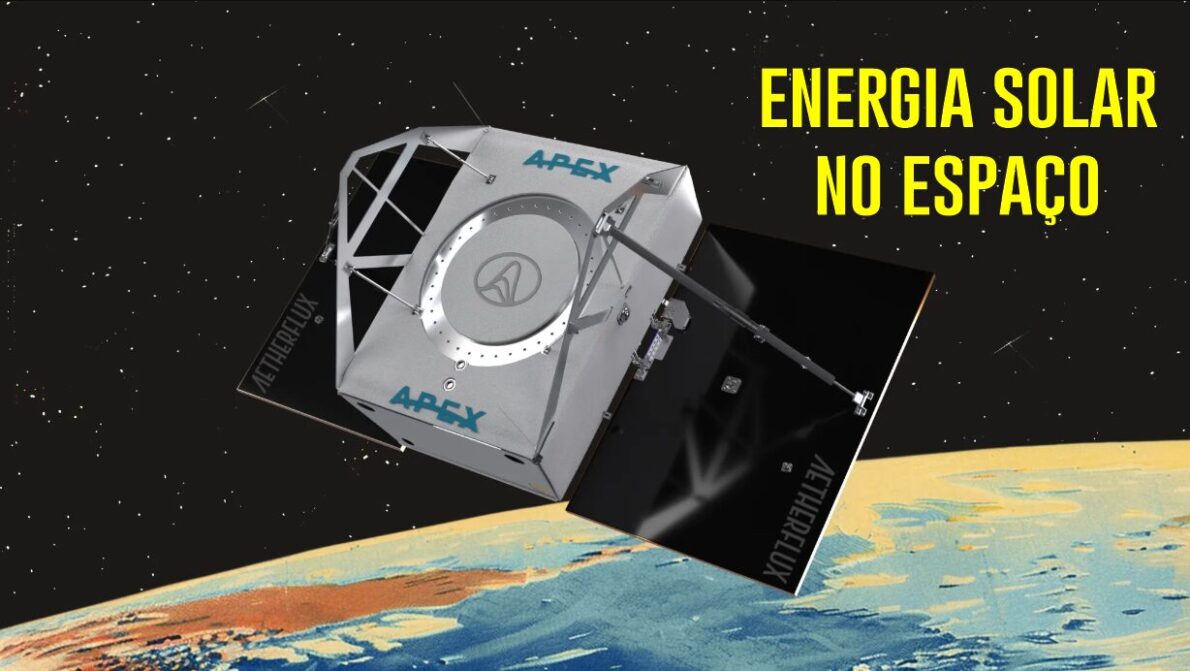

Aetherflux, Created by a Billionaire Entrepreneur, Plans to Utilize Satellites with Solar Panels to Distribute Renewable Energy from Space to the Whole World
Baiju Bhatt, an American entrepreneur of Indian descent, recently revealed his new venture, the space startup Aetherflux, after months of secrecy. Its mission is to develop a sort of “Starlink” for solar energy, a network of low-orbit satellites that captures sunlight and converts it into renewable energy.
The proposal is to transmit this energy directly to Earth, helping remote regions that struggle with electricity supply, as well as providing a more sustainable and innovative alternative for the future of solar energy.
Aetherflux initially targets military applications, but Bhatt plans to expand the use of renewable energy to civilian and commercial consumers. He has already invested around US$ 10 million in a prototype, with the expectation of testing the technology by 2026.
-
AI Security System in Brazil Aims to Cut False Alarms by Differentiating Pets from Intruders, Enhancing 24/7 Monitoring for Homes and Businesses

-
Archaeologists Discover 1,500-Year-Old Byzantine Mosaic with Greek Biblical Inscription in Israel, Uncover Ruins of 10 Buildings Near Kiryat Gat
-
Ohio Carpenter Finds 308-Gram Meteorite the Size of a Baseball After Dreaming of Its Location

-
Chinese Student Builds Humanoid Robot for $2,100 at Age 20, Now Leads Robotics Startup in China



The goal is to transmit 4 kilowatts of power, enough to power an average-sized home, from a satellite 550 kilometers in altitude to a receiver of 10 meters on the ground.
If this phase is successful, the plan is to test larger satellites to generate more solar energy and increase the range of the network, creating what Bhatt describes as “transmission lines” in space to provide renewable energy efficiently and affordably.
The Inspiration Behind Satellite Technology for Solar Energy

Bhatt’s idea of creating a “Starlink” for solar energy is based on an old concept popularized by science fiction. He credits author Isaac Asimov with the initial inspiration, who, in 1941, described a spacecraft transmitting solar energy to Earth.
In the 1970s, NASA and the U.S. Department of Energy explored similar ideas, but the technological limitations of the time hindered their progress. Bhatt believes that it is now possible to overcome these obstacles with his innovative approach of using smaller satellites instead of gigantic panels in geostationary orbit.
The major advantage of solar energy transmitted from space is that it is not interrupted by factors such as weather, cloud cover, or the rotation of the Earth.
The renewable energy generated by Aetherflux’s satellites can be continuously harvested, regardless of weather conditions. Additionally, Bhatt emphasizes that the technology of infrared lasers, instead of microwaves, allows for more efficient transmission of solar energy, reducing the impact on the ground and increasing the transmitted power.
Renewable Energy from Space: Challenges and New Opportunities

Other solar energy projects in space are also underway. In 2023, researchers from CalTech were the first to successfully transmit solar energy directly from space to Earth.
These initiatives demonstrate that the idea of satellites transmitting renewable energy is no longer just a science fiction dream but a concrete possibility, especially in light of the urgent need to find solutions to combat climate change and meet the growing demand for clean energy sources.
For Bhatt, this venture into renewable and solar energy is a return to his roots. Before co-founding Robinhood, he studied physics and mathematics at Stanford, always fostering a strong interest in space. His father, who worked at NASA’s Langley Research Center, was a significant influence in his life, inspiring his dream of one day developing something in the space sector.
Now, with Aetherflux, Bhatt seeks to realize that dream, using his experience as an entrepreneur to revolutionize the solar and renewable energy sector.
Based in San Carlos, California, Aetherflux has already hired a team of engineers from companies like SpaceX and Luminar. The company has acquired a 150-kilogram satellite from Apex, another startup in which Bhatt invested, to carry the solar panels that his team is developing. These satellites will be responsible for capturing solar energy in space and transmitting this renewable energy efficiently to stations on Earth, creating a network that Bhatt hopes to expand globally, similar to Starlink.
The journey ahead is challenging, but Bhatt is committed to turning his vision of a “Starlink” for solar energy into reality. He knows that creating a network of satellites to transmit renewable energy will not be an easy task, but he believes that this technology has the potential to revolutionize how the world consumes and distributes energy.
If successful, Aetherflux can not only provide a sustainable solution for remote areas but also position solar energy as an accessible and continuous source for the future.





Se der certo, vai concorrer com as concessionárias brasileiras