






 Portuguese
  Spanish
  4 min of reading
  1 comment


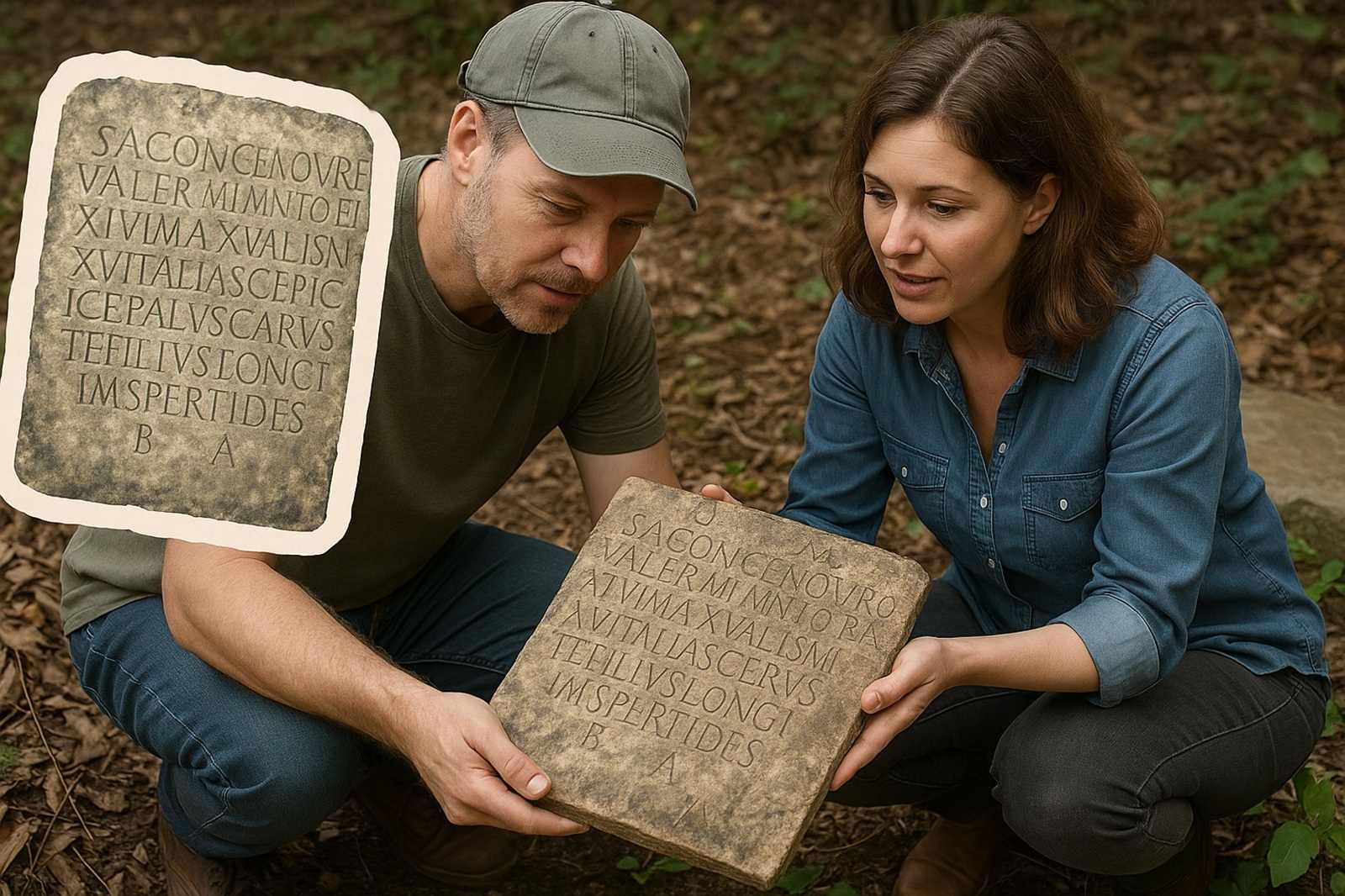


A Couple From New Orleans Found In Their Yard A 1,900-Year-Old Roman Tombstone Belonging To A 2nd Century Soldier. The Missing Artifact Since World War II Will Be Repatriated To Italy
During a simple gardening task, a couple from New Orleans made a discovery that turned into an international archaeological case. While digging in their yard in the historic Carrollton neighborhood, they found an ancient tombstone with inscriptions in Latin.
The analysis revealed that it is a 1,900-year-old funerary artifact from Italy, marking the tomb of a Roman soldier named Sextus Congenius Vero.
From Surprise To Archaeological Mystery
Anthropologist Daniella Santoro from Tulane University and her husband Aaron Lorenz were alarmed when they found the stone. Santoro’s first reaction was to fear that their house had been built over a cemetery, a plausible scenario in New Orleans where this has occurred several times throughout history.
-
Survivor of 1966 SS Daniel J. Morrell Shipwreck in Lake Huron Recounts 38-Hour Ordeal in Extreme Cold

-
The Greatest Hoax in World Cup History? The Film That Denied Brazil’s 1958 Victory and Exposed How Fake Evidence Can Seem Convincing on TV
-
Fake South Korean Online Stores Offer Shopping Thrill Without Spending Money or Receiving Products
-
The War of Jenkins’ Ear: How a Severed Ear Sparked One of the 18th Century’s Most Unusual Conflicts


However, a report from the city’s Preservation Resource Center (PRC), prepared by archaeologist D. Ryan Gray, dismissed this hypothesis. Hidden cemeteries in the area have already been mapped, and there is no indication of one on the couple’s property.
With growing curiosity, Gray focused his efforts on the inscription engraved in Latin. He sent images of the stone to archaeologist Harald Stadler at the University of Innsbruck, who passed them on to his brother, a Latin specialist. Santoro also shared the photos with classicist Susann S. Lusnia from Tulane University.
Independently, they all came to the same conclusion: it was a Roman funerary tombstone from the 2nd century dedicated to Sextus Congenius Vero, a sailor from the Praetorian fleet of Misenum.
The History Engraved On The Stone
The approximate translation of the inscription reveals details about the soldier’s life: “To the Spirits of the Dead by Sextus Congenius Vero, soldier of the Praetorian fleet of Misenum, of the Bessi tribe, lived 42 years and served 22 in the army, on the trireme Asclepius. Atilius Carus and Vecius Longinus, his heirs, did this for him with great merit.”
The text indicates that Vero was from Thrace, a region in southeastern the Balkans, and spent over two decades serving aboard the Asclepius, a trireme — a warship powered by oars — named in honor of the god of medicine.
The stone precisely matches a piece considered missing from the National Archaeological Museum of Civitavecchia, a port city north of Rome.
The museum was destroyed during Allied bombings in World War II and only reopened in 1970. Since then, several items have disappeared from its collection, including the tombstone now found in the United States.
From The Yard To The FBI
Given the historical importance of the find, Santoro contacted Tess Davis, director of the Antiquities Coalition, an organization dedicated to repatriating cultural heritage. With the entity’s guidance, the couple handed over the tombstone to the FBI’s Art Crime Team, which is now coordinating its return to the museum in Civitavecchia.
With the artifact out of their hands, researchers began investigating how it ended up in a residential yard. By consulting census records, they discovered that the house had belonged for decades to the family of Frank Simon, manager of a shoe company.
The main hypothesis suggests that an American soldier brought the tombstone back from Europe after World War II — a scenario similar to that of two 17th-century Dutch paintings that recently resurfaced in Texas.
Clues Without Answers
However, Simon was 59 years old in 1940 and died in 1945, which reduces the likelihood of his direct involvement. Researchers suspected a neighbor, a US Navy veteran, but records show he only served in the Pacific, not in Europe.
Lusnia, who traveled to Italy during the summer, visited the museum in Civitavecchia and confirmed that an inventory from 1954 mentioned the tombstone — although based on old documents and not on a direct inspection. For Gray, this reinforces the idea that the artifact was lost in the chaos of the post-war period, when many pieces were looted or disappeared without record.
Still, the mystery remains about how exactly the tombstone crossed the Atlantic and ended up buried in an American yard. It may have been taken by an antiquities dealer and sold to a tourist or simply repurposed as paving stone by someone unaware of its historical value.
“Perhaps a family member or someone cleaning the house after a sale saw the piece merely as a convenient stone for a muddy yard,” writes Gray. “At this moment, it is impossible to say, but we will continue exploring new possibilities.”
The case of Sextus Congenius Vero shows how an artifact lost for nearly a century can resurface in an unlikely location, connecting a New Orleans garden to the Roman Empire and the chaos of World War II. And, as the tombstone makes its way back to Italy, the investigation continues — in search of answers that may be buried not in the ground, but in the forgotten memories of those who brought it there.





E um fato fantástico tem que conserva e um tesouro